
The startup incubator that refuses to rush

India’s startup ecosystem has become accustomed to celebrating speed. Founders race to launch products, raise venture capital and chase billion-dollar valuations. But some of the country’s most ambitious technology companies have followed a very different path. Bellatrix Aerospace spent years perfecting satellite propulsion systems before finding commercial success. Digantara built an entirely new market around tracking objects in space. Agnit Semiconductors is commercialising technology born out of 15 years of university research, while biotech startup Azooka Labs needed six years before its first products reached the market.Few of these companies would have survived inside a conventional incubator expected to produce results within 2-3 years. Instead, they found a home at the Indian Institute of Science (IISc)’s Foundation for Science Innovation and Development (FSID), which has quietly become one of India’s most successful university-led deep science incubation programmes. Since its inception, FSID has incubated more than 140 startups spanning space tech, semiconductors, biotech, artificial intelligence and advanced materials.The programme’s philosophy is simple: deep science takes time.“We don’t put a clock on our companies,” says B Gurumoorthy, director of FSID. “Our metric is that they should be ready to stand in front of either a customer or an investor. If that doesn’t happen, we stay with them. We’ve had companies here for six years and we don’t have an issue with that as long as they’re progressing.”FSID provides laboratory space, seed funding, access to IISc’s research infrastructure and business mentors. “We try to connect them to faculty for the technical side,” Gurumoorthy says. “For the business side, we bring in people who have built companies. They work one-on-one with our startups until the founders feel they’ve found the right mentor. Quite often those mentors later become investors or members of the executive team.”Powering space dreamsSome of the ventures are now emerging as leaders in India’s most strategically important technologies. Bellatrix Aerospace is a great example. The company began in a rented shed in Coimbatore, where co-founders Yashas Karanam and Rohan M Ganapathy worked on a student project to develop a new kind of satellite propulsion system using water as propellant. When the startup secured an order from Isro in 2016, the founders realised they needed a stronger research ecosystem.“IISc was a wonderful opportunity,” recalls Yashas. “We had no connection with the institute, but they evaluated our technology in depth. They even made an exception to incubate us because they believed deep tech companies like ours needed support.”Bellatrix needed specialised manufacturing facilities, vacuum chambers, furnaces and testing infrastructure that the IISc incubator did not possess. So the institute found another building and created the space.The company also benefited from introductions to investors, collaborations with IISc researchers, and access to technical facilities across the campus.“There were times when cash flow had completely dried up,” Yashas says. “The seed funding from FSID helped us retain our people for almost a year.”Nearly a decade later, Bellatrix has become the first private Indian company to space-qualify a green propellant, and successfully fly on Isro’s PSLV mission. Its principal research and testing facility is still in IISc.A similar story unfolded just a few years later with Digantara, today one of India’s fastest-growing space technology companies. When founder Anirudh Sharma approached IISc in 2020, he was just 20 years old and trying to convince people that India needed a company dedicated to space domain awareness – tracking satellites and space debris to prevent collisions.“There wasn’t much credibility behind a 20-year-old building deep tech in India,” Anirudh says. “We wanted somebody like IISc to support us, not just for credibility but also for infrastructure and guidance.”IISc, he says, became the playground where they could build, fail and build again. “We didn’t have a gun to our head where we had to pay huge rents every month.”Digantara has since grown from a 20-member team inside IISc into a company employing around 170 people across India and the US. It has raised more than $65 million, launched multiple satellites and is expanding into missile defence systems that use space-based sensors to detect and track missile launches.Backing hard scienceThat same philosophy of giving founders time to solve difficult scientific problems is echoed across the rest of FSID’s portfolio. When genomics startup Azooka Labs first approached the incubator in 2015, the answer was no. “But we never gave up,” recalls Fathima Benazir, chief science officer and co-founder. “We strengthened our business plan, came back and finally got incubated.”The company, which develops indigenous genomics products to replace imported alternatives from Germany and the US, took six years to become commercial. “Once we got incubated, we had access to laboratory space, mentors and an office. We didn’t have rental bills, electricity bills or all those overheads. Every grant that we raised could go into product development rather than keeping the lights on,” she says.However, for Fathima, the biggest contribution was not the physical infrastructure but the incubator’s approach to solving problems as they arose, and their understanding of deep science. She recalls how, after Azooka became the only Indian company shortlisted for the Bio International Startup Stadium in the US, the startup lacked the money to participate. “We sent an email asking for help and they ensured the funding came through almost immediately. During Covid, when we lost access to our labs, they stepped in again, helped us acquire a manufacturing facility and we scaled from zero to a million sample collection kits in less than six months.”Today, Azooka’s molecular biology products are used by several leading genomics companies in India.For Agnit Semiconductors, the journey illustrates another strength of the IISc model – the ability to translate decades of university research into commercial products. The company is commercialising gallium nitride semiconductor technology developed over 15 years at IISc, backed by 13 patents and hundreds of research papers.“We literally could not have done this anywhere else in the country,” says Hareesh Chandrasekar, chief executive of the venture. “IISc licensed all the background intellectual property to us, gave us access to clean rooms, semiconductor fabrication infrastructure and laboratories for prototyping.”Today, Agnit is running paid pilots with strategic sector customers and expects its first chips to enter commercial production, even as its longer-term ambition is to build an indigenous gallium nitride semiconductor manufacturing ecosystem in India.FSID’s portfolio also includes startups developing AI compilers, quantum technologies, advanced materials, and novel water purification systems. For Gurumoorthy, these companies illustrate why universities must think differently about entrepreneurship. “Translation through startups is the best way of taking research to society,” he says.Get the latest technology news and updates. Download the TOI App.
Related Stories
 Business
Robot factories and hypersonic missiles: JPMorgan Chase’s first $5 billion of defense investments
1 week ago
 Business
Police say a car has hit an Australian lawmaker, critically injuring her; the driver was arrested
1 week ago
 Business
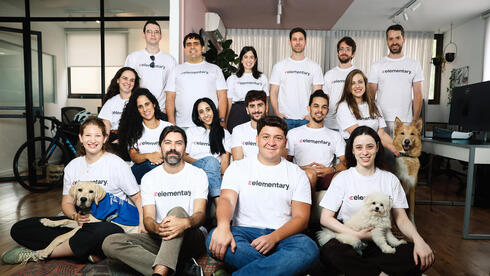
Boomi acquires Israeli startup Elementary for $43 million
1 week ago
 Business
Mega chicken farm expansion plan withdrawn
1 week ago
 Business
Data Breach at Hankyu Hanshin Department Store Common ID System Affects Nearly All 1.26 Million Members
1 week ago
 Business
Global Startup EXPO and Nippon Startup Awards 2026: METI Showcases Japan's Deep
1 week ago
 Business
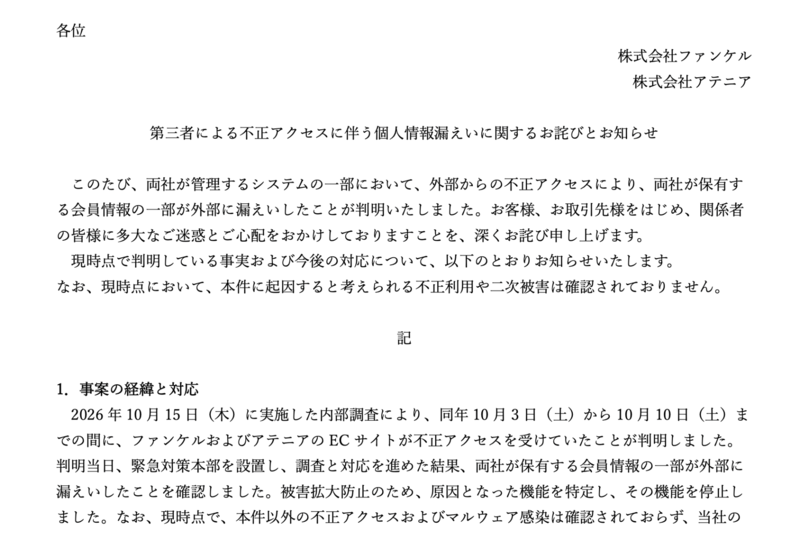
FANCL and Attenir Suffer Data Breach Affecting 780,000 Customers, Exposing Addresses, Names, Phone Numbers
1 week ago
 Business
DeepSeek Quietly Ships V4.1-Flash
1 week ago