
The world's top cities for 2026
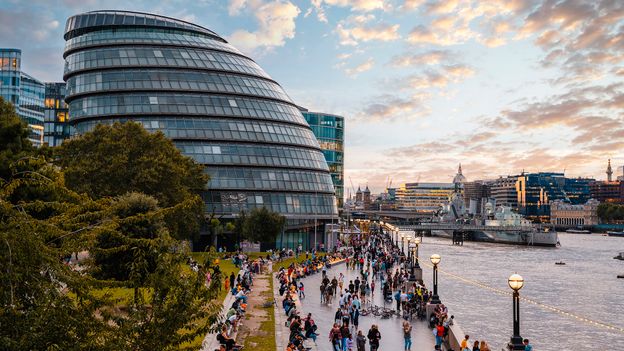
The world's top cities for 2026 - and why they stand out
From cultural investment to cutting-edge technology, the 2026 Global Cities Index reveals what makes the world's leading cities such compelling places to live and visit.
What makes a city stand out on the world stage – and what makes it a great place to visit? According to Oxford Economics' 2026 Global Cities Index, the answer goes far beyond economic clout or beautiful architecture.
The index ranks 1,000 cities across five measures: governance, economics, human capital, environment and quality of life. New York, London and Paris top this year's list, while cities including Seattle and Dublin rank highly.
Top 10 global cities for 2026, according to the 2026 Global Cities Index
Looking across the leaders and standout performers, four qualities stand out – and they help explain why some cities remain so compelling to live and visit.
1. They attract people from everywhere
The world's highest-ranked cities tend to score strongly in human capital, a measure that captures the skills, education and diversity of their populations. That influx of talent and ideas can reshape neighborhoods, food and culture in ways that benefit both locals and travellers.
Boston, ranked seventh in the index, scored particularly highly in human capital, helped by its extraordinary concentration of leading universities and colleges. With its high "knowledge economy", the city earns some of the highest incomes in the world. Some of that wealth goes back into public spaces, including the Rose Kennedy Greenway, a former elevated highway now lined with gardens, fountains and public art, while institutions such as the Harvard Art Museums are open to the public.
Dublin, ranked sixth, benefits from a highly skilled workforce supported by institutions like Trinity College Dublin, attracting major international companies like Google, Meta, Microsoft and Accenture and contributing to the regeneration of former docklands and public spaces around the River Liffey.
And London goes even further: it ranks first in the index for human capital, drawing workers from around the world, with foreign-born residents making up nearly 40% of its population. Its diversity has helped transform the city's once-maligned food scene, which travellers can sample everywhere from Brick Lane to Borough Market.
Economic power alone doesn't make a city compelling, however. Paris, ranked third overall, scores especially strongly for quality of life, helped by long life expectancy and exceptional access to culture. The city has around 130 museums, with 11 municipal museums offering free entry to their permanent collections since 2001, regardless of nationality of country of residence. Many others also have free admission at least once a month.
Seattle, ranked fourth overall, also benefits from a strong quality-of-life score, with the report pointing to the city’s rich art offerings such as the Seattle Art Museum and its grunge music history, spawning rock bands like Nirvana and Pearl Jam. The city recently completed its 20-acre Waterfront Park, replacing a demolished motorway with a walkway that includes new community piers and bike lanes alongside Puget Sound views.
3. They make urban life cleaner and easier
A city can be exciting and culturally rich, but poor air quality or difficult transport can quickly sour the visitor experience.
• The world's best countries for expats in 2026
• What it's like to live in the world's most liveable cities in 2026
• The most anticipated restaurant openings of 2026
Despite its massive size, London performs unusually well on environment measures for a city of its scale. Oxford Economics points to policies such as the congestion charge and the Ultra-Low Emission Zone as factors helping to reduce traffic and pollution, changes travellers can feel in less car-dominated central streets.
San Francisco also scores strongly in the environment category. The index cites its transport network as one reason residents and visitors are less reliant on cars, which keeps emissions low and air quality high. Dublin performs strongly too, thanks to its comparatively low pollution levels and ambitious climate initiatives, which include reaching climate neutrality by 2030.
Some of the fastest-rising cities in the index are being propelled by technology. San Jose, ranked eighth overall, had the highest GDP per person in the index, thanks to corporations like Alphabet (Google), Apple and Nvidia calling Silicon Valley home. In nearby San Francisco, home to Meta, Uber and Salesforce, driverless cars are now part of everyday transport, offering travellers a glimpse of what urban mobility might look like elsewhere in the future.
Tallinn, the capital of Estonia, also made the index's Cities to Watch list, due to its momentum in the tech industry and its high rate of AI adoption compared to other European capitals. High-tech projects like Rail Baltica, set to connect rail travel through the Baltics by 2030, is being built entirely as a "digital native" railway, allowing it to be 100% powered by renewable energy and 5G communication systems instead of physical signal lights.
If you liked this story, sign up for The Essential List newsletter – a handpicked selection of features, videos and can't-miss news, delivered to your inbox twice a week.
For more Travel stories from the BBC, follow us on Facebook and Instagram.
Related Stories
 World
World
Austrian Painter horse renamed after complaint it referenced Adolf Hitler
4 minutes ago
 World
World
Russia could attack a Nato country within months, Danish intelligence says
5 minutes ago
 World
World
Infantino pledges 'culture of dialogue' after uproar over World Cup sell
1 hour ago
 World
World
Watch: Trump anticipated Xi's visit for months
1 hour ago
 World
World
This Pillar Might Hold the World’s First Architectural Blueprint
2 hours ago
 World
World
Sankt Wendel ready for the 2026 FIM SuperMoto of Nations
4 hours ago
 World
World
Israel’s Netanyahu takes the U.N. stage facing global isolation and a fight for his political future
4 hours ago
 World
World
Trump highlights agenda at UN
5 hours ago