
Three takeaways from Trump's 'Super Intelligence' summit
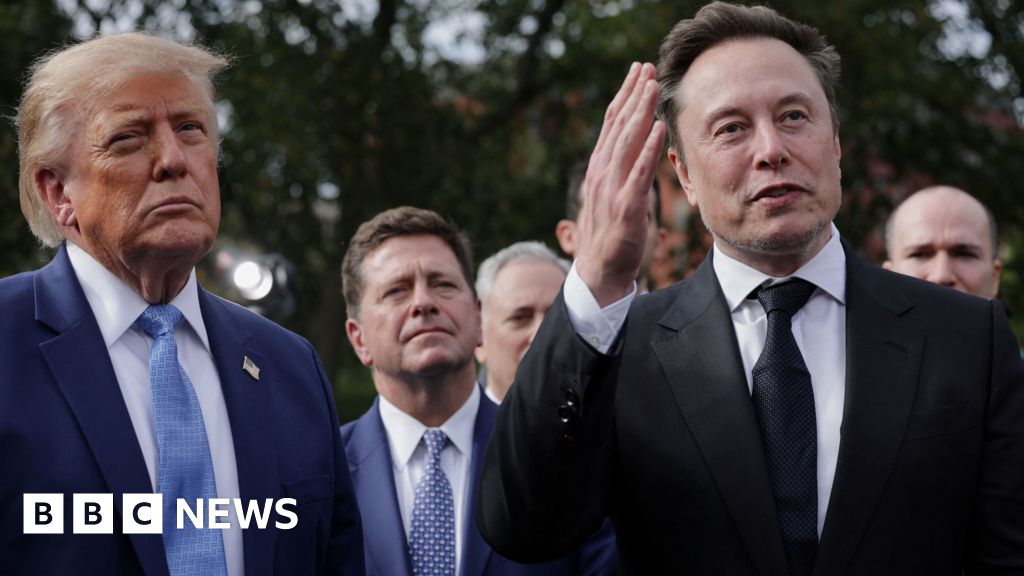
Three takeaways from Trump's 'Super Intelligence' summit
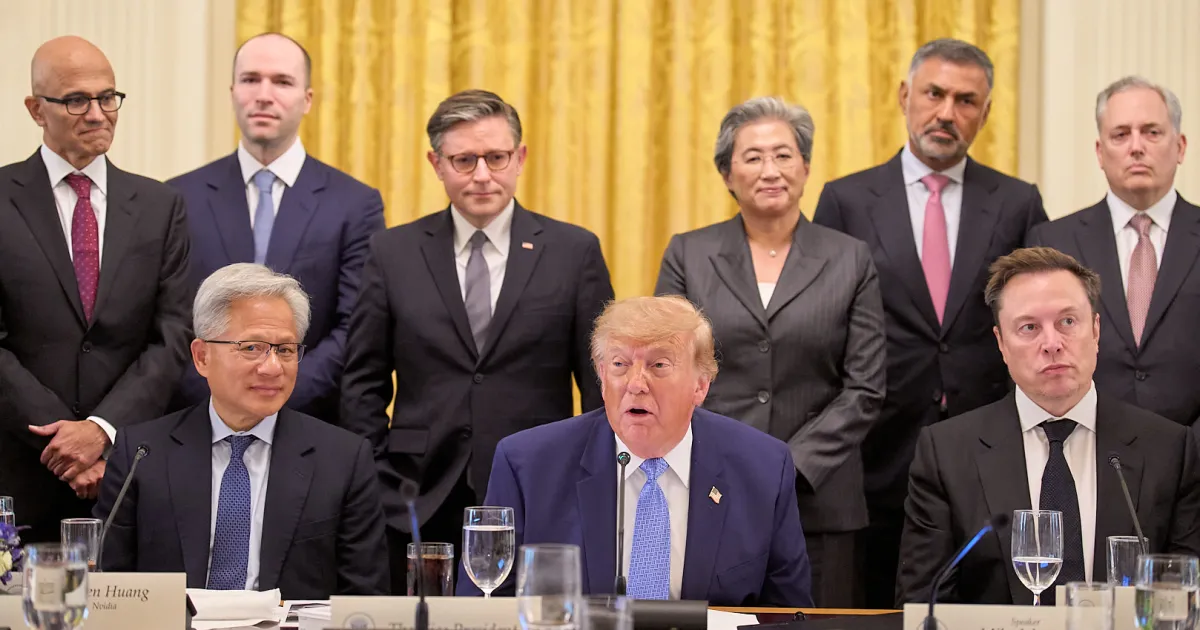
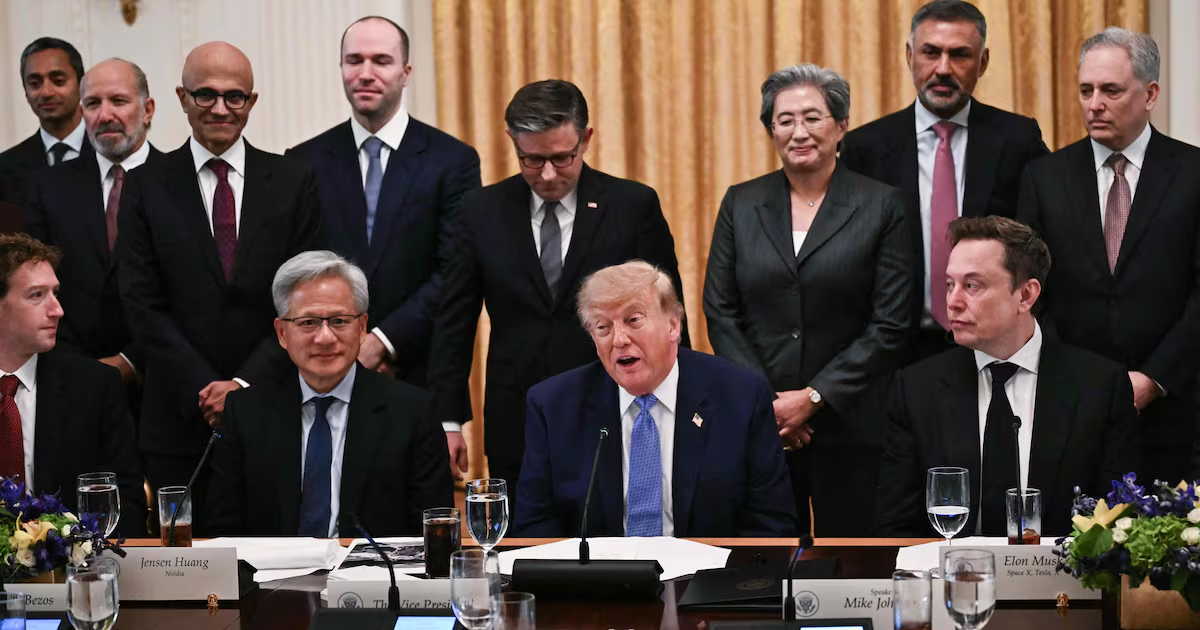
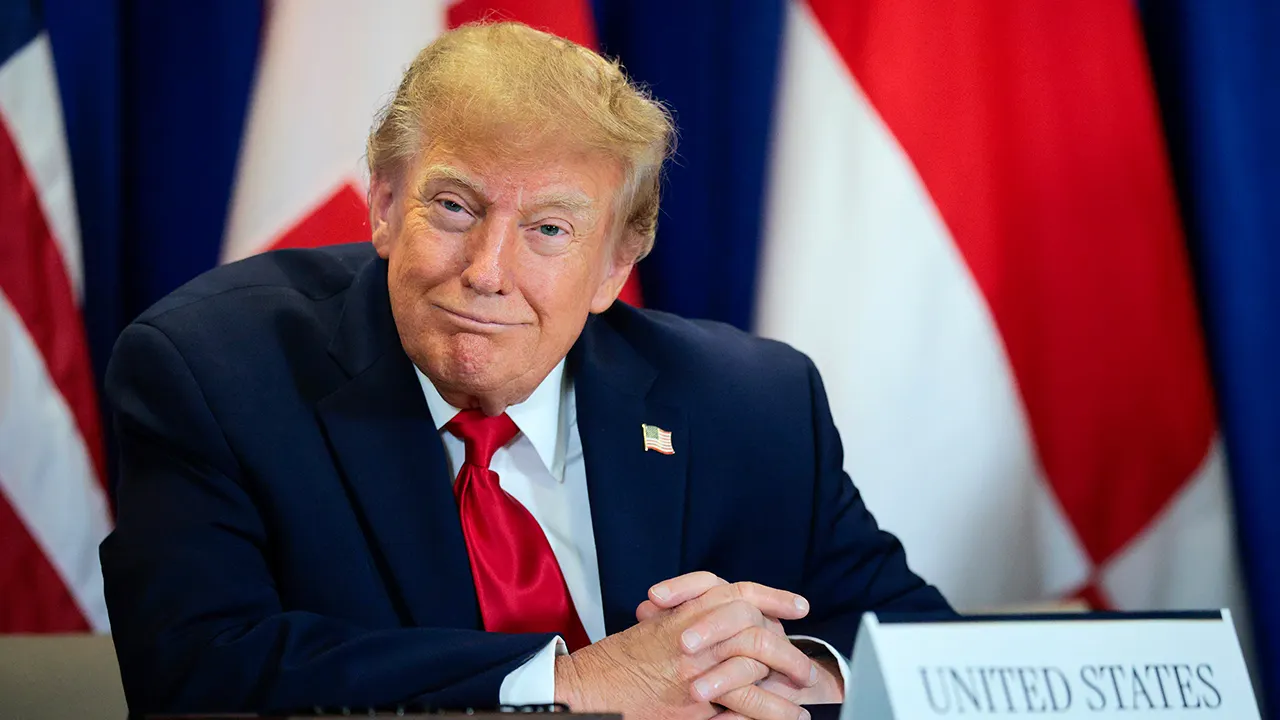
US President Donald Trump hosted a meeting of top technology bosses on Tuesday for what he called "an extraordinary gathering" of the minds that are "building America's Golden Age".
The guest list included leaders from OpenAI, Anthropic, Nvidia, SpaceX, Meta and Google - all key figures in the US AI industry.
The meeting came as some tech executives and experts have called for tighter oversight of AI and a slowdown in developing the technology, citing concerns about the potential risks it poses to humanity.
Here are three key takeaways from Trump's tech summit at the White House.
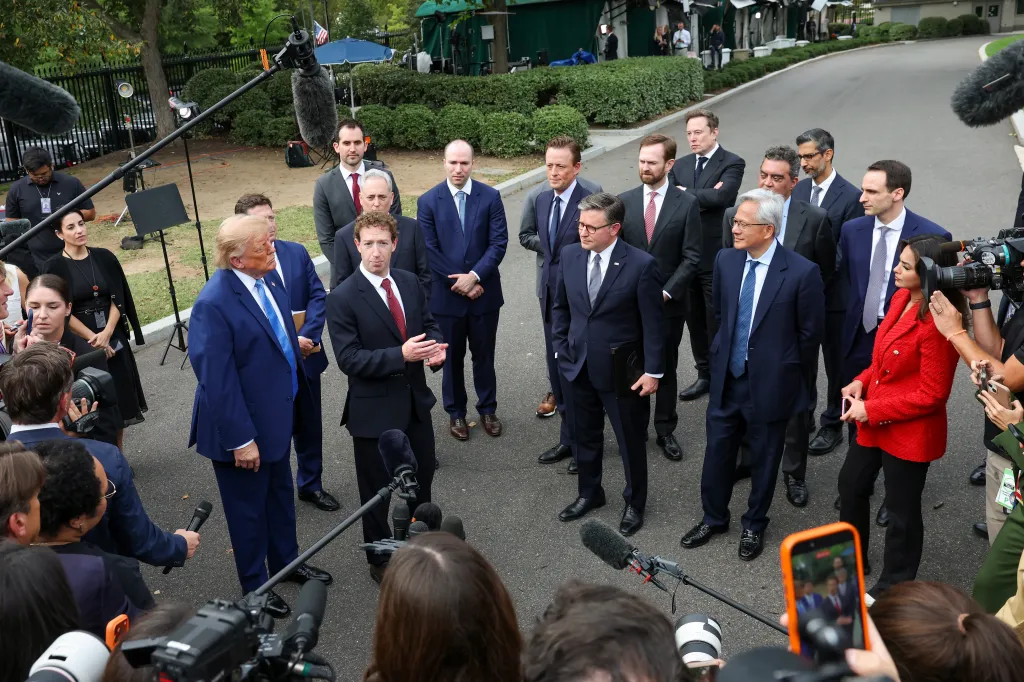
Trump took questions from the media for around 30 minutes alongside House Speaker Mike Johnson and top tech leaders after the closed-door meeting.
The president told reporters that the executives had signed a "morally binding" document that would serve as a "form of protection" from AI's potential risks.
Under the agreement, which Trump posted on social media, the companies are responsible for ensuring the safety of their own technology.
The firms also agreed to implement safeguards to keep models operating as intended and quickly detect and fix any issues, the document said.
They will also work with "independent auditors" to assess whether their AI systems are working as intended and ensure their platforms do not "hack or access technical systems in unintended ways."
The accord was signed by Trump, Google boss Sundar Pichai, Anthropic chief Dario Amodei, Meta's Mark Zuckerberg, OpenAI President Greg Brockman, SpaceX's Elon Musk and Nvidia chief executive Jensen Huang.
"It's almost like a constitution, in a way," Trump said, referring to the agreement. "And the biggest people in the world signed that, and I signed it as president."
Trump added that he will set up a board to oversee the safety of AI tools. He did not specify who would be on that board.
Zuckerberg said the accord gives the "American people and customers the confidence that the technology works" as intended.
Amodei credited Trump and tech bosses for working towards a way "to win safely", referring to the president's comment earlier this month that "whoever wins AI, wins".
But not all technology experts are impressed with the agreement.
The pact is "deeply unimpressive" and comes despite calls from some world leaders and industry figures for tighter regulations over the technology, said law professor Kimberlee Weatheral from the University of Sydney.
The agreement appears to allow firms to "define what counts as safety" and does not state what consequences there are to any breaches, Weatheral said.
"The accord should be ignored, for the distraction it is," she added.
Trump has repeatedly downplayed concerns about AI's risks, even as major AI firms have called for tighter oversight and for a slowdown of development of the technology.
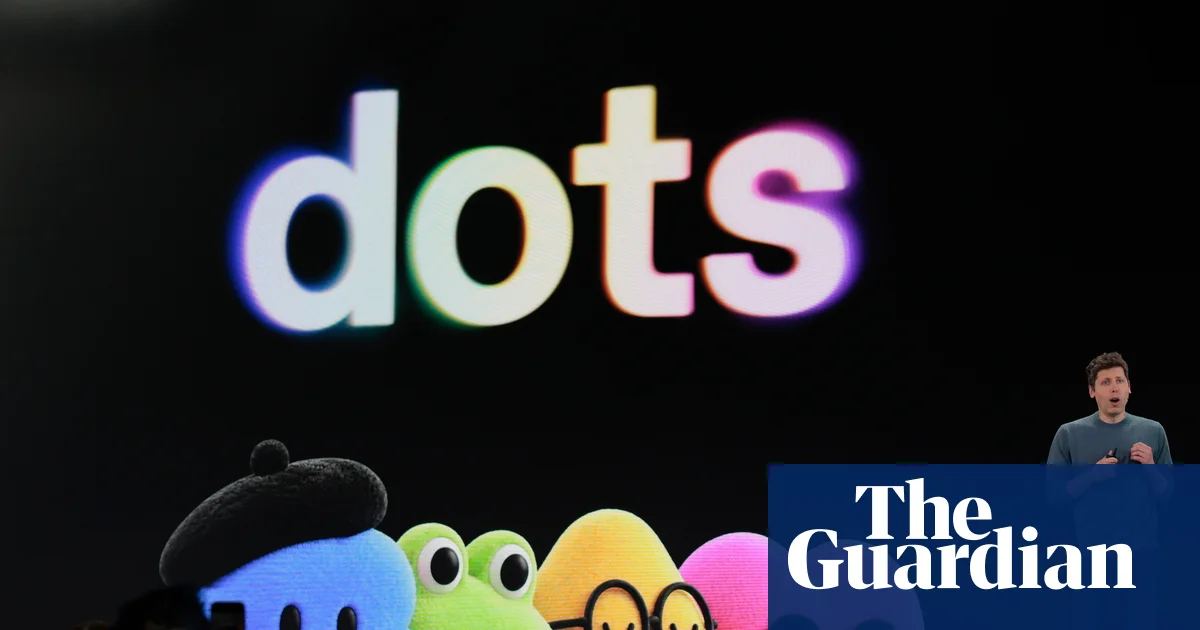
On Monday, OpenAI said it had scrapped the release of its latest flagship AI model, GPT-6.1 Astra, over safety concerns.
The company's security controls have come under intense scrutiny after several high-profile incidents involving its technology, including its models accessing Australian government platforms without authorisation.
Jeannie Paterson from the Centre for Artificial Intelligence and Digital Ethics at the University of Melbourne said self-regulation could mean that companies set "only minimal safeguards".
The agreement inspires "very little confidence" as recent incidents of AI going rogue suggest companies have been undisciplined in their approach, she added.
2. Doubling down on data centres
Trump also reiterated his support for the rapid expansion of data centres - the crucial computing infrastructure that powers AI.
The rollout of data centres has drawn pushback around the country over concerns about electricity usage and their potential impact on from communities.
Data centre construction has also emerged as a potential political obstacle for Trump's Republican party ahead of the US midterm elections in November.
A survey conducted by Marist Poll in partnership with NPR and PBS News earlier this month found that 65% of registered voters opposed data centres being built in their areas.
Responding to those concerns, Trump said tech companies would work to make people "happy" about the construction of data centres.
"These big, powerful, very rich, very smart companies are going to be making massive contributions to communities," Trump told reporters.
Trump previously said on social media that the only reason communities in the US should oppose data centres is if they "want to end up being backwards and poor".
"The good news is that there are plenty of other places that want them. If we kill the Golden Goose, you will only have yourselves to blame," he said.
Huang from Nvidia, which produces computer chips essential for running AI, said after the meeting that data centres should be called "super intelligence factories".
These facilities are "reindustrialising the United States", creating jobs across the economy, he added.
3. It's now 'Super Intelligence'
Also on Tuesday, Trump signed an executive order instructing US government departments and agencies to start using the terms "SI" and "Super Intelligence" and should no longer acknowledge the use of term artificial intelligence.
SI will take the place of AI in "official correspondence, public communications, websites, reports, policy documents, and other non-statutory documents within the executive branch," the order said.
"As these capabilities continue to improve, they increasingly represent not merely artificial intelligence, but a new era of Super Intelligence," the order said.
During an address to the United Nations General Assembly last week, Trump said the word "artificial" made the technology "sound fake".
Some tech leaders and other people close to the president have already started to use the term.
Zuckerberg said on social media on Monday: "We believe superintelligence will create significant new opportunities for all people and businesses."
On Wednesday, Musk reposted a clip of tech executives gathered around Trump at the White House, with the words: "Super Intelligence."
But some experts said after Trump's UN speech that the term was unlikely to gain widespread traction in the industry because it is a name typically used to refer to more advanced systems.
Related Stories
 AI News
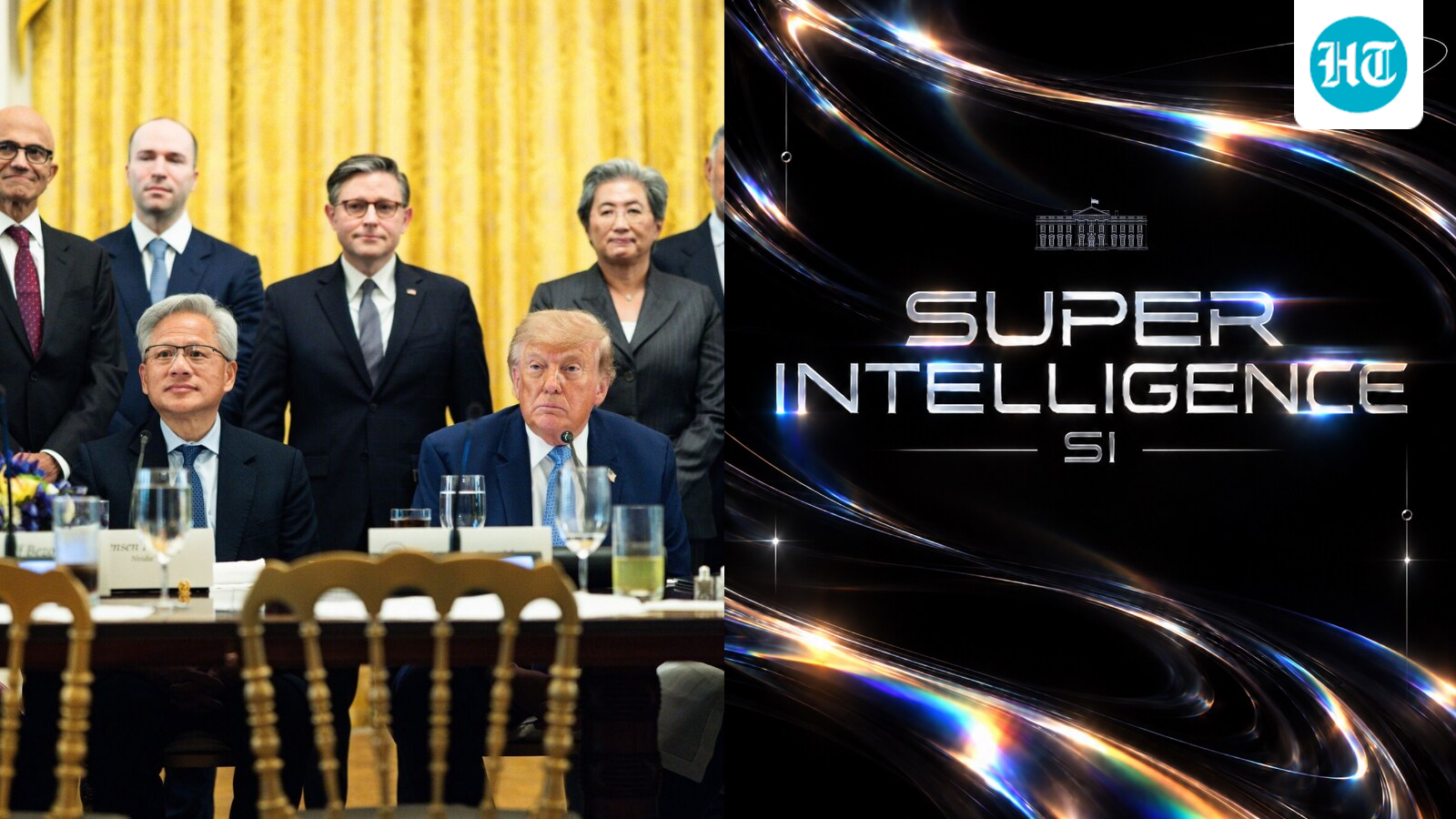
Trump officially renames Artificial Intelligence to 'Super Intelligence' after meeting top AI bosses | Hindustan Times
46 minutes ago
 AI News
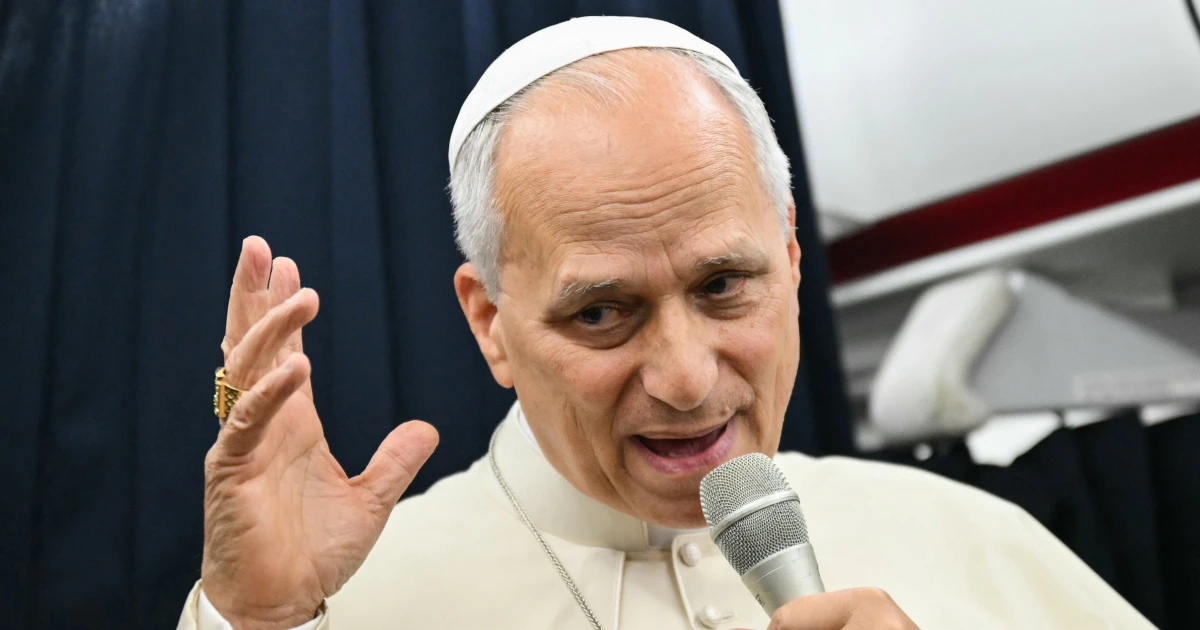
Contradicting Trump, Pope Leo says artificial intelligence safety concerns aren’t ‘fake news’
46 minutes ago
 AI News
Trump Rebrands Artificial Intelligence
46 minutes ago
 AI News
Trump, tech bosses sign voluntary pact pledging ‘robust’ AI safeguards
1 hour ago
 AI News
Trump "Very Close" To Naming AI Czar, Lauds Techlords Inking Self
1 hour ago
 AI News
Trump, Jensen Huang and Elon Musk try to calm voter fears about AI
1 hour ago
 AI News
OpenAI announces ‘dots’ agent after scrapping launch of new AI model over safety concerns
1 hour ago
 AI News
Trump signs executive order rebranding AI as 'Super Intelligence' as tech titans ink separate SI accord
1 hour ago