
Toronto under air quality warning due to wildfire smoke after city tops sweltering 36 C
Toronto under air quality warning due to wildfire smoke after city tops sweltering 36 C
Tuesday's 36.2 C came close to previous July 14 record of 36.7 C set at Pearson Airport
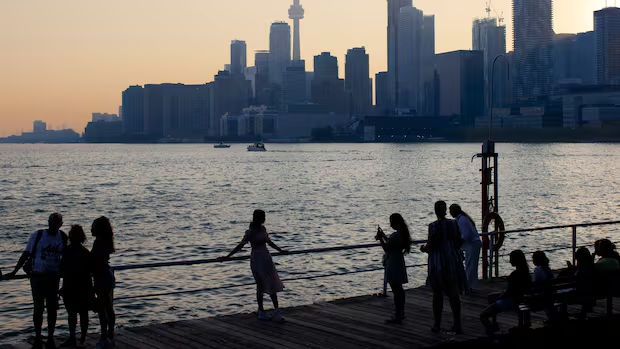
Environment Canada is warning of poor air quality in Toronto due to wildfire smoke after the city reached a sweltering 36 C in the late afternoon Tuesday.
In a yellow-level air quality warning, the federal weather agency says smoke from forest fires in northwestern Ontario is causing or expected to cause poor air quality and reduced visibility. The smoke is affecting much of southern Ontario.
The poor air quality is forecast to begin Tuesday night and may last through to Wednesday, the weather agency says. The warning comes as the city remains under a yellow heat warning.
"As smoke levels increase, health risks increase. Limit time outdoors. Consider reducing or rescheduling outdoor sports, activities and events," Environment Canada says.
Residents may experience mild and common symptoms such as eye, nose and throat irritation, headaches or a mild cough. More serious but less common symptoms include wheezing, chest pains or severe cough.
Those more likely to be affected by smoke include people 65 and older, pregnant people, infants and young children, people with an existing illness or chronic health condition and people who work outdoors.
Meanwhile, Toronto came close to a record high temperature on Tuesday, set at Pearson International Airport in 1995.
The temperature at Pearson airport reached 36.2 C by 4 p.m. on Tuesday with the humidity making it feel closer to the mid-40s, Environment Canada said on its website. Tuesday was the peak of a heat wave that began Monday and is expected to last until Wednesday evening.
The highest temperature ever recorded for July 14 at Pearson airport was 36.7 C. The hottest day of 2026 so far approached that figure, when Canada Day saw a high of 36 C.
People urged to stay inside during hottest part of day
City officials encouraged people to stay inside during the heat of the day.
But even after the sun goes down, the overnight low is expected to be 26 C and the city is keeping eight pools open until 11:45 p.m. to provide a place to cool down late.
Toronto has also opened more than 500 cooling spaces, including a 24-hour cooling space at 136 Spadina Road. The city’s shelter system is opening additional temporary space for people living on the street.
Still, it’s not easy for unhoused people to find relief in the city, says outreach worker Lorraine Lam, and many people she works with are seeking relief in shady parks and air-conditioned spaces with limited hours.
“The heat climate emergency is worsening and there are more and more people who don't have access to city spaces,” she said.
Number of days above 30 C nearly double for mid-July
Toronto’s heat relief measures will be in effect beyond Tuesday.
Should Environment Canada’s forecast hold, Wednesday will be the 13th day this year that it will be above 30 C in Toronto. Usually the city would register just seven days that hot by mid-July, says Environment Canada climatologist emeritus Dave Phillips.
As the heat persists, Toronto Public Health is warning that young children, the elderly, those with chronic illnesses and the unhoused are most at risk for heat exhaustion and heat stroke.
Anyone showing signs of heat stroke should call 911, it said. Symptoms of heat stroke include red and hot skin, nausea, dizziness, confusion and change in consciousness.
“You can go from feeling somewhat unwell to really dangerously unwell quite quickly,” said the agency's associate medical officer of health, Dr. Howard Shapiro.
The agency says there were 39 heat-related emergency room visits recorded during Toronto’s first heat event of the summer between June 30 and July 4.
During Environment Canada’s yellow heat warning for the city, the agency is urging the public to turn on air conditioning, drink water often, close their blinds and limit exposure to the sun. Residents should wear lightweight, light-coloured and loose-fitting clothing, as well as a hat.
Air quality in Toronto was also ranked as moderately risky Tuesday, Environment Canada says.
With files from Michelle Song, Clara Pasieka and Dale Manucdoc
Related Stories
 AI News
Messi vs. Bellingham could be the story of the World Cup semifinal between England and Argentina
3 minutes ago
 AI News
Texas is drenched by heavy rains as forecasters warn that more storms could bring dangerous floods
3 minutes ago
 AI News
China’s monthly car exports top 1m for first time as overall trade soars
3 minutes ago
 AI News
Trump will speak on elections in primetime address after pushing debunked conspiracies
3 minutes ago
 AI News
Uttar Pradesh Congress Challenges 'One Nation
4 minutes ago
 AI News
Okotoks welcomes Canada's best baseball teams
5 minutes ago
 AI News
ARC Resources shareholders approve Shell's $22B acquisition proposal
5 minutes ago
 AI News
Ottawa to create facility for military drone research in Quebec
5 minutes ago