
Trump will not renew USMCA, toppling one of the last pillars of stability in global trade
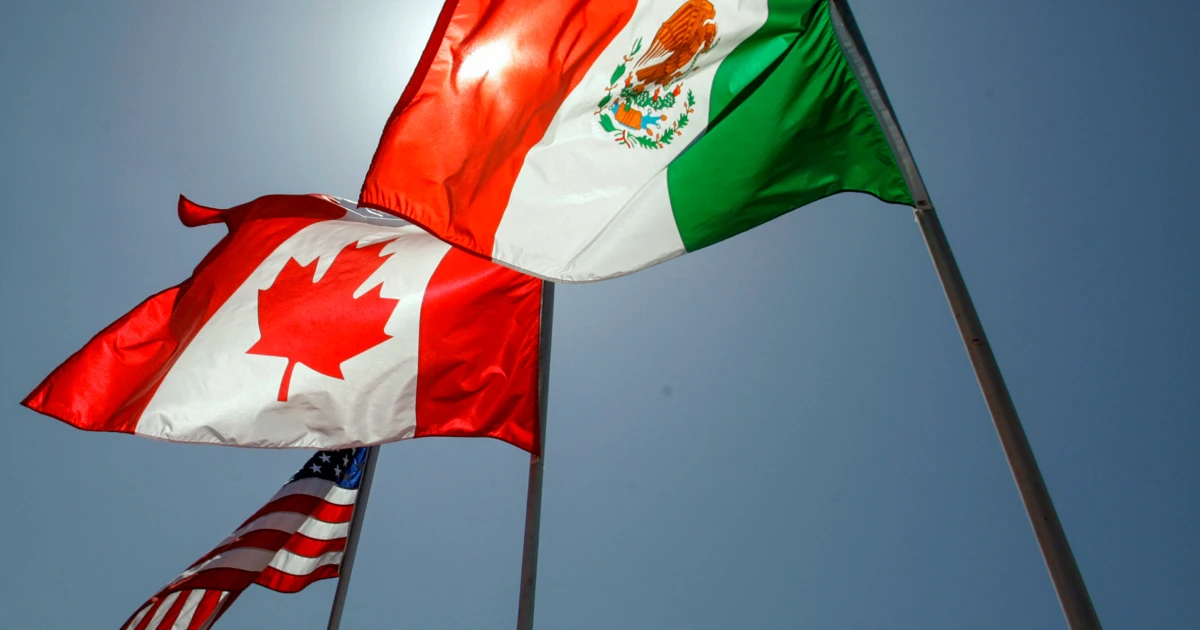
Six years to the day after the US-Mexico-Canada Agreement on trade entered into force, the Trump administration announced Wednesday that it plans to pull the plug on a deal widely viewed as a successful and stabilizing force across North America’s three largest economies.
Limited time: Save 25% on NBC News subscription
Get exclusive reporting, live Q&As and ad-free reading.
Instead of renewing the deal, a senior Trump administration official told reporters the United States will begin of a decade of negotiations on amendments to the deal.
One potential outcome of these negotiations is that Washington could reach separate, bilateral trade agreements, one with Mexico and another with Canada.
The move, which had been telegraphed by the administration for several months, nonetheless represented a stark reversal for President Donald Trump, who negotiated and signed the USMCA deal in 2018 after he pulled out of the North American Free Trade Agreement.
A year later, Trump called the USMCA “the best and most important trade deal ever made by the USA” in a social media post.
Fast forward seven years, and now the administration claims the deal failed to accomplish its stated goals of modernizing and rebalancing trade between the three countries.
“The primary issues that the president’s been focused on with the world, and particularly with Canada, Mexico, is our trade deficit,” a senior Trump administration official said on the press call.
“When USMCA was adopted six years ago by a bipartisan majority, and the president’s approval, the idea is that we would modernize the agreement and it would also lead to rebalancing. The agreement did succeed in modernizing the agreement,” said the official. “But with respect to rebalancing, our trade deficits with both Mexico and Canada shot up during the Biden administration.”
“We’ve started to get it under control, but we believe that the USMCA did not operate to control the deficit like the president intended, so that’s really the heart of it,” the official added.
Widely viewed as one of the few remaining pillars of stability in the Trump era world of global trade, the collapse of USMCA will amplify economic uncertainty for small and large businesses in all three countries.
However, the senior Trump administration official stressed that the White House is not interested in dragging out talks for the entirety of the ten years, saying periodic reviews are a feature of the deal.
“It’s called the Joint Review, and the idea was to make sure that any agreement between Mexico, Canada, and the United States always put America first, rather than let a trade deal persist on autopilot over decades,” the official said.
From the beginning of his second term, Trump has made sweeping global tariffs the centerpieces of his economic policy. Against this backdrop, the president and his aides have repeatedly taken issue with the tariff exemptions on USMCA-compliant goods that are at the heart of the deal.
But there were also hints on Wednesday of the more targeted animosity that has been growing between Washington and Ottawa in Trump’s second term.
Specifically, the senior official took issue with Canada’s decision last year to retaliate against Trump’s tariffs.
Mexico, which did not impose tariff retaliation measures, is currently engaged in talks with the White House about the future of the deal, the Trump administration official told reporters.
Dominic LeBlanc, the Canadian minister responsible for U.S. trade relations, said in a statement Wednesday that he had met with U.S. Trade Representative Jamieson Greer earlier that same day, and that Canada is “unwavering” in its support for the trade deal.
“Canada approaches these discussions from a position of strength and with the goal of preserving and strengthening one of the most successful trading relationships in the world,” said LeBlanc.
He also took a not-so-subtle dig at Washington, saying, “At a time of global economic uncertainty, Canada is a stable, reliable and trusted partner.”
LeBlanc noted that the agreement “remains fully in force until 2036 and can be renewed at any time for another 16-year period.”
In the years since the deal was implemented in 2020, the USMCA has indisputably boosted trilateral trade between the three parties to it.
“Total intraregional trade in goods” soared from $1.07 trillion in 2020 to more than $1.63 trillion in 2024, according to research from The Brookings Institution.
Stateside, businesses and trade groups have expressed mixed feelings about USMCA.
“North American economic integration enables enormous competitive benefits for the region,” the American Automotive Policy Council said in a statement Wednesday.
But the group also claimed that U.S. automakers “face a disadvantage versus imports from countries whose exports face a flat 15 percent tariff and are not subject to comparable rules of origin. We urge a swift and durable resolution that ensures a level playing field and provides long-term certainty needed for capital-intensive automotive investments.”
The Business Roundtable, which represents many of the largest American companies from JPMorgan Chase to Home Depot to Hilton and Pepsico, said the deal has resulted in “significant economic benefits.”
“As the agreement reaches this important milestone, the three governments can better align policies against unfair trading practices, reduce regulatory and economic friction within the region, and ensure North America is better positioned to compete with non-market economies,” the business group said, while urging Washington to “strengthen and extend USMCA.”
Related Stories
 World
World
Manchester United weigh up stunning move for Real Betis and ex-Tottenham forward Troy Parrott
1 week ago
 World
World
Israeli police arrest 10 following weekend attacks by settlers on journalist and diplomats
1 week ago
 World
World
Trump says suspension of Russia sanctions is to keep peace negotiations going
1 week ago
 World
World
Ukrainian drones strike St. Petersburg oil facilities | NHK WORLD
1 week ago
 World
World
Victoria Falls stadium in Zimbabwe nears completion for CWC27
1 week ago
 World
World
‘The world will be amazed:’ Iran’s commanders prepare for further war
1 week ago
 World
World
Festival opens with musket salute in Sakai, Osaka
1 week ago
 World
World
Trump's new pitch for Republican candidates — they're really good
1 week ago