
University of Pennsylvania: Successful Alumni Who Founded Startups
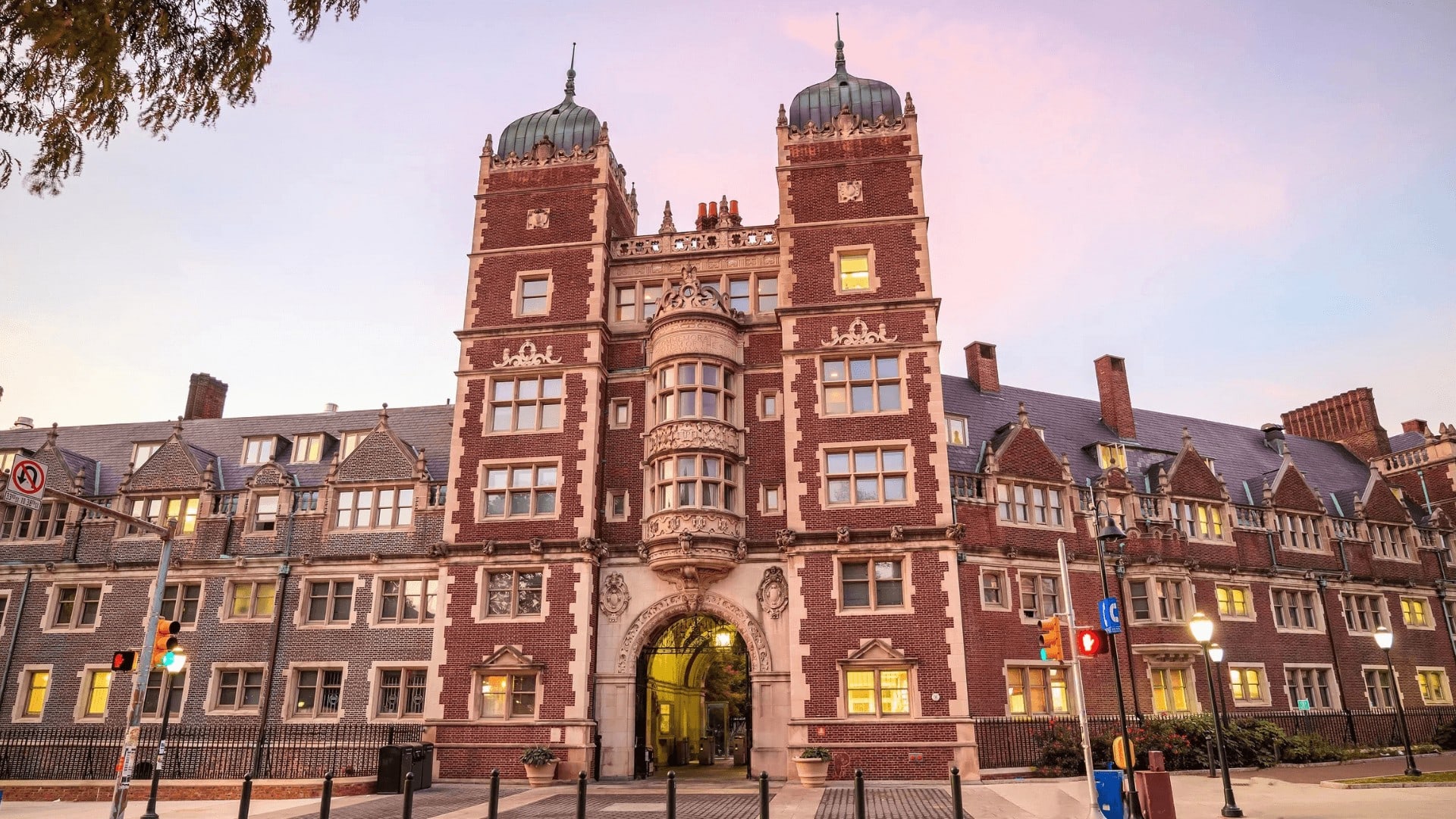
A robot that helps tree surgeons work safely may appear to have very little in common with a baby equipment rental service. But at the University of Pennsylvania, they both belong to a growing number of businesses built by graduates who noticed a problem and decided to create a solution for it.
Penn has quite the entrepreneurial reputation which includes some big names such as Elon Musk. But the smaller ventures are often just as interesting and they tend to reveal what happens when someone brings professional experience or a personal frustration to a business idea.
The individuals mentioned here each have different connections to the university. Several are alumni founders while others are executives or researchers helping Penn ventures to reach customers.
What Makes Penn’s Startup Landscape Stand Out?
Penn gives budding entrepreneurs access to people who understand the different parts of building a business. Venture Lab welcomes students from across the university, bringing together business, engineering, design and other disciplines into the same entrepreneurial community.
The Lab’s home, Tangen Hall, boasts a design studio, a retail lab and a food lab for students to work on physical products alongside their business plans.
Penn’s researchers also develop businesses in areas such as medical devices and digital health. To be able to turn an invention into a useful product, they need people who understand customers and how to run a business. Penn is where these people come together to be able to launch and scale.
10 Successful Alumni Who Founded Startups
Some of these Penn entrepreneurs started with an idea during their studies, while others found inspiration later on in their careers. Their ventures span robotics, transport and healthcare, with each taking a slightly different route from an initial concept to a working business.
Elon Musk studied physics and business at Penn, receiving his degree in 1997. He founded SpaceX in 2002 to make space more accessible, pursuing a business in an industry that had formidable technical and financial barriers. Musk has often traced his interests in sustainable energy and space exploration back to his university days.
He then joined Tesla as a major investor in 2004 after the company had been established and became CEO in 2008. His financing and leadership helped to turn the young electric car business into a major manufacturer as we know it today.
Musk’s Penn background brought together two subjects that would remain closely connected throughout his career, those being how technology works and how to build a business around it.
Sundar Pichai’s early work at Google included overseeing its browser toolbar which was a pretty modest starting point for someone who would eventually lead both Google and its parent company, Alphabet. After earning his Wharton MBA in 2002, he joined Google in 2004.
Chrome became quite an important part of his career, launching in 2008 and Pichai later assumed responsibility for Chrome and Apps, followed by Android and a wider range of Google services. In 2015, he became Google’s CEO and Alphabet’s CEO four years later in 2019.
While Pichai was not the founder of either company, his place in Penn’s entrepreneurial story comes through that leadership. Taking on responsibility for products used across the world requires a certain set of demands and that’s exactly where he built his reputation.
Before completing his Wharton MBA in 2025, Jon Kokot served as a White House military social aide and a US Navy legislative affairs officer. His background gave him a useful starting point to launch Civic with fellow Penn alumnus Julian Trajanson.
Civic is a platform that helps public-sector staff make sense of information arriving at their offices. Its tools include email organisation, summaries of policy issues and sentiment tracking. The aim is to make it easier for staff to understand what people need and respond without becoming buried in too much admin work.
Margaret Zhu and her colleagues began working on equipment that could change how parts of tree surgery are done. Their company, Serpent Robotics, is developing a rope-climbing robot that can be controlled from the ground to cut branches and help manage their descent.
Zhu, a finance major in Wharton’s class of 2026, co-founded the venture with colleagues from Penn Engineering and its Integrated Product Design Programme, and received a 2026 President’s Innovation Prize with the company winning the $50,000 runner-up prize at Penn’s Startup Challenge.
Bo Zhao completed her Wharton’s executive MBA in 2018 and as a former engineer, she intended to continue working in her family’s furniture business and starting her own company was not the obvious next step. But after becoming a parent, she found herself facing the combination of expensive equipment, confusing choices and a collection of things her child no longer needed.
Baby Gear Group was born out of those frustrations, offering rentals and subscriptions that let families return equipment once they were finished with it. By May of 2025, Baby Gear Group was operating in five US locations and Zhao has often sought advice from her Wharton classmates on her business model.
When you’re behind the wheel, the potential consequences of reaching for a phone when it demands attention can be devastating. Ted Chen co-founded LifeSaver Mobile to give employers a way to restrict mobile phone use while their fleet drivers are driving.
Chen graduated from Wharton in 1987 and Penn Law in 1991. The company’s software works on employees’ phones, restricting screen use and enforcing hands-free calling. It gives organisations a practical means of applying their driving policies, beyond asking staff to follow a set of rules.
Dr Angela Bradbury is a Penn faculty member with expertise in oncology, genetics and medical ethics. She founded Penn’s Telegenetics Programme which provides remote genetic services to medical practices without access to genetic specialists.
She is the founder of Lucidigene which develops digital health tools for patient education and the delivery of genetic testing. It remains an early-stage venture but the purpose follows naturally from her clinical work which is helping healthcare services communicate complex information in ways that patients can understand.
Christine Rohan was looking for advisory board opportunities when she was introduced to PCI Ventures in 2021. Vasowatch had recently joined its portfolio and the founders were looking for someone to lead the business. After several months of discussions, Rohan became the CEO in 2022.
Vasowatch is developing technology to assess the risk of postpartum haemorrhage, with the aim of giving clinical teams earlier warning of potential complications and Rohan has brought experience from GE, the Blue Cross Blue Shield Association and other healthtech startups.
Det Ansinn has spent years helping companies turn technical ideas into working products. He founded BrickSimple, a software and medical device development firm and then went on to work with Neuralert Technologies before becoming the CEO. His educational background is at Drexel, while his Penn connection comes through Neuralert’s research origins.
Neuralert was developed to address the problem of strokes going undetected in hospital patients. Its wrist-worn technology monitors differences in arm movement that can possibly indicate a stroke, with software designed to alert hospital staff to investigate.
Orble began through a Penn senior design project and then developed into an automated drinks venture under Munch Industries. The machine allows customers to customise their bubble tea orders, bringing a familiar café purchase into a self-service setting.
By April of this year, an Orble machine was being piloted at the Accenture Café in Penn’s Towne Building which gave the team somewhere to test the product with customers who could walk up, order a drink and decide whether they wanted another. It also received the 2026 Linn Family Innovation Prize, adding university recognition to the hands-on experience of running its campus pilot.
Related Stories
 Technology
DEPO Ventures Launches Ukraine Fund
30 minutes ago
 Technology
Oman Expands Digital Skills Training Through Ericsson’s Digital Lab Programme
31 minutes ago
 Technology
Economic Community of West African States (ECOWAS) Celebrates Innovation as HubPharm Africa Wins Second Startup Awards
1 hour ago
 Technology
Top Luxury
1 hour ago
 Technology
Behind the technology powering a greener – and cheaper
1 hour ago
 Technology
Neuroscience Innovator Receives Tech Titan Award
1 hour ago
 Technology
Retail Technology News: September update
1 hour ago
 Technology
Trump’s Super Intelligence edict supercharges .si domain registrations
1 hour ago