
Venture and Startup Industry Expresses Regret Over Passage of "DoctorNow Prevention Act" ... "Innovation Stifled, Consumer Benefits Must Be Considered"

Korea Venture Business Association: "Fundamental Principles for Regulating Entry into New Industries Must Be Reviewed"Korea Startup Forum: "Success or Failure of Innovation Is Decided by Vested Interests"Calls for Legislative Revisions tha
After the amendment to the Pharmaceutical Affairs Act, which prohibits pharmaceutical wholesale operations by telemedicine platforms—commonly referred to as the "DoctorNow Prevention Act"—was passed by the National Assembly, the venture and startup industries expressed their regret.
On August 20, the Korea Venture Business Association stated, "The law has chosen the strongest form of a ban—prohibiting the entire business model of wholesaling—citing concerns over rebates and the enticement or brokering of patients, even though these issues could have been regulated sufficiently under the existing legal framework." The Association added, "This is another instance where small innovations by startups in emerging industries have been frustrated due to entry regulations and the vested interests of professional groups. Our society should take this opportunity to reflect on how it will accommodate and regulate innovations in new industries and venture businesses."
The Association emphasized, "To achieve the government's goals of becoming one of the world's top four venture economies and reaching 40 trillion won in annual venture investment, it is crucial to first overhaul the fundamental regulatory principles governing industries." It continued, "How can we encourage young people to start businesses in an environment where business models, widely accepted in advanced economies, are uniquely banned or subjected to even stricter regulations in Korea?"
The Association further asserted, "To prevent this legislation from becoming another example of 'innovation-stifling law,' like the 'Tada Ban Act,' subsequent policy design must adequately incorporate innovation and consumer benefits." It added, "In particular, the sub-regulation design under the Medical Service Act should not undermine the effectiveness of telemedicine or public access to healthcare. Furthermore, discussions on expanding medication delivery must address real patient discomfort and information asymmetry."
The Korea Startup Forum also expressed regret that its request for a reassessment of the bill—in light of the advantages and benefits experienced by the public during the review process—was not considered. The Forum stated, "Patients who have completed telemedicine consultations frequently deal with the long-standing inconvenience of having to search multiple pharmacies to find their prescribed medications." The Forum added, "If there were concerns, direct regulation of those acts, establishing tighter oversight systems, or refining the institution would have been viable options. Instead, the law has adopted a blanket prohibition, stripping away the very sustainability of the business."
The Forum pointed out, "A multitude of innovative startups have been forced to abandon their businesses due to existing regulations, and services that have enhanced consumer benefits are repeatedly eliminated through institutional means whenever they face opposition from professional groups." It concluded, "The success or failure of innovation is determined not by the market or users, but by the voices of those seeking to maintain the status quo."
The Forum urged the government and National Assembly, stating, "As the sub-regulations relating to telemedicine are revised, it is essential to listen to voices from the field." The Forum continued, "Regulations designed to close regulatory gaps must be structured with industry input so that they do not diminish public benefits. The National Assembly should continue monitoring the gaps left by this legislation and engage in further discussions to address them."
In March 2024, DoctorNow established Bijin Medicines, a wholesale supplier of pharmaceuticals. This was to resolve the inconvenience of patients who, after receiving remote medical consultations, have to visit multiple pharmacies to obtain their prescribed medicines. Bijin Medicines supplied medications directly to partner pharmacies and showcased pharmacies with available stock on the DoctorNow app. However, this practice drew criticism as potentially constituting a form of rebate.
The revised Pharmaceutical Affairs Act adds telemedicine intermediaries to the list of entities disqualified from obtaining pharmaceutical wholesale licenses. This aims to prevent telemedicine platforms from exerting influence in the distribution process by supplying pharmaceuticals to their contracted pharmacies.
Following the passage of the amendment, the Ministry of Health and Welfare, the Ministry of SMEs and Startups, and the Office for Government Policy Coordination announced plans to discuss expanding the scope of medication home delivery—currently restricted to specific groups—as the full institutionalization of telemedicine approaches at the end of the year. Starting December 24, medication delivery will be permitted for residents of islands and remote areas, long-term care beneficiaries, persons with disabilities, patients with infectious diseases, and patients with rare diseases. The government is preparing sub-regulations that will permit local neighborhood pharmacies to deliver medications but prohibit dedicated telemedicine pharmacies.
The government stated, "We are beginning discussions on expanding eligibility for remote prescription deliveries and will also discuss revising related laws such as the Pharmaceutical Affairs Act and Medical Service Act." The government continued, "A cross-government public-private consultative body with all stakeholders will be operated to ensure the stable establishment of the telemedicine service and to create an environment in which people can safely receive their medications."
© The Asia Business Daily. All rights reserved. Unauthorized AI training and use prohibited.
Related Stories
 Business
Portuguese startup wins pitch contest in San Francisco
8 minutes ago
 Business
This Miami startup thinks your home should have a signature scent
1 hour ago
 Business
Russia
5 hours ago
 Business
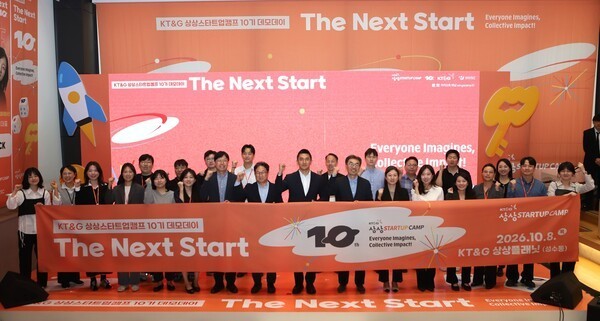
KT&G Holds Final Demo Day for 10th Sangsang Startup Camp
6 hours ago
 Business
DocuSign vs Dropbox Sign: Cost and Send Limits
7 hours ago
 Business
Salesforce acquires Israeli startup Loops in deal estimated at $30 million
7 hours ago
 Business
Poilievre to visit Detroit to push tariff
9 hours ago
 Business
Female Founder News #30
9 hours ago