
What happens next after Lindsay Clancy's murder case ends in a mistrial?
What happens next after Lindsay Clancy's murder case ends in a mistrial?
After a week of mulling Lindsay Clancy's fate, a judge has declared a mistrial in the case of the US mother accused of murdering her three young children.
It came after the jury said they could not reach a unanimous verdict on whether Clancy was guilty of murder.
The declaration opens the door to a host of possibilities about what happens next.
Clancy, who faced three counts of first-degree murder, does not deny killing her children in 2023 but pleaded not guilty, with her lawyers arguing she was suffering from postpartum psychosis and should not be held criminally responsible.
The prosecution said she made a calculated, intentional decision to kill them.
Under US law, the jury must unanimously reach a conclusion "beyond a reasonable doubt". If they cannot, the judge can call a mistrial, which ends the trial with no verdict.
Jurors in Clancy's trial had been deadlocked for days, and told the judge three times that they were unable to come to a unanimous decision.
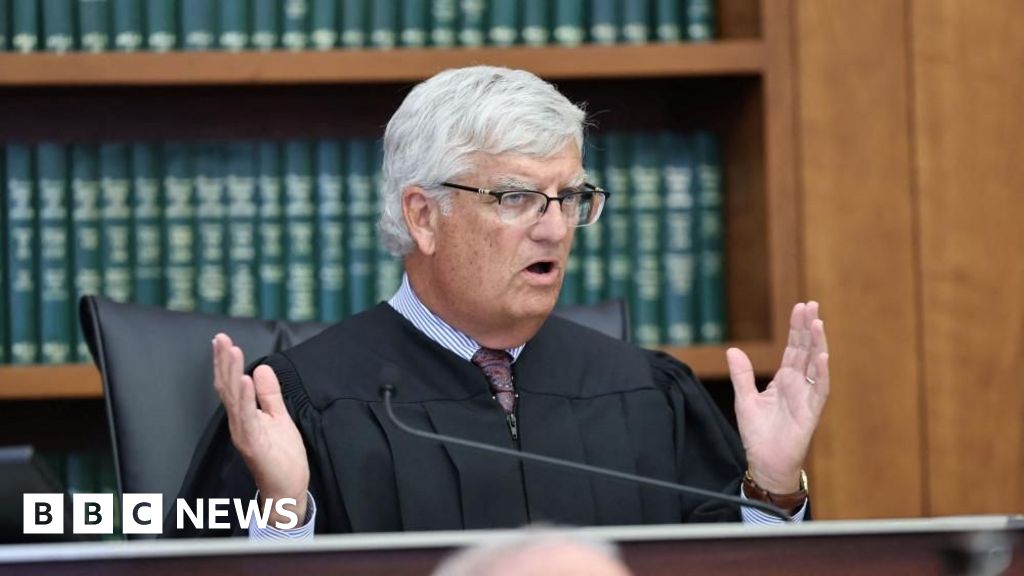
Massachusetts Superior Court Judge William Sullivan, who was overseeing the trial, previously urged them to continue deliberating until there is no possible chance of a decision.
In a last-ditch effort he issued additional instructions, known as a Tuey-Rodriguez charge in the state, encouraging the panel to consider all perspectives and ensuring jurors were questioning and examining their own views in the case.
The jury continued to indicate they could not come to a consensus, leading the judge on Friday to say he had no choice but to declare a mistrial.
This does not mean prosecutors have proven their case, nor does it mean the defendant is not guilty.
Now, the prosecution could push forward with their criminal charges and restart the trial with a new jury or negotiate a plea agreement.
Alternatively, prosecutors could dismiss the charges altogether.
Clancy will still be held under the same murder charges and remain at the mental health facility where she is currently housed as lawyers weigh their next steps.
If a new trial is planned, Clancy will remain in that facility until it begins - though her lawyers could ask for a review of her bail situation, said Heather Cucolo, a New York Law School professor and expert in mental health law.
Even if a new trial is being prepared, prosecutors could still negotiate with Clancy's team over a plea agreement, Cucolo said.
Will prosecutors ask for a new trial?
In serious felony cases like these, prosecutors often ask for a retrial.
If they do, the jury selection process will take place once again and a new trial will be scheduled with a new set of jurors.
The time it could take to schedule another trial will depend on a host of factors, including the court schedule, any legal requests either side may file, and how long it may take to line up expert witnesses.
The six-week trial in Massachusetts captured significant public interest across the globe, with crowds gathering outside the court.
"A case like this that obviously has been so high-profile, and there is so much of an emotional response to this to the facts of this case, I think it's very likely that the prosecutor will ask for a retrial," Cucolo said.
That is unclear, but it has been a complex case with each side presenting a huge amount of expert testimony.
In a note to the judge on Thursday, the panel indicated one juror wasn't following guidance on reasonable doubt.
Under US law, a jury must unanimously believe "beyond a reasonable doubt" that someone is guilty in order to convict them of a crime.
The designation is the strictest standard in the US legal system. It places the burden on the government to prove that the accused is guilty, and not the accused to prove their innocence.
Clancy's lawyer indicated that sole juror was holding up the proceedings and causing the deadlock. He asked the judge for that juror to be removed.
But the judge denied his request and the next day, he officially declared a mistrial.
The identities of the nine women and three men on the jury has not been made public, and the judge banned any photographing or filming of them to retain their anonymity.
But once a case is over, a juror can choose whether or not to speak publicly about the case and their deliberations.
Following other high-profile trials, jurors have in some instances come forward to discuss the case, even writing books or doing media interviews.
So while it remains unknown to the public what has gone on behind closed doors, more could be revealed in the coming days or weeks.
If you are suffering distress or despair and need support, you could speak to a health professional, or an organisation that offers support. Details of help available in many countries can be found at Befrienders Worldwide. www.befrienders.org.
In the UK a list of organisations that can help is available at bbc.co.uk/actionline
Related Stories
 World
World
Atlantic International Film Festival spotlights East Coast stories, global perspectives
2 hours ago
 World
World
UN moves away from map that makes Africa look small
2 hours ago
 World
World
UN votes to adopt new map that makes our world look very different
2 hours ago
 World
World
Lindsay Clancy lawyer Kevin Reddington creates courtroom spectacles
2 hours ago
 World
World
UN votes to adopt new world map that reflects Africa’s true size
2 hours ago
 World
World
The World of Motorcycling- News detail
3 hours ago
 World
World
Judge declares mistrial in Lindsay Clancy murder case after jury fails to reach unanimous verdict
4 hours ago
 World
World
Helicopter search suspended for Squamish, B.C., mountain runner missing on Matterhorn
4 hours ago