
What went wrong with U.S. trade talks, according to Canada's chief negotiator
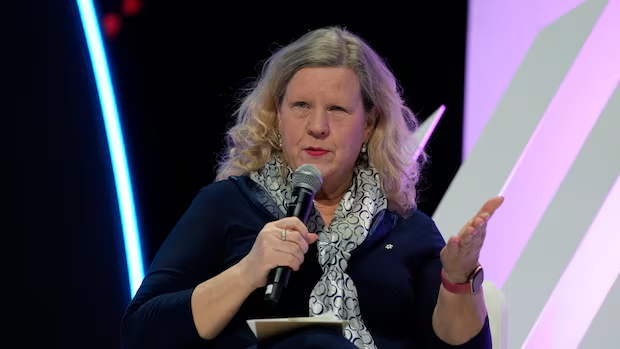
What went wrong with U.S. trade talks, according to Canada's chief negotiator
Janice Charette disputes U.S. claims that Canada's last-minute demands derailed negotiations
Canada's chief U.S. trade negotiator is disputing several claims made by American officials about why trade talks fell apart last week, namely that the Canadian side brought forward last-minute demands on autos and that U.S. negotiators weren't interested in French language discoverability rules.
"Canada has been resolute throughout these negotiations that we were talking about the entirety of our automotive sector," Janice Charette said in an exclusive interview with CBC's The House airing Saturday morning.
Charette's comments clash with those made by U.S. Commerce Secretary Howard Lutnick, who told reporters Thursday that the Canadians only brought up tariff relief on medium- and heavy-duty trucks at the last minute — and further alleged the Canadians did so to kill the deal.
"The words 'medium- and heavy-duty trucks’ were raised in these negotiations on Friday at 4 o'clock," Lutnick said. Those trucks include some models of Ford's F-series pickups and the General Motors Silverado, which are made at Ontario plants.
Charette refrained from calling Lutnick wrong, but said the Canadians raised the issue on "Monday, Tuesday, Wednesday and Thursday."
Charette says Canada consistently raised auto industry in U.S. trade negotiations
"Howard Lutnick was not at the negotiating table," Charette told host Catherine Cullen.
She added that the Canadians were speaking with U.S. Trade Representative Jamieson Greer, and it was very clear they were seeking tariff relief for those types of autos, among other sectors.
Both countries have been trading barbs over the past week about who — and what — ultimately killed a prospective trade deal that could have granted Canada tariff relief in key sectors such as autos, steel and aluminum, and lumber.
Prime Minister Mark Carney has maintained it was late U.S. demands that prompted him to call negotiators back to Ottawa, while Lutnick and Greer argue the Canadians are at fault.
Carney outlines the last-minute changes U.S. tacked onto trade deal terms
Asked whether she views the U.S. claims on what went wrong as dishonesty or merely a question of perspective, Charette chalked it up to differing opinions.
According to Charette, the Canadians were seeking an arrangement with "the lowest rate of tariffs on the narrowest basket of goods with the best market access — so the best deal overall, and the best trade deal for each of our key strategic sectors. That's what we were working towards."
Trump's top trade negotiator disputes Canadian assertion that U.S. made last-minute demands
The Canadian government understood that a U.S. trade deal would involve some degree of tariffs on its goods and tariff-free access on American products, Charette added.
"In no case has any country been able to secure an agreement unless they agreed that U.S. goods were going to enter into their market tariff-free," Charette said.
French discoverability, Canadian free trade deals
Carney has told reporters that at the last minute, the U.S. took issue with Canadian rules that ensure French language content is easy to find on streaming platforms such as Netflix, and that the Americans tried to restrict Canada's ability to strike trade deals with other countries.
This week, both Greer and Lutnick pushed back on Canada's claims on French language discoverability, arguing the U.S. would not jeopardize a deal over that issue.
"If you think I ever said the word 'French' — do I care about how the Québécois speak? I mean, what could matter less to America? We don't care," Lutnick said Thursday, adding that Carney "manufactured" the issue to influence the provincial election in Quebec.
Charette pushed back on that version of events and said the Canadians were prepared to look at financial obligations imposed on streamers, but would never offer movement on measures to protect the French language.
"And it is also true that right up until the final negotiating session, Friday night, the Americans were still asking for us to remove those provisions," Charette said.
As for restrictions on Canada's future trade deals, Greer told CBC News earlier this week that there was no requirement in the text, but rather that the U.S. sought to discuss how Canada could align its tariffs so it doesn't become a backdoor for steel and aluminum from other countries.
LeBlanc welcomes U.S. decision 'withdrawing positions' on language, culture
What we know about how the Canada-U.S. trade talks fell apart
Charette said the topic came up "quite late" in discussions, and it was unclear to the Canadians whether the Americans wanted a consultation on future free trade agreements, some kind of sign-off or a veto.
"But it was clear that there was an interest on the part of the United States in constraining or limiting Canada's ability to enter into future free trade agreements for important products like primary steel that would come into the Canadian market," she said.
A source has previously told CBC News that the U.S. wanted Canada to apply sectoral tariffs, primarily on steel and aluminum, to its trading partners, and countries that have a free trade deal with Canada would face tariffs on imports above 2025 levels.
Where does Canada go from here?
Charette said as it stands, Canada's "pens are down, but the door is open."
"We're prepared to go and work with the United States on a deal that would be in the economic interest of Canadians, as long as it doesn't impact Canadian sovereignty," she said.
As for whether Canada can trust the U.S. as negotiating partners, Charette said that remains to be seen.
"Trust is earned, and trust is earned through the fine print of a trade agreement that was under negotiation right up until those final moments in the night on Friday."
Canada won't accept U.S. attitude that we're a 'subsidiary,' Carney says
Greer has said there are no open channels right now, but he has a good relationship with Canada-U.S. Trade Minister Dominic LeBlanc. Meanwhile, Lutnick has claimed Canadian negotiators will kickstart talks again once the Quebec election and Alberta referendum are complete.
The Canadian government is bracing for a long fight. On Tuesday, it announced it will match U.S. President Donald Trump's new 50 per cent tariffs on hundreds of Canadian goods by tariffing $27.6 billion of comparable U.S. goods.
The art of inflicting pain: How to select targets for Canada's counter-tariffs
The Liberal government is also rolling out $7.5 billion to help workers and businesses weather the U.S. tariffs. Finance Minister François-Philippe Champagne has said that the federal government will continue its support for "as long as it takes."
Asked how she feels about where everything stands now, Charette said she's proud of the work the Canadian team did.
"We didn't leave anything, we put it all out on the field. There was no stone unturned, we did everything we thought we could," she said.
Benjamin Lopez Steven is an associate producer for CBC's The House and a digital writer with CBC Politics. He was also a 2024 Joan Donaldson Scholar and a graduate of Carleton University. You can reach him at benjamin.steven@cbc.ca or find him on X at @bensteven_s.
Related Stories
 Canada
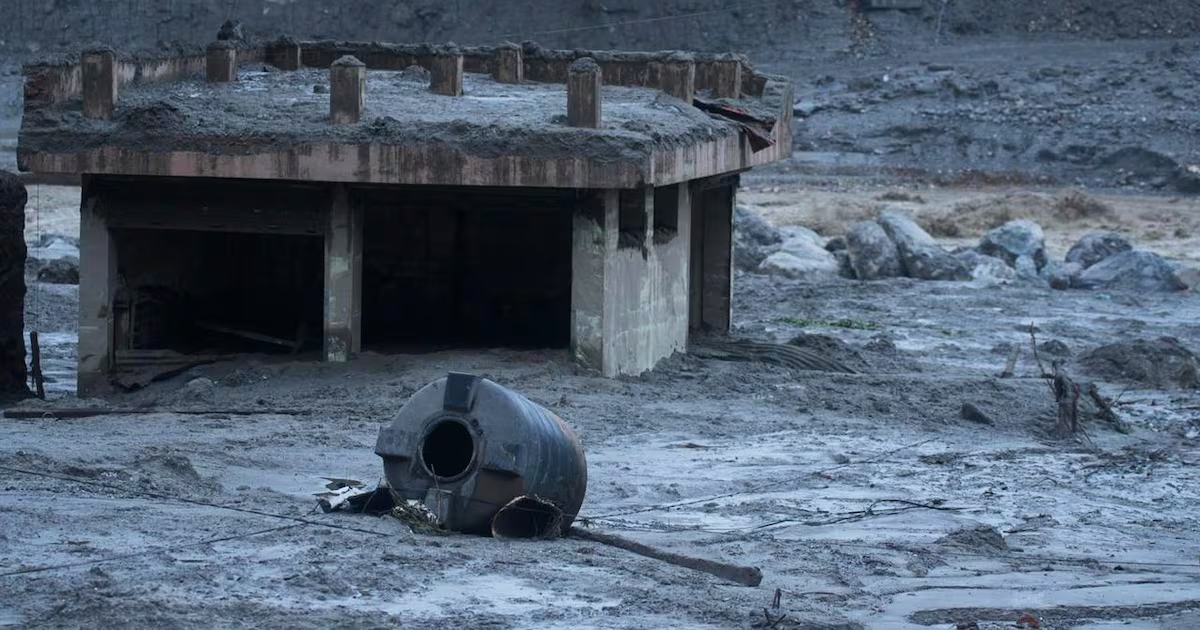
Canada provides $5 million to Nepal relief efforts as search for missing Canadians continues
41 minutes ago
 Canada
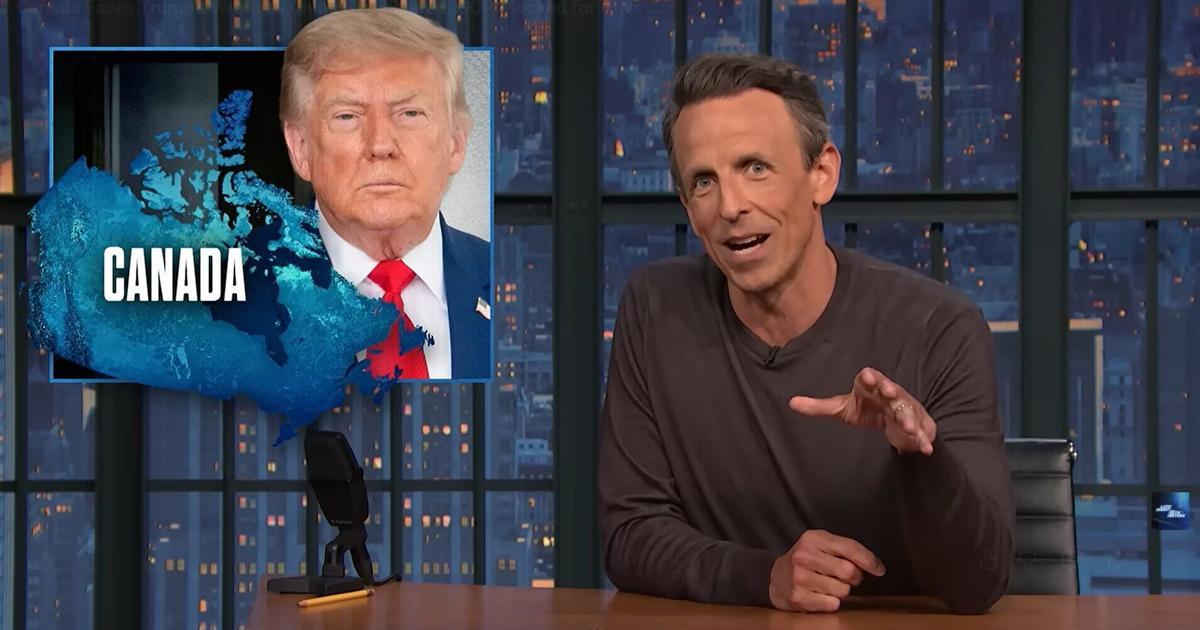
Seth Meyers calls Donald Trump’s trade war with Canada ‘lunacy,’ pokes fun at ‘bad cop’ Doug Ford
41 minutes ago
 Canada
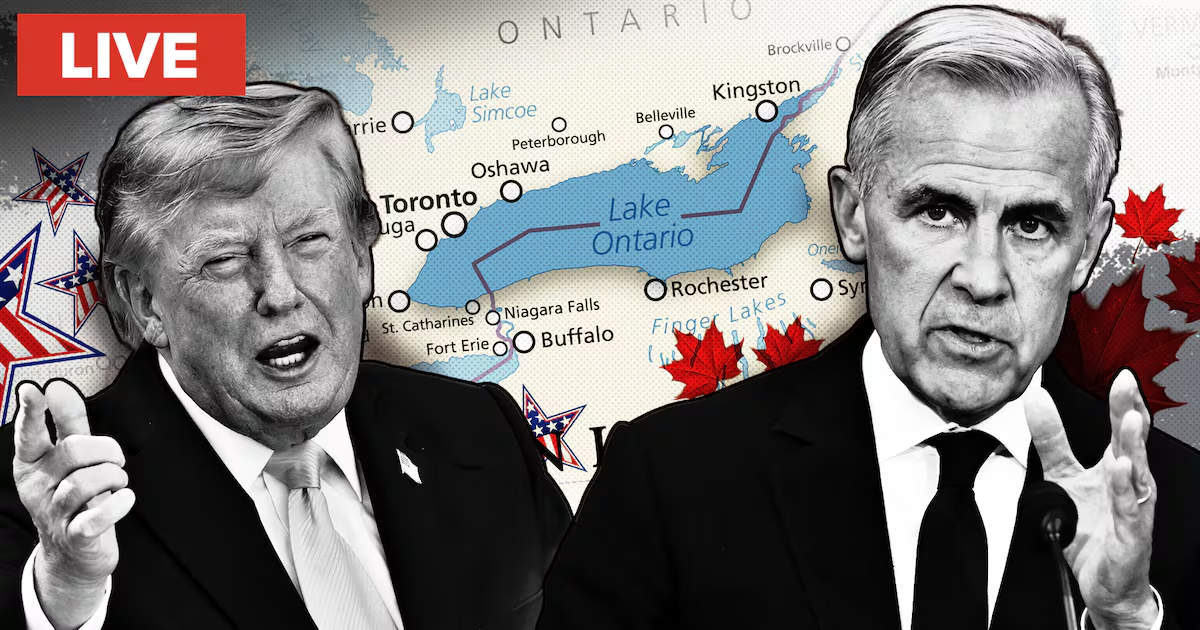
Canadian brands show their pride in wake of Trump’s Lake Ontario order. Live updates here.
41 minutes ago
 Canada
'Space Academy': Trump announces new U.S. Space Force school
1 hour ago
 Canada
Union, industry leaders urge government not to rush trade talks with the U.S.
1 hour ago
 Canada
Canada
1 hour ago
 Canada
‘This is our lake’: Canadian brands rally around Lake Ontario with new merchandise
1 hour ago
 Canada
U.S. civil rights groups make urgent plea for voting rights in D.C., ahead of midterm elections
2 hours ago