
Which states stand to suffer most in escalated U.S.
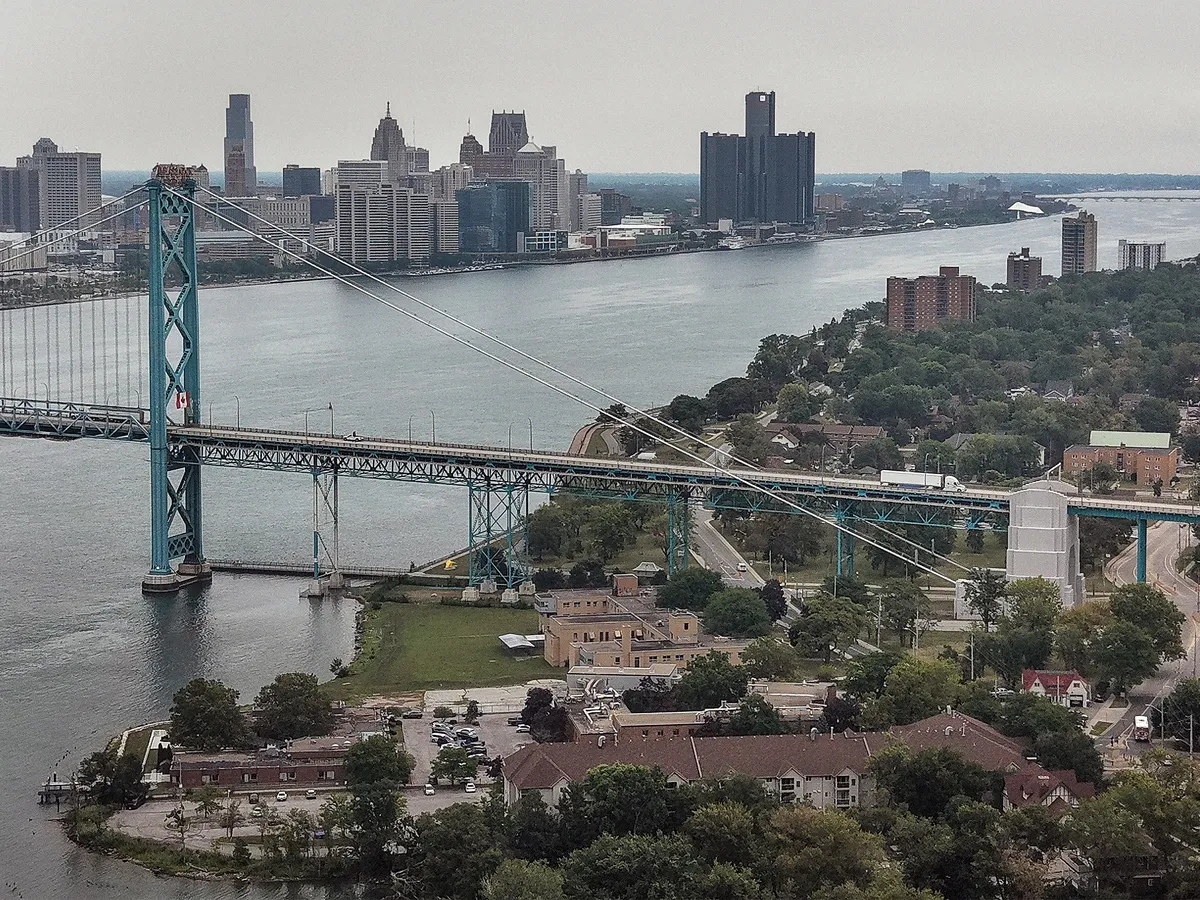
Ottawa says new counter-tariffs on American goods are primarily designed to protect Canadian companies’ domestic market share. But with November’s U.S. midterm elections looming, there’s no doubt the levies will have both an economic and political impact south of the border, particularly in battleground states (think Michigan, Ohio and Iowa).
“I think that’s very intentional,” said Inu Manak, a senior fellow at the Peterson Institute for International Economics in Washington, D.C. “It’s to draw attention to this issue, make politicians in the United States talk about it, because I think there has been some frustration among a lot of U.S. trading partners that there’s silence from Congress on a lot of these issues.”
With Canada’s $27.6 billion in counter-tariffs set to take effect in less than a week, here’s a look at which industries and states could feel the most economic pain.
On Sept. 8, Canadian counter-tariffs on certain steel, aluminum and iron products from the U.S. will increase from the current rate of 25 per cent to 50 per cent. The new levies would apply to hundreds of derivative products used in construction, manufacturing, vehicles, machinery, equipment and consumer products.
In general, states that have a lot of automotive and industrial manufacturing will be hurt the most because those sectors are highly integrated across Canada and the U.S., Manak said.
“Looking at Ohio, Michigan, Indiana, and Pennsylvania, these are areas where you have iron and steel production,” she said.
Those four states were the top U.S. exporters of iron, steel and ferroalloy to Canada in 2025, with a combined US$2.6 billion — about half of all steel exported to Canada.
Motor vehicles and related products
Canada is maintaining its existing 25 per cent counter-tariffs on American-made vehicles that aren’t compliant under the Canada–United States–Mexico Agreement (CUSMA), first imposed in April 2025.
But starting Sept. 8, new counter-tariffs of 25 per cent to 50 per cent could apply to certain U.S. motorcycles, trailers, semi-trailers and other vehicle-related products.
States like Michigan and Ohio are particularly vulnerable to auto-related tariffs because their manufacturing bases are highly integrated with Canada’s. Last year, 38 per cent of all exports from Michigan and 32 per cent from Ohio went to Canada, according to data from the U.S. Department of Commerce’s International Trade Administration (ITA). Motor vehicles and parts are both states’ top northbound exports.
There’s a lot at stake for Michigan, a border state with deep trade and tourism ties to Canada, which will elect a new governor and senator in November.
“Michigan would probably be the single state hit hardest because the auto industry is so important to them economically and psychologically,” said Ed Gresser, vice president at the U.S.-based Progressive Policy Institute think tank. “And Michigan is probably the state most deeply integrated with Canada.”
Major automakers Ford Motor Co., General Motors Co., Honda Motor Co. Ltd. and Toyota Motor Corp. also have plants in other states, including Indiana, Missouri, Kentucky and Alabama. All four of those states count motor vehicles as their top export to Canada.
Related Stories
 Canada
Montreal’s blue
47 minutes ago
 Canada
Federal government admits two trans inmates charged with sexual assault after transfer to women's prisons
47 minutes ago
 Canada
Dutch bank shifts 86 tonnes of gold from U.S., Canada to U.K.
47 minutes ago
 Canada
Powerful storm hits Canada’s Toronto, cutting power to tens of thousands
47 minutes ago
 Canada
Trade war complicates Manitoba Hydro plan to buy gas turbines from U.S. manufacturer
1 hour ago
 Canada
Two more B.C. Conservative M.L.A.s abandon party
1 hour ago
 Canada
Ontario student accused in U.S. of taking airport photos for Chinese official
1 hour ago
 Canada
Trump says not doing business with Canada is an option
1 hour ago