
Whitfield: Pope Leo warns AI technology could dehumanize society
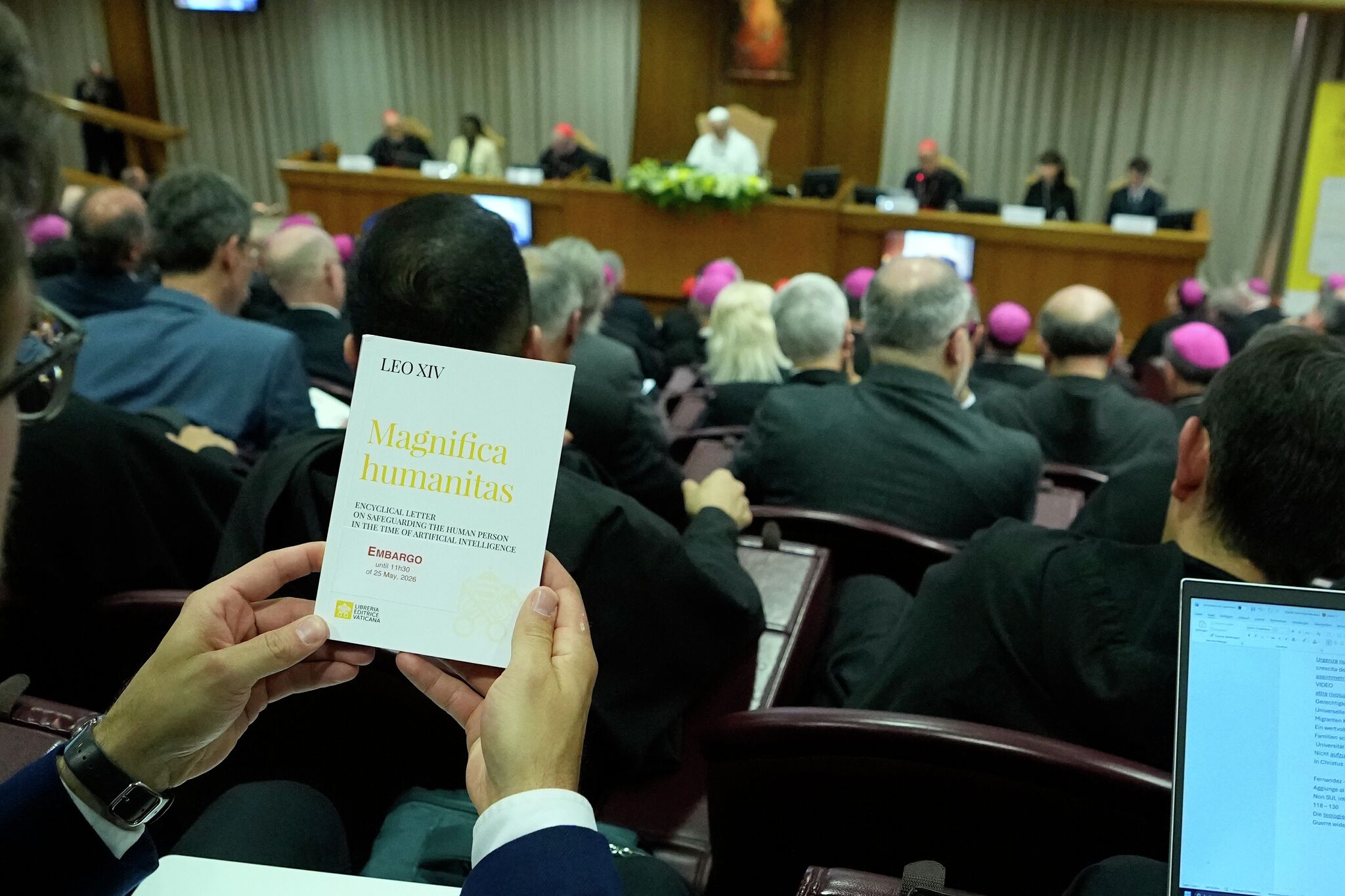
Pope Leo XIV attends the presentation of his first encyclical, “Magnifica humanitas: On Safeguarding the Human Person in the Time of Artificial Intelligence,” at the Vatican on May 25.
Definitely read it, but no rush.
I’m talking about Pope Leo XIV's recent encyclical, “Magnifica Humanitas.” I really do think everyone should read it, not just Catholics, everyone, anyone interested in the most existential questions of the day, questions about justice and technology, things like artificial intelligence. You know, those things we’re all worried about.
But again, no rush. In fact, my advice is you wait a bit, let the buzz die down and the headlines fade. Let all the opinionistas get it out of their system. Wait until you’ve forgotten what they said.
Article continues below this ad
Take what I call Merton’s pace. Thomas Merton, that great midcentury monk, said he always took his news “slightly stale.” That is, the papers he read were always a few days old, magazines always a few weeks old. He thought it important not to treat news as a stimulant. He thought that taking it slow helped him engage ideas better, the world better too. He said that “when you hear news without the ‘need’ to hear it, it treats you differently. And you treat it differently.” Amen.
Now back to the encyclical I hope you’ll eventually read. When you finally do pick it up, you will enter two ongoing discussions, a discussion about technology and then a discussion about what today is called “Catholic Social Teaching.” Both discussions, both extended arguments, go back millennia.
The beginning of the technology argument goes back to the myth of Prometheus, the thief of fire, who also stole from the gods the technai. It also goes back to the story of Theuth, the inventor of writing, whom King Thamus suspected didn’t entirely grasp all the consequences of his contrivance. These stories come to us from Plato; to him, they were ancient stories too.
Among the moderns, one thinks of people like Martin Heidegger and, before him, Ernst Kapp. But also, there are people like Georg Simmel, Nicolas Berdyaev, Jacques Ellul, Ivan Illich, Lewis Mumford, Marshall McCluhan, Neil Postman, Albert Borgmann and Hubert Dreyfus. Of contemporary thinkers, I have found people like Mark Coeckelbergh, Evan Selinger and Shannon Vallor particularly helpful.
Now my point here, rehearsing this abbreviated litany of names, is to underline both the antiquity and current depth of the discussion. We aren’t the first generation to worry that our technology has gone too far; and we shouldn’t act like it.
My second point is to suggest that this is precisely the discussion the pope has joined, not immediately the popular one. That is, the pope has entered a serious discussion reserved for those who’ve done the reading and not just listened to podcasts.
Sounds a bit snobbish, I admit, but it’s not. Rather, I am inviting you into the discussion, but only if you’re willing to do the work. The matter is serious enough that simply aggregating half-literate opinions will not do. We need serious and broad readers, serious and broad thinkers if we are going to think ourselves through this brave new world safely.
Which may just be the pope’s first achievement in writing this encyclical. By joining this broad conversation, he’s invited all of us, and especially the forgers of new technologies, to think about questions of technology and artificial intelligence far more broadly and as part of the human project.
To immerse ourselves in humanity’s ancient and ongoing discussion will not only help us think about this subject well, but it will also help us to understand more readily what that pope is saying. Reading him, you will realize that he is saying little that’s new. Rather, his words are a collection and organization of the fruits of earlier discussion, which is not a defect but a strength, not to mention a very Petrine thing to do.
And Pope Leo does this I think because he wants to bring the discussion about technology into that other great discussion, what the Church these days calls “Catholic Social Teaching.”
In fact, as you begin to read the encyclical, you may wonder when the pope will finally begin to talk about technology. He spends an enormous amount of time at the beginning just summarizing modern Catholic social thought from Leo XIII to Francis. It’s actually a great review of modern teaching if you are looking for a crash course on the subject.
But what does the pope say? Well, as captured even by the headlines, the pope’s first goal is to reassert the priority of the human person. The way Berdyaev put it almost a century ago, “The machine demands that man assume its image; but man, created to the image and likeness of God, cannot become such an image.” This is basically what the pope said: that we face a “pivotal choice,” that “ours is the pressing duty to remain profoundly human.”
Here though I admit the pope is more optimistic than I am; popes are always more optimistic than me.
For instance, the pope writes, “Technology should not be considered, in itself, as a force antagonistic to humanity.” I don’t know, some technologies in themselves I do fear may be antagonistic to humanity.
Further, especially when I think of things like Elon Musk’s Neuralink, I fear that as we continue in this brave new world, the human thing to do may indeed be to go backward a little, to embrace the vocation of George Orwell’s proles, the working class in his novel 1984. “The proles had stayed human,” Orwell wrote. That line has always haunted me.
Speaking up for humanity, Pope Leo aims explicitly at transhumanism and posthumanism, both technocratic ways of thinking that tend to treat the human being as either perfectible or liable to evolutionary erasure, blessedly wiped out by superior AI beings possibly already among us.
He calls them false accounts of salvation. He warns of their implicit injustice and violence, that if “the human being is treated as something to be perfected or surpassed, it becomes easier to accept that some lives are less useful, less desirable or less worthy.”
This is but the latest skirmish in the papacy’s war against anti-humanism, a war, you could say, that has been waged between the children of Friedrich Nietzsche and Michel Foucault and the Successors of Peter for over a century. It’s a war now being fought to see who will finally control the most powerful tools ever devised. Will they be controlled by the old-fashioned humanists or by those who don’t think humans are all that significant?
This explains the pope’s most repeated emphatic plea to “build forms of cooperation” in this new world of technology and artificial intelligence. As far as I can tell, one of the few unique claims he makes is that things like “patents, algorithms, digital platforms, technological infrastructure and data” should be considered “shared goods.” Now what he means by that is not any kind of socialism but more shared oversight. The problem is that modern states are no longer in control; rather, our technological world is now designed and determined by a dangerous and obscenely wealthy few.
And such a world, the pope said, “tends to become opaque.” Who’s behind the design, the finances, the application and regulation of all this new technology? Who’s behind the data centers? Who gets a say? If the answer to these questions is not in some way democratic, then the dawning brave new world will almost certainly be one that further excludes, further crushes the poor, further dehumanizes.
Again, the pope is not at all the first to ask these questions, but as pope, he underlines the fact that they are very important questions, existential questions and not merely political or economic questions.
Which finally, as I said at the start, is why I think you should read this encyclical. Because if we’re going to flourish together we’ll need to work together, talk to one another. Which is precisely the thing all our technologies have made it harder to do.
Have thoughts about this? Send a letter to the editor using our letters form or email letters@dallasnews.com. Letters should be no more than 200 words and include the first and last name of the writer and city of residence.
Related Stories
 Technology
When Tech Companies Die, What Happens To The Products They Leave Behind?
2 days ago
 Technology
Two Finns supplying Russia with missile tech worth tens of millions
2 days ago
 Technology
Drones with pepper spray, four
2 days ago
 Technology
Micron Technology stock pre-market at EUR 800.50: memory storage - ad
2 days ago
 Technology
TAIEX Ends at 4
2 days ago
 Technology
ZAWYA: Technology, start-ups can double India
2 days ago
 Technology
Czech government to consider CZK 1 billion fund for startups
2 days ago
 Technology
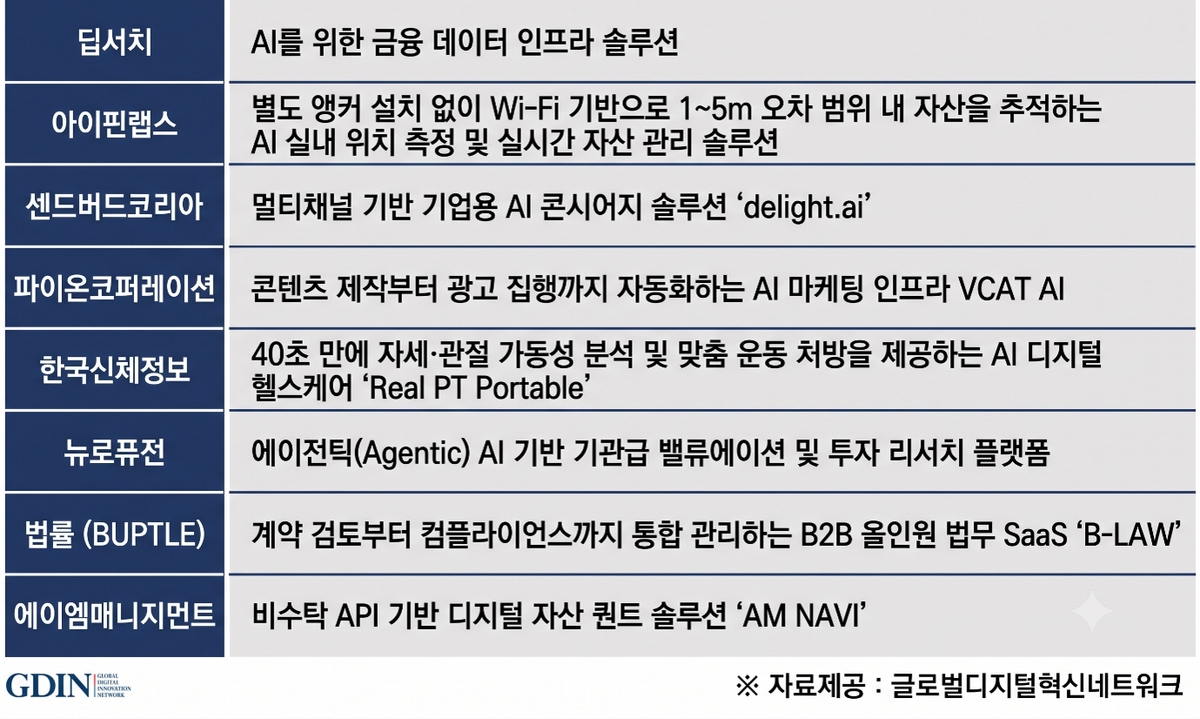
GDIN Supports Eight Startups at CEATEC 2026 in Japan, Opens Door to Local Investor Collaboration
2 days ago