
Why Experimentation, Not Planning, Makes for a Successful Startup

Why Experimentation, Not Planning, Makes for a Successful Startup
If you think careful mid-to-long-term planning makes for a successful startup, then your thinking might be antiquated. If founders always stuck to their original intent, Netflix would still be mailing out DVDs, Amazon would sell only books, Twitter would be a podcasting platform, Slack would be an online game involving fairytale giants, and YouTube would be a matchmaking site featuring only videos of self-made introductions from singles.
Due to startups' very nature, entrepreneurs need to be open to radical experimentation, said Academy of Management Scholar Marc Gruber of the École Polytechnique Fédérale de Lausanne.
"In the ancient times, we thought about a startup as a smaller version of a large company and required of founders to apply a normal business planning approach that you see in a large company," Gruber said.
"But over the years, entrepreneurship scholars came to realize that one needs to think in a different way about what a startup is, and that a startup needs to have more exploration, more experimentation," he said.
"It deals with a lot of uncertainty, so a planning approach does not work well."
That is not to say that startups should shapeshift seemingly aimlessly until something sticks. Founders nowadays can rely on a set of tools that have replaced traditional business planning and are in better alignment with the true challenges faced in startup creation.
For instance, the Market Opportunity Navigator that Gruber co-developed helps entrepreneurs to figure out a promising target market and, thus, to understand "where to play," while the Business Model Canvas helps founders to figure out "how to win" in a particular market—ultimately striving to find, as Silicon Valley entrepreneur Steve Blank likes to say, "a repeatable, scalable business model."
Experimentation is a recipe for success for many startups. Keep in mind, though, that there should be a process of testing assumptions and adjusting if experiments do not pan out, Gruber said.
Related Stories
 Business
This Week's Funding Roundup: Australian startups bank $275M
3 minutes ago
 Business
Enforcement cameras switched on to stop drivers
1 hour ago
 Business
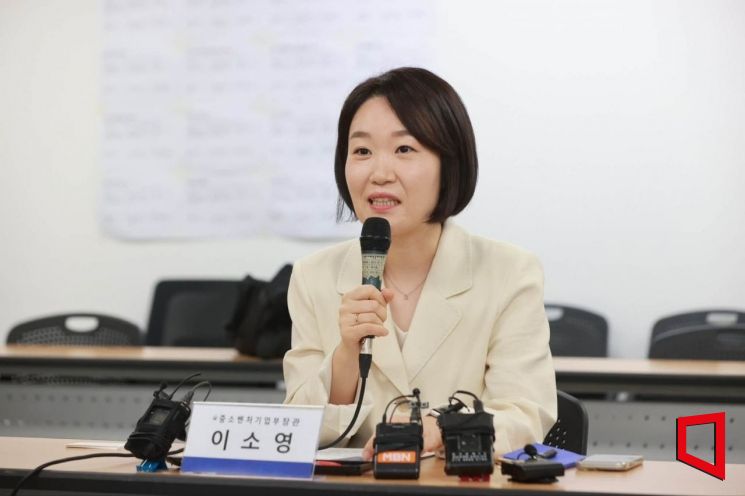
Minister So Young Lee Inaugurated as SME Minister: "We Will Remove Barriers to Challenge Like a Startup Within Government"
1 hour ago
 Business
Calgary police investigate stabbing in downtown parkade
2 hours ago
 Business
Have you heard of these Quebec political parties?
15 hours ago
 Business
New fund invests $250,000 in Charleston small business center
16 hours ago
 Business
Gunmen kill 27 in two shootings in South Africa
17 hours ago
 Business
Pope Leo draws 800,000 people to central Paris for open
17 hours ago