
5 European success stories investors initially passed on

Venture capital is supposed to be about spotting the future – catch is the future has a habit of looking rather questionable when it first walks into a pitch meeting.
Among the most famous international examples being Airbnb, whose founders were rejected by multiple investors before building a global hospitality giant; Google, which was reportedly offered to Excite and turned down; and Salesforce, which Marc Benioff has said struggled to attract traditional VC backing in its early days.
Some of Europe’s biggest technology success stories also spent their early years collecting rejections, sceptical looks and variations on “this will never work”. In several cases, investors were not just unconvinced by the valuation or timing; they questioned whether there was a viable business there at all.
With the considerable benefit of hindsight, those decisions make for some entertaining reading. From AI video before generative AI was fashionable to a bank nobody thought needed building, here are five European companies that struggled to win over investors before becoming major success stories.
Paris-based BlaBlaCar grew from a frustrating Christmas journey. In 2003, Frédéric Mazzella could not get a train home and noticed how many cars travelling in the same direction had empty seats. Founded in 2006, the company gradually turned the basic idea of matching drivers and passengers into a trusted long-distance carpooling marketplace.
Investors saw several problems. According to BlaBlaCar’s own account of its early fundraising, investment firms argued that carpooling was too niche, difficult to monetise and unlikely to scale. Some believed users associated the service with hitchhiking and would simply never pay for it. Even a proposed business-to-business version failed to generate much enthusiasm.
Spanish angel investor Luis Martín Cabiedes eventually helped change the picture, committing the final €150k required for BlaBlaCar to close a €600k Seed round in 2009. A subsequent €1.25 million round followed in 2010, and in 2015 the company raised €174 million ($200 million) in a round that helped establish it as one of France’s early unicorns.
Today, BlaBlaCar says its community-based travel app has 40 million active members a year across 41 countries, combining carpooling with bus and train travel.
Niche, not scalable and difficult to monetise? Perhaps. But 41 countries later, the niche has become rather crowded.
Few companies embody Europe’s cross-border startup identity quite as neatly as Skype. Founded in 2003 by Swedish entrepreneur Niklas Zennström and Danish entrepreneur Janus Friis, with core technology developed by an Estonian engineering team, Skype used peer-to-peer technology to make internet voice calls comfortable and cheaper.
European investors were considerably less comfortable.
Co-founder Niklas Zennström said: “We got turned down by everyone.” According to Niklas, investors were wary following the dotcom crash, while Skype’s plan to disrupt the global telephone network was considerably more ambitious than the locally focused internet businesses many European funds preferred at the time.
Skype did eventually find its audience rather emphatically. In 2005, eBay agreed to acquire the company in a deal initially worth around €2.2 billion ($2.6 billion). After another change of ownership, Microsoft acquired Skype in 2011 for €7.4 billion ($8.5 billion) in cash.
The Skype service itself was eventually retired by Microsoft, but the outcome remains one of European tech’s defining early exits. Apparently, “everyone” can say no and still leave room for a rather large acquisition cheque.
When Anne Boden founded London-based Starling Bank in 2014, she was hardly walking into banking as an amateur. A computer scientist by training, Boden had already held senior positions at Allied Irish Banks, RBS and ABN AMRO.
Her idea was to build a bank designed around mobile technology rather than bolt an app onto an existing branch-based institution. Investors were not immediately queuing at the door.
In her book ‘Female Founders’ Playbook’, Anne Boden writes: “I held meetings with more than 300 investors before I found someone interested in putting money into Starling Bank.” She has also spoken publicly about investors questioning both the practicality of starting a new bank and whether she was the person to do it.
She added: “They laughed in my face and it took me a long, long time to get people to take me seriously. I didn’t have contacts in the industry. I didn’t know how it really worked. But every time I gave a pitch, it got better.”
Starling eventually secured the backing it needed, received its UK banking licence in 2016 and launched its first personal current account in 2017. Fast-forward to 2026 and the group reported 6.2 million platform accounts, €14.7 billion (£12.7 billion) in customer deposits and €252 million (£217 million) in pre-tax profit. It was also Starling’s fifth consecutive profitable year.
Spotify was founded in Stockholm in 2006 by Daniel Ek and Martin Lorentzon with an ambitious goal: build a legal streaming service compelling enough to compete with music piracy while navigating the famously complicated world of record-label licensing.
Both founders already had technology credentials. Ek had founded online advertising company Advertigo and worked as CTO of Stardoll, while Lorentzon founded Stockholm-based internet marketing company Tradedoubler in 1999.
Still, previous success did not make Spotify an automatic investment.
Johan Brenner, then at Balderton Capital and now a general partner at Creandum, has openly discussed the decision to pass. General partner Johan Brenner said: “So, when Spotify was pitched to us, we turned it down – we knew how hard it was to deal with the music labels.”
Balderton had already made investments in music startups that had struggled, making another bet on the sector difficult to justify at the time. Creandum, meanwhile, did invest in Spotify.
The music-label problem never exactly became simple, but Spotify became considerably larger than its early sceptics expected. The company listed publicly in 2018 and, by the second quarter of 2026, reported 777 million monthly active users and 300 million Premium subscribers, alongside quarterly revenue of €4.8 billion.
It is a useful reminder that sometimes an investor correctly identifies everything that is difficult about a market – and still misses what the startup might become.
London-based Synthesia was founded in 2017 by Victor Riparbelli, Steffen Tjerrild, Professor Matthias Niessner and Professor Lourdes Agapito, bringing together entrepreneurs and researchers from institutions including UCL and the Technical University of Munich.
Its proposition is now easy to understand: businesses can use its generative AI platform to create professional videos and digital presenters without cameras, studios or actors. In 2017, however, AI-generated video was a significantly tougher sell.
Riparbelli has described approaching more than 100 investors and being rejected by most of them: “nobody believed in it”. The eventual breakthrough came when the team cold-emailed Mark Cuban, who responded and ultimately put $1 million into the company.
That early bet has aged rather well. In January 2026, Synthesia raised a $200 million Series E – valuing the company at $4 billion.
BTW: Are you a corporate or investor looking to invest or acquire exciting startups in specific markets? Check out our Startups Sourcing Service!
Related Stories
 Stocks & Markets
Can BWX Technologies' Nuclear Manufacturing Expansion Support Growth?
20 hours ago
 Stocks & Markets
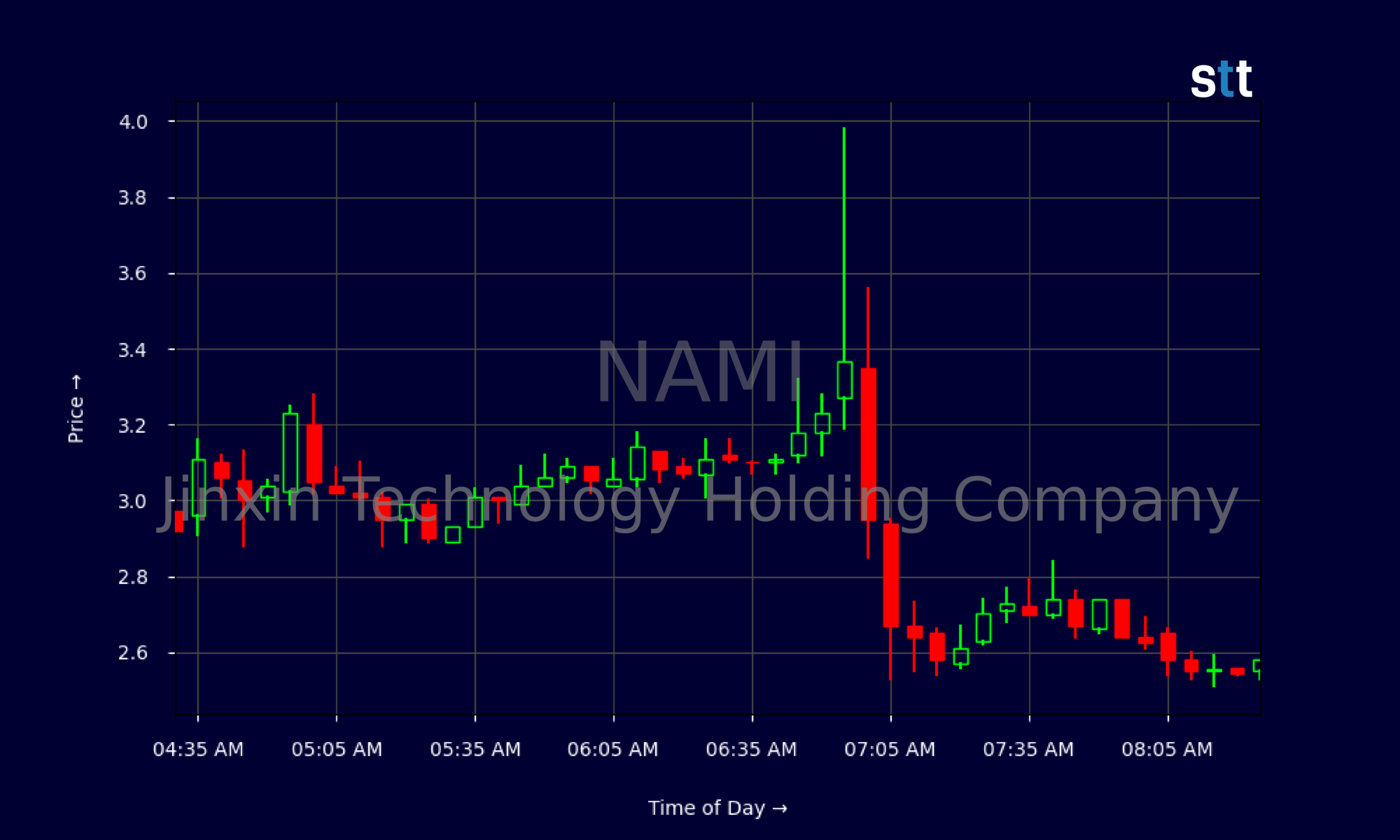
NAMI Stock Draws Trader Focus After Sharp Intraday Reversal
1 day ago
 Stocks & Markets
Market sees biggest fall in 11 months, crashes over 2%; what should SIP investors do?
1 day ago
 Stocks & Markets
How investors can distinguish market expertise from independent investment analysis
1 day ago
 Stocks & Markets
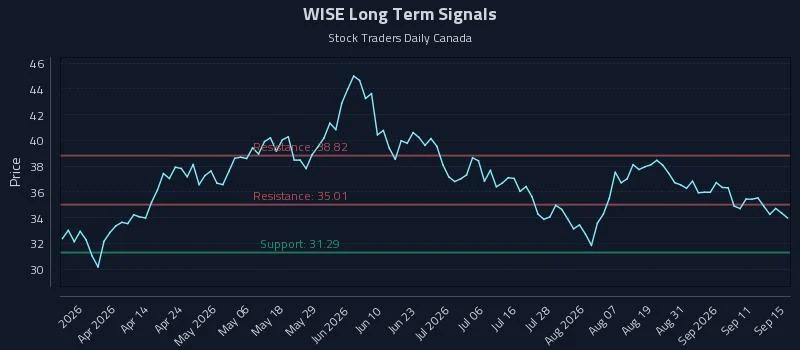
Precision Trading with Themes Generative Artificial Intelligence Etf (WISE) Risk Zones
2 days ago
 Stocks & Markets
'Liberation Day' in Retrospect: 6 Things That Surprised Investors
3 days ago
 Stocks & Markets
Jamie Dimon says market risks are 'bigger than people think'
5 days ago
 Stocks & Markets
MU Stock Slides As Legal Fight And Chip Selloff Rattle Traders
1 week ago