
5 Reasons Why Users Ditch Claude
5 Reasons Why Users Ditch Claude
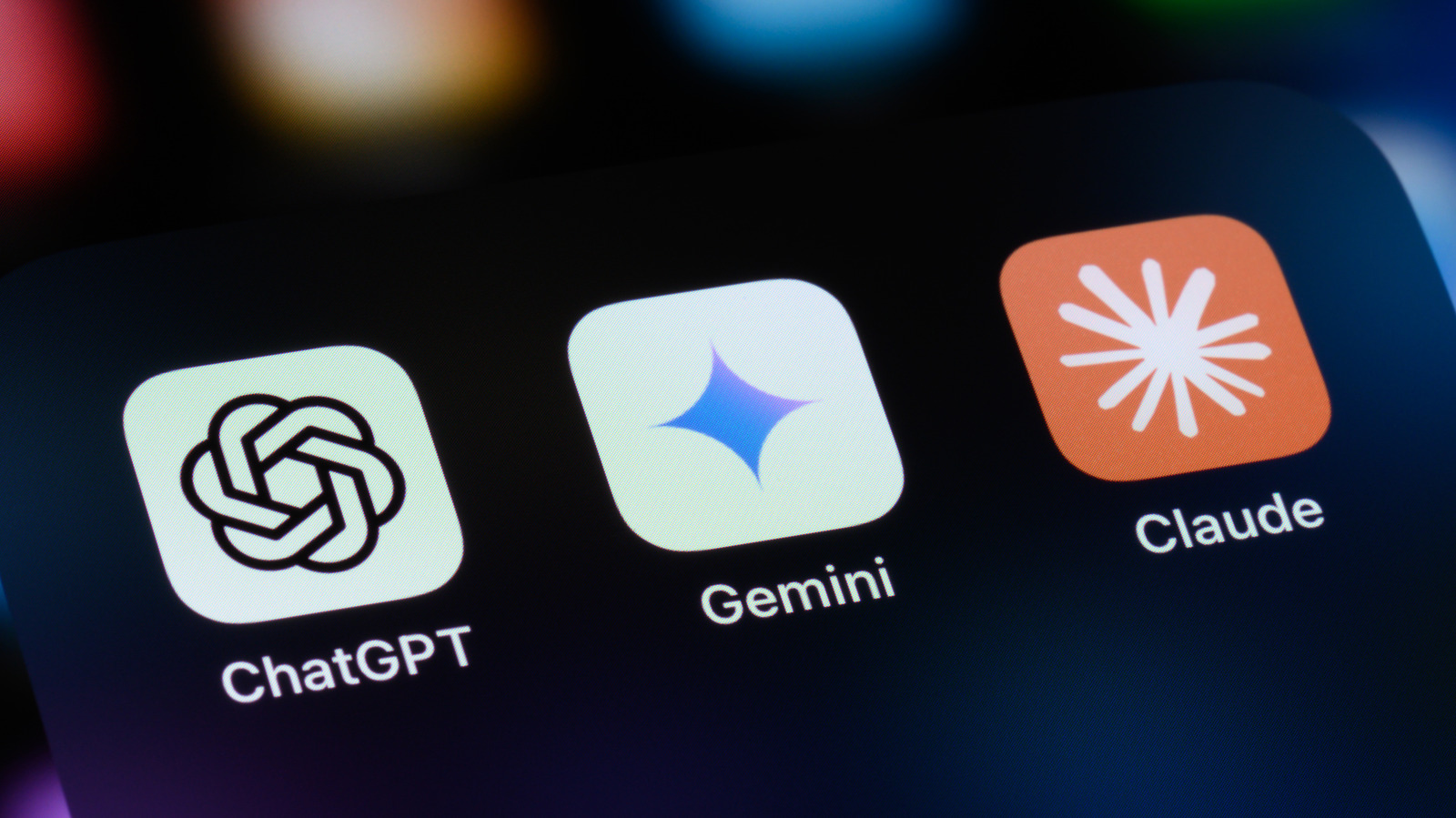
Anthropic's Claude is one of the main AI tools customers use for everyday tasks. While compared to OpenAI's ChatGPT and Google Gemini, Claude has a great advantage in text generation, deploying code, and helping developers debug a system, it also has several limitations that continue to drive customers away from the platform. Some of the reasons include the company's recent moves to add watermarks to AI-generated text, limited usage even as a premium subscriber, and its comparatively limited features for video and imagery. Also, many people just don't want to pay for artificial intelligence anyway.
Claude is designed to work an AI companion for tasks such as writing text, editing code, and interacting with other apps. It offers automation to help manage your email, calendar, and messages. While that's great for some people, it doesn't match capabilities offered by competitors who've grown their AIs to generate video, images, and even music.
Besides that, there's also a group of people just satisfied with the AI features their own smartphone offers, such as Samsung with its Galaxy AI, and Apple with its Siri AI, which will get new features this fall that may change how people use their iPhones, iPads and Mac devices.
Claude may be one of the most popular AIs available for good reasons. But it's not for everyone. Of you're thinking about using Claude as your main AI, or maybe you're just unsatisfied with your current LLM, here are some reasons people are unhappy with Anthropic's model.
One of the biggest scandals Claude has faced has been around AI-generated text. Schools and universities had already taken steps to ban AI, but teachers still had few ways to truly tell if a student or their AI had written something. In August 2026, Anthropic announced that future Claude models would start adding information into the text they generated to create a trackable watermark. The company said this new change was created to comply with the EU AI Act. It also matches with what other companies have done for AI images, adding a visible watermark in addition to extra details in the image's code.
Shortly after the announcement, users began taking to social media to share they were canceling subscriptions, even though all major AIs will have to comply with the EU's rules. According to Business Insider, people weren't happy with this change, even with Anthropic being clear that visually there's no difference in the content created and no extra tokens (essentially, computing power) is being used. The response suggested people might be afraid of getting caught using AI tools when they say they're not.
For what it's worth, Anthropic says its watermark was designed just to identify AI involvement, and not to trace that back to a person, group, organization. That means if the content is detected as AI-made, it won't say whether person A or B was responsible for it, or even when it happened.
Some companies have specific ways to deal with bad language,discrimination, or even curse words. While, in a way, these firms want to make their language models sound more human so they would respond to you the same way as a person would, they also want to prevent misuse, inappropriate language for kids and teens, and so on. Still, AI models like Claude, can also be combative and point to a problem without a clear solution.
Users on social media have shared that issue. One X user wrote: "The reason I'm dropping Claude is because the model was constantly combative, would point out issues without offering solutions and talking to it felt like pulling teeth." Others point to Claude just flagging prompts and being unable to help them with a project, or stopping mid-way through, making users feel annoyed by the AI's language, an unreasonable comment, or sometimes just a misunderstanding that makes tokens be spent without the work going anywhere.
Besides that, users say that Claude strruggles with authority and facts. They say it sometimes takes messages from Reddit and sound like an unquestionable truth. The companies say their AI's try to take a neutral approach to subjective issues.
In April 2026, Anthropic blocked third-party autonomous agent frameworks, like OpenClaw, from authenticating through its $20-per-month Claude Pro and $100-per-month Max subscriptions. With that, Anthropic forbade other apps using the platform unless they paid per usage, rather than through a subscription. Users theorized one reason was that these agents were consuming thousands of dollars of computing costs, subsidizing costly usage with generous monthly subscriptions.
This move generated backlash from developers and power-user communities, as many had purchased Claude subscriptions to power their always-on personal agents. In response, some vowed to cancel subscriptions, arguing that Anthropic abruptly broke their automated workflows without warning, and disabled what had been a popular feature.
Some developers migrated to Anthropic's pay-as-you-go API, which made them pay a more realistic price for these operations, while others reconfigured their agents to run on models from companies like OpenAI, or self-hosted open-weight models.
One of the biggest challenges for the AI industry is computing power. The companies say demand from all of us is so high that they are unable to offer full access to everyone without more hardware. Subscription plans often come with metered maximum usage per week, and even throughout the day. Some companies handle those limitations for users differently from others. While many Claude users praise the platform for being better at coding and helping users with drafts, some also complain often about how many tokens it uses up, and ultimately how often their allowed usage runs out.
With that, when searching for a way to improve this issue, people might see several Reddit threads of people teaching how to maximize Claude tokens, such as using different models, starting a new chat after 10 to 15 messages, and so on. After all, while Claude can analyze lengthy PDF documents, debug complex codebases, or utilize flagship reasoning models to perform a task, it also reads everything from that thread every time a person adds a new prompt. With that, it becomes fairly easy to hit the limit when someone is going back and forth with a project, a novel draft, etc.
That said, to avoid those interrupted workflows, some users have decided to migrate to different AI plans, such as ChatGPT Plus or Google AI Pro, which they believe offer more generous usage for the cost. Google also sweetens its deal in particular, giving customers access to other perks, including extra Google Drive storage, YouTube Premium Lite support, and other features that OpenAI, Anthropic, and other AI companies can't top.
Lack of an advanced real-time voice mode
When comparing LLMs, many Redditors wonder if they should ditch ChatGPT for Claude, or try Claude for the first time. The answer is usually the same: Claude is great for text writing and coding, but ChatGPT better as an all-in-one solution.
While Claude supports voice mode, some users complain it's not as good as what other LLMs, especially ChatGPT, offer. With ChatGPT, you can get different tones, voices, and even regional accents. Apple as well will soon offer more Siri voices options with iOS 27, and Google is rapidly improving is Gemini AI too. All these improvements are especially useful for someone trying to learn a new language, practice conversational pronunciation, or just brainstorm without actually typing.
By comparison, some users report that the voice conversation function with Claude still lags behind a lot and it can't even correctly translate what a person is saying. With that, they prefer to stay or upgrade to a different LLM that can do all of that. With the current ChatGPT capabilities, you can interrupt the AI, add something to the conversation, like a photo or a file, and you can even ask the chatbot to be more expressive, mimic someone, sound sadder, and so on.
Related Stories
 AI News
South Korea's 'Try Everything' Draws Crowds at DDP as Physical AI Robots Steal the Show
19 minutes ago
 AI News
Chinese military researchers and tech giants caught using Claude — US frontier model, coded 16 air-defense suppression tools targeting Taiwan, drafted anti
49 minutes ago
 AI News
When Will Artificial Intelligence Make Us Richer? The Productivity Puzzle
50 minutes ago
 AI News
€5bn EU venture fund backs AI medical assistant Tandem Health
1 hour ago
 AI News
27 year old Anthropic researcher who quit AI industry says the biggest decisions on humanity's future are
1 hour ago
 AI News
SA calls for global oversight of artificial intelligence
1 hour ago
 AI News
AI will transform capitalism
1 hour ago
 AI News
We asked AI whether it would lead to human extinction in a decade. Here’s what it said
2 hours ago