
A case of artificial intelligence
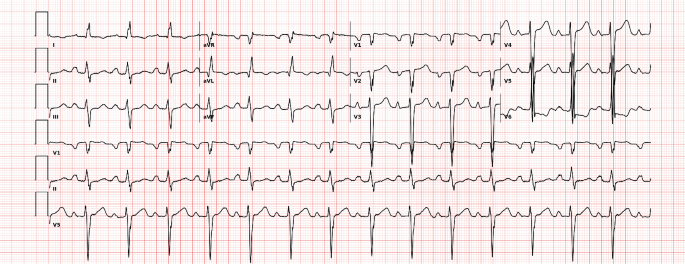
Structural heart disease (SHD), a broad category encompassing conditions that affect the valves, walls and chambers of the heart, is a major contributor to cardiovascular morbidity and mortality1,2. Although early diagnosis and treatment are associated with improved outcomes, SHD remains underdiagnosed3, largely because echocardiography — the gold-standard diagnostic test — is time-consuming, costly and not uniformly accessible.
Artificial intelligence (AI)-enhanced electrocardiogram (ECG) analysis offers a scalable approach to the early detection of cardiovascular disease. We have developed an AI-ECG algorithm to identify previously unrecognized SHD and deployed it in emergency departments (EDs), where patients with limited access to outpatient medical care are frequently encountered4. We are evaluating the effect of AI-ECG-guided screening on SHD diagnosis and management among patients presenting to the ED, as part of the SAGE (Structural Heart Disease Diagnosis using Artificial Intelligence in the Emergency Department) trial. Here we present a sentinel case in which AI-enabled ECG analysis facilitated the detection of disease that might otherwise have been missed due to an atypical presentation.
This is a preview of subscription content, access via your institution
Prices may be subject to local taxes which are calculated during checkout
Global Burden of Cardiovascular Diseases and Risks 2023 Collaborators. J. Am. Coll. Cardiol. 86, 2167–2243 (2025).
Tan, M. C. et al. J. Am. Heart Assoc. 13, e030895 (2024).
Article PubMed PubMed Central Google Scholar
d’Arcy, J. L. et al. Eur. Heart J. 37, 3515–3522 (2016).
Poterucha, T. J. et al. Nature 644, 221–230 (2025).
Article PubMed PubMed Central CAS Google Scholar
Hasselberg, N. E. et al. Europace 16, 563–571 (2014).
Van Rijsingen, I. A., Arbustini, E. & Elliott, P. M. J. Am. Coll. Cardiol. 59, 493–500 (2012).
Tat, E. et al. JACC Case Rep. https://doi.org/10.1016/j.jaccas.2026.107184 (2026).
Armoundas, A. A. et al. Circulation 149, e1028–e1050 (2024).
Kelshiker, M. A. et al. Lancet 407, 704–715 (2026).
Department of Cardiology, Columbia University Irving Medical Center, New York, NY, USA
Heidi S. Hartman, Paloma P. Malta, Michelle Castillo, Francisco A. Roedan Oliver, John Weston Hughes, Martin B. Leon, Timothy J. Poterucha & Pierre Elias
Department of Data Science, NewYork-Presbyterian Hospital, New York, NY, USA
Joshua Finer, Dustin Hartzel, Christopher Kelsey, Daniel Rocha, Jeffrey A. Ruhl & David vanMaanen
Department of Biomedical Informatics, Columbia University Irving Medical Center, New York, NY, USA
Department of Emergency Medicine, Weill Cornell Medicine, New York, NY, USA
Department of Emergency Medicine, Columbia University Irving Medical Center, New York, NY, USA
Department of Cardiology, Mayo Clinic, Rochester, MN, USA
Search author on:PubMed Google Scholar
Correspondence to Pierre Elias.
T.J.P. owns stock in Abbott Laboratories and Baxter International, and has research support provided to his affiliated institutions from the Tianqiao & Chrissy Chen Institute, American Heart Association (awards 933452 and 23SCISA1077494) Eidos Therapeutics, Pfizer, Janssen Pharmaceuticals and Edwards Lifesciences. T.J.P. and P.E. are inventors of the AI-ECG algorithm “EchoNext” for the detection of structural heart disease. P.E. has received research support to his institution from the American Heart Association, Eidos Therapeutics, Pfizer, Janssen Pharmaceuticals, New York Academy of Medicine, Edwards Lifesciences, and owns equity in Pathway Labs. M.A.P. is supported by a grant from the NIH/NHLBI (R01HL149680). All other authors declare no competing interests.
Echocardiogram performed based on AI-ECG screening for structural heart disease reveals severely reduced left ventricular systolic function.
Hartman, H.S., Finer, J., Hartzel, D. et al. A case of artificial intelligence-enhanced diagnostics leading to heart transplantation. Nat Med (2026). https://doi.org/10.1038/s41591-026-04454-y
Version of record: 22 June 2026
DOI: https://doi.org/10.1038/s41591-026-04454-y
Related Stories
 AI News
Bill Gross bets AI can help mass
20 hours ago
 AI News
Nigeria records 93% rise in AI micro
20 hours ago
 AI News
The Italian gelato maker using AI to invent new flavours
20 hours ago
 AI News
Closing the Gap Between Agentic CX Pilots and Production
20 hours ago
 AI News
New Brunswick data centre debate highlights cross
21 hours ago
 AI News
How to Structure an AI Agent Referral Fee Agreement Between Startups
21 hours ago
 AI News
No, AI didn’t delete a Swedish reality TV series
21 hours ago
 AI News
There is no AI in Armageddon. Artificial intelligence is a tool, not an apocalypse
21 hours ago