
AFRICA FINANCE IN BRIEF:Private capital surges as African markets deepen cross border investment
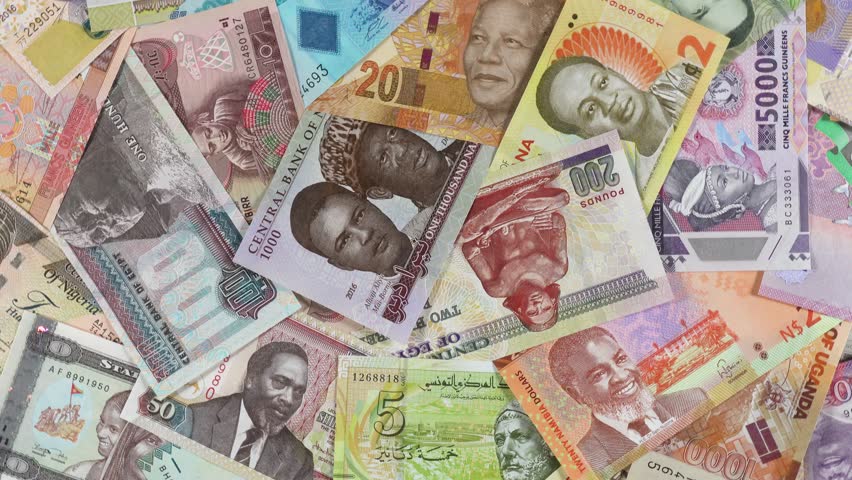
Africa’s capital markets and financial sector are showing signs of deeper integration this week, as private financing mobilised by the World Bank for the continent surged, Rwanda moved to give its investors access to the Dangote refinery IPO, and Ethiopia prepared for a sharp expansion in stock market listings. At the same time, Nigerian and South African banks are taking different approaches to building their presence across Africa through acquisitions.
Private capital mobilised by the World Bank Group for Africa rose nearly 150 percent to $22 billion in its 2026 financial year, up from about $9 billion in 2022. Globally, the World Bank mobilised a record $112 billion in private capital during the year, more than triple the $35 billion recorded four years earlier. The increase reflects greater use of guarantees and other tools to bring private investors alongside development financing.
Why it matters: The increase could help close Africa’s large infrastructure and development financing gap by bringing more private capital into projects that governments and development institutions cannot fund alone.
Rwanda’s Capital Markets Authority is working with stakeholders to enable Rwandan investors to participate in the Dangote Petroleum Refinery IPO, which is being marketed ahead of its planned listing on the Nigerian Exchange. Investors can currently register their interest through United Capital Financial Services Rwanda, although the regulator stressed that registration does not guarantee an allocation.
The refinery is seeking to broaden public ownership of its 650,000 barrel per day facility, with strong interest already reported among Nigerian investors. Rwanda’s participation could also widen the IPO’s reach beyond Nigeria as Dangote considers expanding its refining operations across Africa.
Why it matters: Opening the offer to Rwandan investors could deepen cross border participation in African capital markets and give investors outside Nigeria direct exposure to one of the continent’s largest industrial assets.
Ethiopia’s Securities Exchange has granted in principle approval to 11 new listings, potentially increasing the number of companies trading on the exchange from six to 17 if all complete the process. The first new company, from the financial services sector, is expected to begin trading next week. Ethiopia launched its stock exchange in 2025 as part of efforts to build a domestic capital market and reduce companies’ reliance on bank financing.
The latest approvals bring the exchange closer to its ambition of having 50 listed companies by 2030. However, approval in principle does not guarantee an immediate listing, as companies must still complete regulatory and disclosure requirements.
Why it matters: A larger and more diverse stock market could give Ethiopian businesses new sources of long term capital while creating more investment opportunities for local and foreign investors.
Nigerian and South African banks are taking increasingly different approaches to expansion across Africa, according to a report tracking six major East African banking transactions between 2024 and mid 2026. Nigerian lenders, led by Access Bank and followed by Zenith Bank, have favoured multiple acquisitions, while South Africa’s Nedbank has pursued larger controlling transactions, including its roughly $856 million deal involving NCBA Group.
Kenya remains the main target for regional banking expansion, with Tanzania emerging as a secondary platform. The deals increasingly focus on acquiring licences, customer networks, digital platforms and payment infrastructure rather than simply adding loan books. Nigerian banks have also gained additional capacity for expansion after raising more than N4.65 trillion under the Central Bank of Nigeria’s recapitalisation exercise.
Why it matters: The acquisitions are reshaping Africa’s banking map as lenders seek scale, technology and access to fast growing consumer and business markets across the continent.
Faith Omoboye is a foreign affairs correspondent with background in History and International relations. Her work focuses on African politics, diplomacy, and global governance.
Join BusinessDay whatsapp Channel, to stay up to date
Related Stories
 Finance
Emerging Trends in Real Estate® 2026
13 hours ago
 Finance
Cher’s son, Elijah Blue Allman, indicted on felony charge: report
14 hours ago
 Finance
A planned $5 million raise may fund crypto assets or director insurance at Digital Currency X
17 hours ago
 Finance
Third Marineland beluga dies after being moved, this time in Spain
20 hours ago
 Finance
Day centre for disabled adults in Brighton to close
1 day ago
 Finance
US lawmakers pass bill giving Trump more power to sanction Russia and its enablers
2 days ago
 Finance
Halifax examining how to buy more Canadian goods, services amid U.S. trade war
2 days ago
 Finance
Hong Kong unveils its first 5
2 days ago