
Trump tariffs making beer cans more expensive for Canadian producers
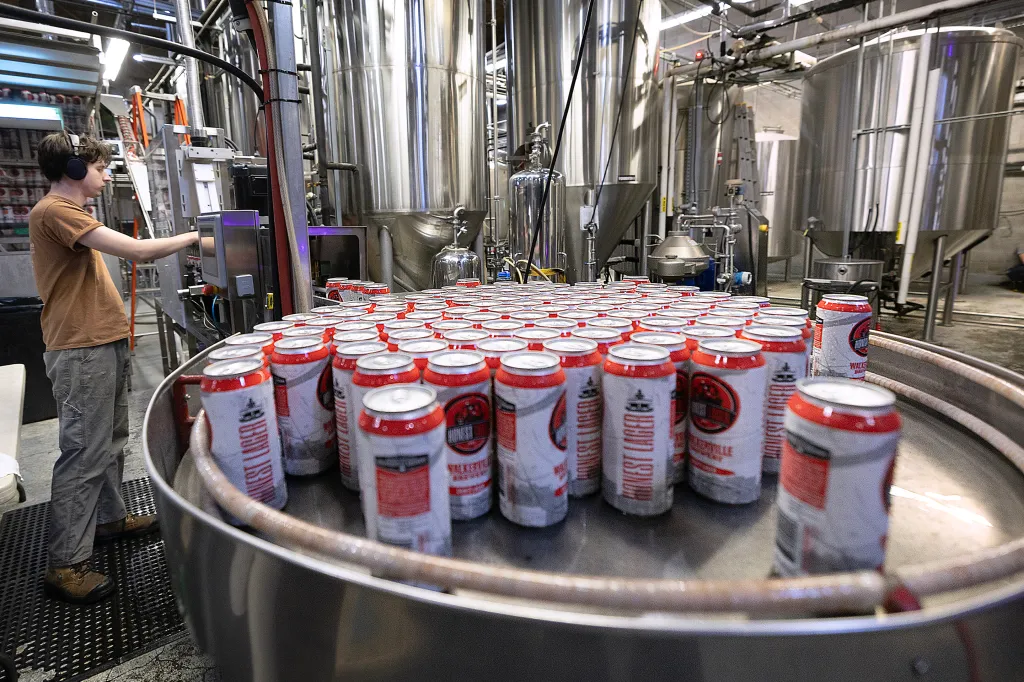
Even for a strictly Canadian craft beer drinker, U.S President Donald Trump’s tariffs are making it more expensive to enjoy a cold one.
In another sobering example of trade war upheaval in a once cohesive cross-border supply chain, beer can prices are on the rise across Ontario.
Windsor’s Walkerville Brewery has so far resisted raising prices as its costs increase on everything from the apple juice in their cider to the aluminum cans it goes into. But owner Mike Brkovich said that can’t last forever.
“We know how tough the economy is and our customers are loyal,” he said. “We’re going to have to increase the prices I think in the next three or four months. But we’re trying to hold the prices.”
After the latest round of trade talks broke off at the 11th hour, Trump imposed tariffs of up to 50 per cent on $27.6 billion worth of Canadian products starting Aug. 22. Canada retaliated Sept. 8 with equal tariffs on U.S. imports.
“It’s a ridiculous policy by the U.S.,” said John Taylor, chair of the department of marketing and supply chain management at Wayne State University.
“Instead of quantifying it on each item, I think it’s just a general statement that tariffs have increased or have caused inflation,” said Brkovich. “Everything comes back to this nonsense and it’s hurting the consumer more than anyone.”
On Monday morning, Brkovich said the brewery received notice from a supplier that the price of the apple juice it uses for ciders is increasing from $1.80 per litre to $2.05 per litre.
“They never gave us an explanation of why the apple juice has gone up, but I’m sure it’s linked to tariffs,” said Brkovich. “They don’t ever say it’s due to tariffs. They just say things are out of our control, and this is how much it’s going up.”
One problem Brkovich said he can attribute directly to the tariff war is the rising cost of beer cans.
Trump first imposed a 25 per cent tariff on steel and aluminum products in March 2025. Canada immediately responded with a dollar-for-dollar retaliation.
The tariffs for aluminum products going in both directions are now 50 per cent after the U.S. escalated the war in late August.
Brkovich said tariffs have pushed up the cost of a 473 ml beer can from about 31 cents to 35 cents.
Taylor said that might not seem like a lot, but it all adds up when the cost of everything else is also climbing.
“Percentage wise you’re going to raise the cost of that can quite dramatically,” said Taylor, also an associate professor of global supply chain management. “If you look at the total cost of a can of beer, not with the beer in it, the can might only be 10 or 15 per cent of the total cost of the beer. But consumers get cut 1,000 times. A little bit here and a little bit there.”
Walkerville Brewery, which goes through about 40,000 cans a month, buys them solely from a Canadian supplier. But most of that company’s cans likely come from the U.S.
Much like the auto industry and wider economy, beer can production is a tightly integrated cross-border endeavour.
Canada specializes in producing aluminum because it has abundant hydroelectric power. Home to large aluminum smelting operations, it imports the raw material from countries including Brazil and the U.S.
But Canada has no domestic rolling mills producing specialized can sheet aluminum. A lot of that happens in the U.S.
Some Canadian companies do bring the rolled aluminum back over the border to make cans, but none of them produces the popular 473 ml tallboys that most craft breweries use. A lot of that also happens in the U.S.
There are American producers of aluminum, but it’s a much smaller industry than in Canada. Taylor said Trump’s tariffs will also drive up the price of American-made aluminum.
“The U.S. producers of aluminum, to the extent that there are any, will raise their prices by close to 50 per cent because they’re not going to leave money on the table,” he said.
“The can producers have dramatically higher costs of their raw material aluminum. So, what they ship back to Canada in cans and what they ship into the U.S. market will all be quite a bit more expensive.”
Given that Canada has imposed retaliatory tariffs, the material is taxed when it crosses the border in either direction on the journey to becoming a beer can.
“I say this to people that ask me about the tariffs and the counter tariffs: what’s hurting us more is this overall inflation that we have in the economy where the consumer has less discretionary income to purchase these things,” said Brkovich. “Hospitality and restaurants, coming into a brewery or a winery or a micro distillery, the consumer just doesn’t have the money that they used to have.”
He said the brewery has changed strategies to keep people coming through the doors as it strives to avoid price increases.
“Last week we had specials on cases,” said Brkovich. “We have events where it doesn’t cost anything to get into our events. When we have the night market it’s free. The consumer really wants value, so we have to be creative on how we get the consumer some value.”
Related Stories
 Canada
Canada took the trade war to Trump’s backyard. Americans didn’t care
22 minutes ago
 Canada
BREAKING: ILAC Education Group in Canada files for bankruptcy
22 minutes ago
 Canada
Flood
1 hour ago
 Canada
The hidden cost of going to university in Canada, and the one place still keeping it cheap
1 hour ago
 Canada
CTV News in the Arctic: Warship commander says ‘the global order is changing’ as Canada expands presence
1 hour ago
 Canada
Multiple people treated after rabies found in skunk in Kootenay Lake region of B.C.
2 hours ago
 Canada
Canada won't pay directly into EU budget under Carney's plan: ambassador
2 hours ago
 Canada
Michelle Li: The Iconic Journey Continues
2 hours ago