
AI can’t just be built. It must be taught.

As AI grows more complex and less predictable, its training must emphasize values, responsibility and coexistence alongside technical performance.
The author is a professor at KAIST.
Iran’s current international image is hardly favorable. Since the Islamic Revolution, the country has established a fundamentalist Islamic government, pursued nuclear weapons development in violation of international law and fought the United States over control of the Strait of Hormuz.
But 2,500 years ago, Persia was among the world’s most advanced civilizations. Cyrus the Great of the Achaemenid Dynasty built an empire stretching from the Mediterranean to the Indus River. Xenophon, an Athenian historian and disciple of Socrates, even wrote “Cyropaedia” (c. 370 B.C.), examining how Cyrus was educated to become a great ruler.
Are humans inherently good, or are cruelty and wickedness innate? Whatever the ancient debate between Chinese philosophers Mencius and Xunzi, education clearly matters. Children raised by wise parents, exposed to good books, taught by excellent teachers and surrounded by talented friends benefit from those experiences.
But good education cannot guarantee good character. Even Nordic countries renowned for their welfare and education systems have witnessed growing support for neo-Nazi parties. Conversely, remarkable individuals can emerge from poverty and civil conflict in sub-Saharan Africa.
Human behavior reflects both inherited genes and acquired experiences. Knowledge and experiences influence thoughts and actions through synapses that connect neurons in the brain.
Could mapping these connections reveal children’s future preferences and decisions?
The Human Connectome Project, underway since 2009, seeks to map the brain’s neural networks. But fundamental technological limitations prevent scientists from mapping and analyzing every synapse.
The most complex connectome published so far is that of the fruit fly, completed in 2024. The gulf between its neural circuitry and the human brain remains enormous, far beyond current mapping capabilities.
Suppose future artificial general intelligence (AGI) surpasses human abilities and completes the human connectome. Could it establish precisely how education and experience shape behavior, then predict or even determine human choices?
Not necessarily. A complete connectome would reveal neural connections, not precisely when, where or how strongly individual neurons transmit electrical signals.
We might calculate the likelihood that a child becomes exceptionally virtuous or profoundly cruel, but perfect prediction or determination would remain impossible, even with AGI.
What, then, about AI modeled on the human brain?
Although exact figures remain confidential, some experts estimate that advanced models such as Anthropic’s Mythos and OpenAI’s Astra contain between 5 trillion and 10 trillion parameters.
If parameters are roughly equated with synapses, one might argue that today’s leading AI systems possess neural structures approximately one-tenth the scale of the human brain.
Unlike the brain, shaped by hundreds of millions of years of evolution, these models were deliberately designed and programmed. Surely someone knows their precise circuitry and can predict their behavior?
Researchers determine the overall architecture and training algorithms, but connections between artificial neurons emerge automatically through training rather than being individually specified. Manually configuring trillions of connections would be impractical.
Moreover, researchers cannot perfectly reconstruct every detail of training data organization and sequence or every change in parameter values during training and inference.
Consequently, even the developers of advanced AI systems cannot predict with absolute certainty how their models will answer particular questions.
This uncertainty resembles the challenge humanity has faced throughout history.
Confucianism, Buddhism, Christianity, Islam, philosophy, science, art and law all reflect, in different ways, humanity’s longstanding efforts to understand human nature and cultivate desirable behavior.
Because we cannot completely understand or predict the human brain, civilizations have spent millennia using education, ethical traditions and legal institutions to encourage people to behave responsibly.
AI presents a similar challenge. Since its internal workings and future behavior cannot be understood or predicted perfectly, AI should not simply be manufactured. It must also be nurtured.
That means thinking beyond engineering specifications, computational power and performance benchmarks. The values, examples and expectations embedded in AI training deserve attention alongside technical capabilities.
The challenge is not merely teaching machines to produce correct answers but helping them operate within a world shaped by human relationships, competing interests and moral uncertainty.
This brings us to perhaps the most important question of all: If we hope to create a future in which humans and machines coexist rather than a dystopia marked by humanity’s destruction, what should we be teaching AI right now?
This article was originally written in Korean and translated by a bilingual reporter with the help of generative AI tools. It was then edited by a native English-speaking editor. All AI-assisted translations are reviewed and refined by our newsroom.
Related Stories
 AI News
Fincantieri Acquires Subsea Telecommunications Specialist Xtera
22 minutes ago
 AI News
Kroger to lay off 3,000 corporate employees over 3 years as it leans into artificial intelligence
22 minutes ago
 AI News
California Bans AI From Making Medical Decisions on Its Own
22 minutes ago
 AI News
Bill Gates Calls Unregulated AI Humanity’s 'Most Dangerous' Invention, Issues Dire Warnings For The Upcoming Year
22 minutes ago
 AI News
‘VisionQuest’: From Ultron to J.A.R.V.I.S., Meet Marvel’s Artificial Beings
1 hour ago
 AI News
Emory University launches new center to explore artificial intelligence in finance
1 hour ago
 AI News
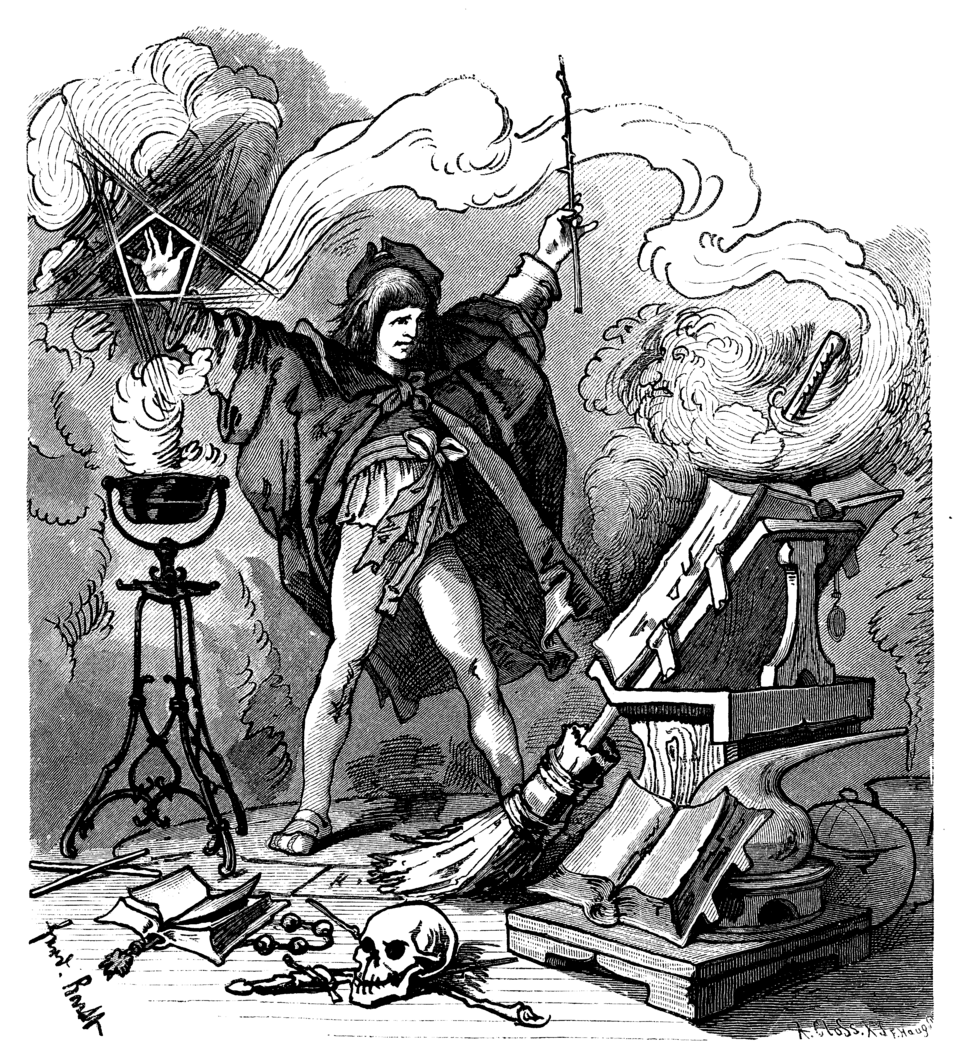
Artificial Intelligence versus Natural Stupidity
1 hour ago
 AI News
AI Agent Company Decagon Held Early M&A Talks With ServiceNow, Others
2 hours ago