
AI divide: It's not technology but learning capacity
AI divide: It's not technology but learning capacity
This is the second in a series of five articles highlighting resilience in the era of artificial intelligence — ED.
In the previous column, I argued that artificial intelligence (AI) will not so much replace humans as expose the systems we have built. The real divide of the AI era, I suggested, will not be technological. Instead, it will be a divide in what I called “collective learning capacity.”
There are questions that remained unanswered. What is that capacity? Why does it vary so widely between organizations and societies? And finally, why is AI about to make those variations decisive.
Learning capacity, in the sense I mean it here, is not the ability of an individual to absorb new information. It is something collective.
A team of brilliant individuals can sit inside an organization that learns nothing. A society of intelligent citizens can produce institutions incapable of adapting. The intelligence of the parts does not determine the intelligence of the whole.
What I mean by learning capacity is the ability of an organization, an institution or a society to adjust its behavior to a changing environment, faster than the environment outpaces it. Every adaptive system — biological, organizational, national — performs this through some version of the same cycle. It detects what is happening, interprets what the signals mean, decides what to do and observes what happened so the next cycle improves on the last. The capacity is the cycle. The faster, cleaner and more honest the cycle, the more capable the system. It is the closest thing organizations and societies have to a survival function.
The first is signal detection. It is the capacity to notice what matters in an environment that produces more data than any human or institution can attend to. AI does not solve this. It complicates it. As machines generate more content, more forecasts and more synthetic evidence, the signal-to-noise ratio of the information environment degrades. Detection is no longer about having more sensors. It is about having sensors tuned to what is worth seeing.
The second is interpretation, or converting what has been detected into shared meaning. This is where most organizations quietly break down. AI can generate ten interpretations of the same dataset, each defensible. Without a shared frame, stakeholders read the same outputs in different directions. Interpretation is a collective act, dependent on trust, expertise and a culture that distinguishes meaningful insight from confident output.
Decision-making, or converting interpretation into commitment, is the third component. While AI has made analysis nearly free, it has not made making decisions easier. Decisions still require political capital, organizational alignment and accountability. Hierarchies remain. Approval cycles remain. The speed of analysis has accelerated; the speed of decision has not.
The fourth is feedback — observing what happened and updating for the next cycle. This is the least discussed and arguably the most fragile component. Under AI, feedback is increasingly polluted by hallucinated evidence, by reports generated about the performance of systems that themselves generated the reports, and by metrics that look like learning but produce no actual revision. Without honest feedback, the loop becomes an echo chamber.
Until now, this cycle has been a quiet differentiator. Some organizations always learned faster than others. Some societies always adapted more nimbly. The gap was real but slow-moving.
AI changes that. AI multiplies whatever learning capacity already exists. A system that detects accurately, interprets honestly, decides quickly and feeds back rigorously will use AI to do all four faster — accelerating its compounding. A system weak in any of these functions will use AI to do its weakest steps faster too: producing noise faster, misinterpreting faster, deciding badly faster and reinforcing distortions faster.
Two organizations with identical AI tools will diverge sharply. Not because of the technology but because of the cycle the technology entered. The same is true with two ministries, two universities, two cities.
The gap will not narrow. It will widen.
What is true between organizations is also true between nations. A recent example sits in living memory. During the pandemic, all major economies had access to comparable data on transmission, hospitalization and vaccine performance. The outcomes diverged sharply — by orders of magnitude in mortality, economic continuity and public trust. The variable was not what each country knew. It was how quickly each country could interpret what it knew, align stakeholders, decide and revise. Some societies moved through that sequence faster than others. Some never completed it at all.
The same dynamic is now beginning to play out, more quietly, with AI. Nations with identical access to frontier models will produce dramatically different outcomes. The variable will not be the model. It will be the cycle. This is what I call learning inequality.
It is the widening gap between systems that can integrate AI into a functioning learning loop and those that cannot. It will define the next decade more decisively than any technical benchmark, any chip embargo or any model release.
The first place this inequality is already visible is in the most basic step of the cycle: the ability to tell signal from noise.
We live in the most information-rich era in human history. And yet, by every meaningful measure, our collective ability to interpret what we know is declining.
That paradox is where this series goes next.
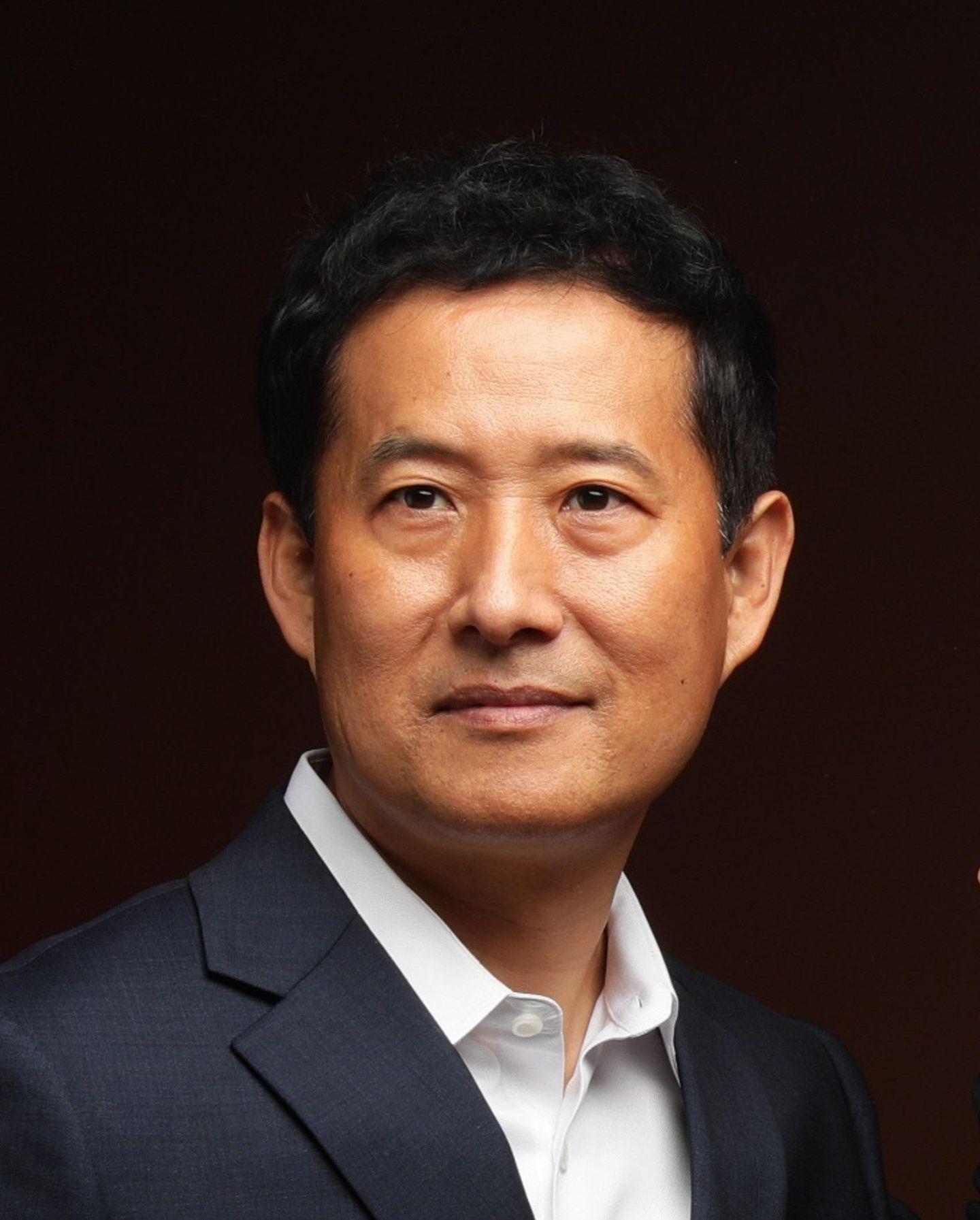
Charles Chang is a PhD candidate in AI Convergence and a security resilience consultant based in Seoul, with extensive experience spanning government and corporate leadership. Any views, thoughts and opinions expressed in this article are solely my own and do not reflect the views, opinions, policies, or position of his employer.
Related Stories
 AI News
Robosys Validates VOYAGER AI Maritime Autonomy Software
40 seconds ago
 AI News
As AI agents grow, vendors carve out decision
58 seconds ago
 AI News
Author or artificial intelligence? Literature in crisis
1 minute ago
 AI News
Anthropic bans users from being 'cruel' to its AI systems
56 minutes ago
 AI News
Why Arrowhead Abandoned Call Analytics For The Voice AI Dogfight
59 minutes ago
 AI News
Instinct joined the chat: The startup is bringing its AI agents to your group DMs
59 minutes ago
 AI News
Trump’s attempt to rename AI is looking awfully artificial
1 hour ago
 AI News
OpenAI revenue shortfall exposes vulnerability in artificial intelligence ecosystem
1 hour ago