
AI: The Washington Report

On July 14, the Trump administration launched “GOLD EAGLE,” a new public-private clearinghouse, pursuant to Section 2(d) of Executive Order No. 14409, “Promoting Advanced Artificial Intelligence Innovation and Security,” which President Trump signed on June 2. The initiative is jointly implemented by the Departments of the Treasury, Homeland Security (DHS), and Defense (DOD), in collaboration with AI developers, open-source software providers, and critical infrastructure operators. The program is established to function as a “force multiplier” that accelerates detection of exploits by applying frontier AI models to vulnerability data and distributes prioritized threat and remediation information to government and private-sector defenders.
Why it matters: GOLD EAGLE signals the Trump administration’s push to formalize a centralized, AI-driven approach to how quickly issues like software flaws are found and fixed. It would also provide an early window for companies and industry groups to help shape the program’s terms through engagement with the Treasury, DHS, and DOD.
On July 22, Assistant to the President and Director of the White House Office of Science and Technology Policy (OSTP) unveiled more than $5 billion in federal commitments expanding the Genesis Mission alongside a slew of National Science and Technology Challenges. The Genesis Mission, established in November by President Trump’s Executive Order No. 14363, is a government initiative aimed at harnessing artificial intelligence to accelerate scientific research and discovery on a national scale.
Why it matters: This financial commitment signals that the administration views AI as a matter of national coordination, with more than 15 federal agencies directing funding, data, and infrastructure toward AI-driven science. For companies in AI, life sciences, energy, semiconductors, and defense, the funding signals significant new federal demand and partnership opportunities. This also indicates that federal research priorities and funding streams are shifting toward AI-ready systems and mission-driven challenges, which businesses seeking federal grants will need to track.
On July 21, OSTP released a companion report outlining the broader policy architecture behind the Genesis Mission and related AI-in-science initiatives. The report is organized around four chapters:
The White House and HHS are convening outside experts to work toward a consensus set of principles for benchmarking and evaluating clinical AI. The initiative is jointly run by OSTP, FDA, and the Office of the National Coordinator for Health Information Technology (ONC).
It is structured as a one-month “sprint” with a written-submission phase followed by a discussion phase. The effort responds to a theme that has surfaced repeatedly in HHS’s public AI engagement this year: stakeholders want clearer, standardized metrics for judging whether a clinical AI tool is “good.”
On July 1, the FTC proposed a policy statement concerning the suppression of accuracy in artificial intelligence systems. The statement argues that AI companies violate Section 5 of the FTC Act’s prohibition on deceptive practices when they “steer the outputs of their AI Systems toward unexpected objectives, and away from the objectives set by or reasonably expected by users.”
The FTC’s legal reasoning is as follows:
Why it matters: This signals the FTC has used, and will continue to use, its existing Section 5 deception authority to police AI companies that deceptively steer outputs, even alterations made to satisfy state laws like Colorado’s AI Act. For businesses building, deploying, or procuring AI systems, this statement raises enforcement concerns. Any undisclosed steering away from accuracy-focused marketing claims can expose companies to FTC deception claims.
As previously reported, Reps. Jay Obernolte (R-CA) and Lori Trahan (D-MA) released the nearly 270-page draft on June 4. Its core provisions include a three-year federal preemption of state laws “specifically regulating the development” of AI models, transparency and third-party audit requirements, codification of the Center for AI Standards and Innovation, and provisions on cybersecurity, workforce, impact reporting, and whistleblower protections. As of the most recent commentary, many people believe the current draft is unlikely to pass out of committee, given opposition from parts of the industry and from leaders of the House Democratic AI Task Force, which reportedly “framed itself in opposition hours after the draft’s release.”
Why it matters: GAAIA represents a serious bipartisan attempt at a comprehensive federal AI framework, and its preemption fight will determine whether the US moves toward a single national standard or continues to rely on a state-by-state patchwork, like Illinois’s S.B. 315 and Colorado’s Chatbot Safety Act. For businesses, the outcome carries real stakes either way: passage could simplify compliance by displacing overlapping state development rules with one federal regime, while continued stalemate (which many observers currently expect) means companies must keep building compliance programs for multiple, sometimes conflicting, state frameworks.
On July 30, the Senate Commerce Subcommittee on Telecommunications and Media held a hearing titled “Intelligent Networks: Powering Artificial Intelligence and Transforming Communications,” chaired by Sen. Deb Fischer (R-NE). Industry witnesses — USTelecom CEO Jonathan Spalter, Nebraska PSC Commissioner Dan Watermeier, and Cisco Chief Architect Bob Everson — argued that outdated permitting processes are the primary barrier to deploying AI-ready fiber infrastructure, and urged Congress to establish consistent timelines for approvals. Vanderbilt Policy Accelerator’s Asad Ramzanali provided the lone counterweight, warning that unconnected Americans are being excluded from AI’s economic benefits.
Why it matters: This hearing signals that permitting reform will be a top legislative priority for the telecom industry heading into the fall, with bipartisan support emerging for deployment “shot clocks.” For clients in the broadband and AI infrastructure space, the window to shape permitting legislation is now open. However, the hearing also exposed significant policy gaps: cybersecurity mandates, spectrum allocation, and energy grid strain from data centers remain unresolved and may resurface when the Commerce Committee takes up broader AI legislation after recess.
On July 6, Gov. J.B. Pritzker signed into law the Artificial Intelligence Safety Measures Act (S.B. 315), with the House passing the bill unanimously on May 27. S.B. 315 is the first state law to require annual independent third-party audits of frontier AI models’ safety practices. The bill targets the largest frontier developers, those with over $500 million in annual revenue, developing models above a specified computational power threshold.
The Illinois attorney general would have exclusive enforcement authority, with civil penalties of up to $3 million per violation. The bill does not create a private right of action. The legislation is modeled after 2025 laws in California and New York, with Illinois being the first to require third-party audits.
Why it matters: S.B. 315 matters for AI regulation and state oversight because it moves beyond the disclosure-only approaches of California and New York toward genuine external verification rather than self-policing.
On July 1, Gov. Jared Polis signed into law H.B. 26-1263, the Chatbot Safety Act. Its aim is to protect users, especially youth, from the demonstrated harms of AI technology.
Companies must meet baseline requirements for all users and additional protections for minors under 18:
The Act takes effect January 1, 2027. This makes Colorado the first state to enact chatbot-specific AI legislation aimed at protecting minors from psychological and safety harms, distinct from broader frontier-model transparency and audit requirements.
Why it matters: This Act marks a shift away from broader state AI regulation toward a narrower, harm-specific disclosure, signaling that states may increasingly regulate AI by discrete use cases (chatbots).
We will continue to monitor, analyze, and issue reports on these developments. Please feel free to contact us if you have questions about current practices or how to proceed.
Related Stories
 AI News
Egypt trials smart irrigation and artificial intelligence technologies to optimise water use in agriculture
31 minutes ago
 AI News
L&T Finance Ltd. Launches The Second Edition Of 'Pitch Point,' A Competition For AI Startups Ahead Of RAISE' 26
1 hour ago
 AI News
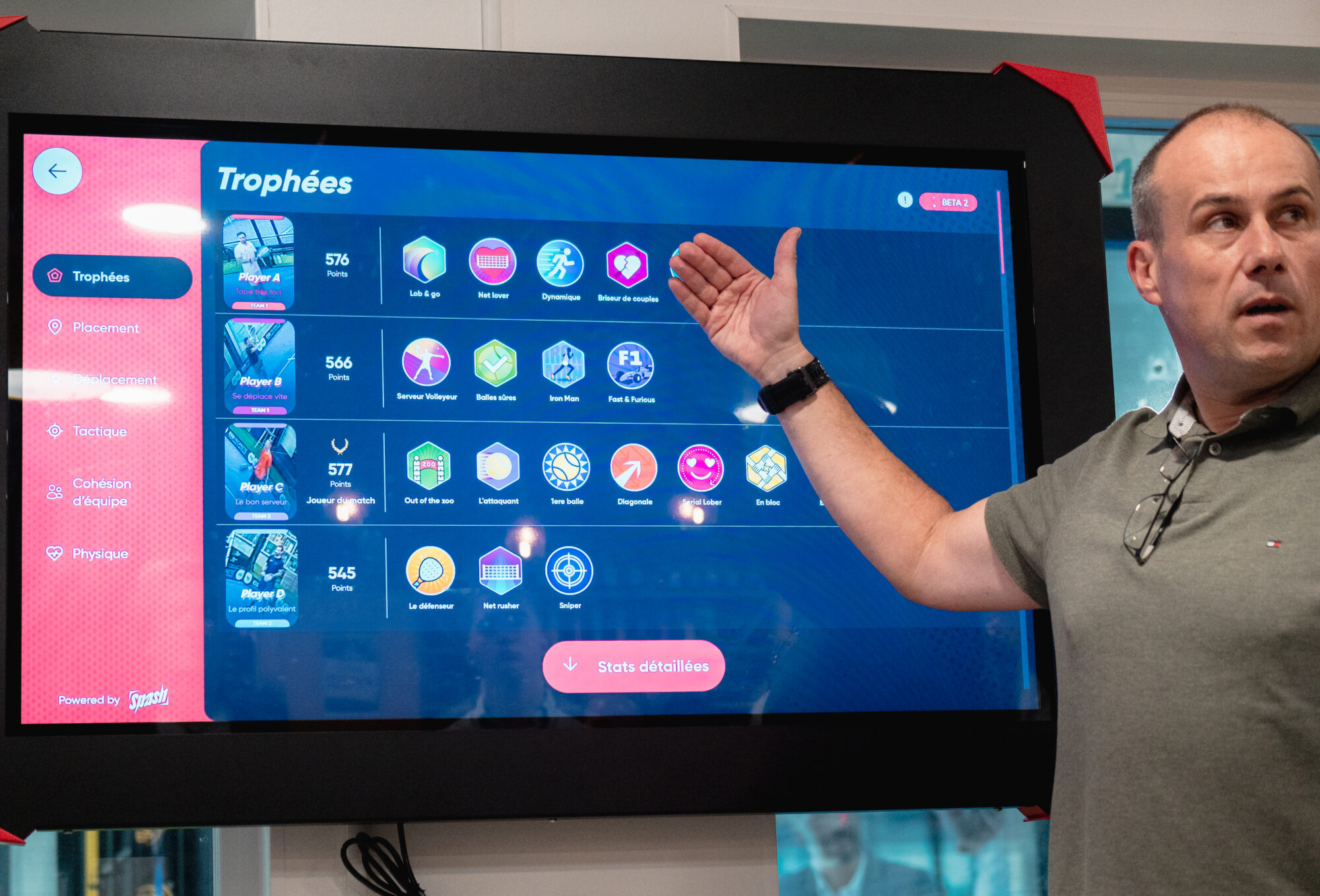
SPASH raises 2 million euros: artificial intelligence at the heart of its strategy for padel clubs
1 hour ago
 AI News
AI can’t just be built. It must be taught.
1 hour ago
 AI News
UC Santa Barbara taking a ‘base camp’ approach to artificial intelligence
1 hour ago
 AI News
Latest News In AI Chips
2 hours ago
 AI News
Britain steps up national defences against growing AI risks
2 hours ago
 AI News
Microsoft President Warns AI Is Less Regulated Than Milk, Washing Machines as He Pushes Governments Towar
2 hours ago