
Alberta government to force Edmonton to change infill rules
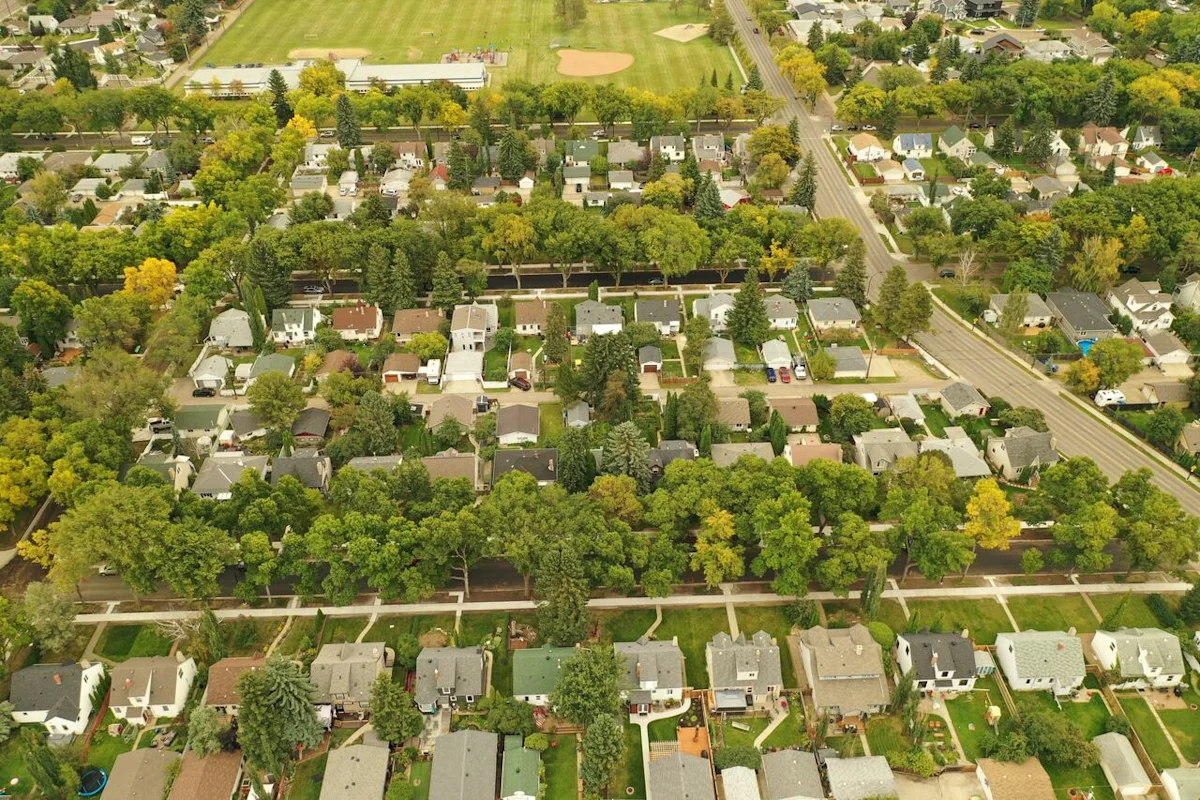
The Alberta government has announced new development measures that will force Edmonton to change infill rules and alter how new homes are allowed to take shape in neighbourhoods in the province's largest cities.
During a news conference Thursday, Premier Danielle Smith said the province is directing the City of Edmonton to repeal its infill bylaws, reverting to parameters that were in place before 2024 for housing types, density and height, and to restore minimum on-site parking requirements in place before 2020.
Smith said the city's current policies are harming homeowners by straining local infrastructure systems, congesting streets and eroding property values.
"While Edmonton has taken some steps to amend portions of its bylaws and lessen the impact in established neighborhoods, the overall approach to infill remains in place," Smith said.
"And let me be clear, the goal should not simply be more housing, but more housing that is planned and integrated in a way that works for both existing residents as well as future families."
Edmonton will have three months to amend its bylaw.
The government is also requiring the City of Calgary to maintain its current pre-2024 bylaw framework, which means "returning to reasonable density and height rules, common sense minimum parking requirements and considerations for utilities and water infrastructure requirements," she said.
That city, which recently repealed blanket rezoning, will be directed to create an overlay identifying lands restored to previous low-density residential zones. This ensures requirements for housing types, building heights and parking remain in place while its broader land-use review continues.
As part of the interim measures announced Thursday, Alberta's two largest municipalities will also be directed to comprehensively review their land-use bylaws to develop a "more balanced" approach to infill development, Smith said.
Edmonton will have 18 months for its review, while Calgary's broader review, which is currently underway, is planned to be completed in 2027.
The changes are necessary to support responsible housing growth as Alberta's cities continue to expand, Smith said. The population growth has put pressure on the available housing supply, and there have been record housing starts to try to meet the new demand.
Blanket zoning changes made in Edmonton and Calgary in 2024 prompted concerns about the pace of infill development, Smith said.
Calgary has acknowledged those concerns and made appropriate changes to its bylaws, she said, but Edmonton's regulations remain out of sync with what responsible development should look like.
Smith made Thursday's announcement in Edmonton, where the scale of recent infill development has been particularly controversial.
Critics have called on the city to repeal its blanket infill and zoning bylaws, arguing that large multiplexes and multi-storey buildings have strained the city's established and historic neighbourhoods.
In response to resident frustrations, Edmonton city council has repeatedly amended its infill bylaws, including recent changes to height reductions in small-scale residential zones and stricter setback rules for new builds.
City administration is scheduled to release a public report by the third quarter of 2027 to evaluate the impact of infills on market values on neighbouring properties.
Municipal Affairs Minister Dan Williams said there has been little consultation with residents and few "checks and balances" on high-density development, resulting in unintended, negative consequences for Edmonton neighbourhoods.
He acknowledged it's unusual for the province to intervene on municipal development bylaws, but said it's necessary to ensure new housing balances Albertans' goal of home ownership in safe, affordable and livable communities.
"This announcement is about restoring the possibility for Alberta to grow in a thoughtful and balanced way. It's about giving Albertans a voice before their neighborhoods are permanently changed," he said.
The move isn't about dictating exactly what municipal residential zoning bylaws should say, he said. "Instead, it's a pause; it's a reset."
Williams credited Calgary's city council for acknowledging these concerns and repealing its 2024 rezoning changes. But he said Edmonton must backtrack further on its bylaws and do mroe to mitigate the impacts of infill on its mature neighbourhoods.
Edmonton's city administration has argued that high-density development is needed to accommodate rapid population growth in the city and reduce the cost of escalating urban sprawl.
But Williams said the pace and scale of high-density development in the city has been "too far, too fast."
"What we have right now isn't working," he said.
Related Stories
 Canada
Ontario Tech opens new pathway to strengthen Canada’s defence capabilities
52 minutes ago
 Canada
Trump interrupted repeatedly by protesters at rally for voters in Texas
1 hour ago
 Canada
New U.S. indictment charges former Venezuelan president Nicolás Maduro with torture
1 hour ago
 Canada
Prince Harry reveals he ‘slipped into depression’ after moving to Canada
1 hour ago
 Canada
Oshawa museum faces nearly $3K in city fines over homeless encampments on property
1 hour ago
 Canada
Prime Minister Carney announces landmark investment to retrofit one million homes, cutting energy costs and emissions
1 hour ago
 Canada
Sask., Alberta premiers reject Elon Musk's call for provinces to separate from Canada
1 hour ago
 Canada
Why Moscow’s secrecy around a suspected plague case is unsurprising
2 hours ago