
Artificial Intelligence in Recruitment: Navigating Tanzania’s Regulatory Landscape

A recent sector study of HR practitioners in Dar es Salaam’s local government authorities found that a clear majority already view AI as improving candidate screening and onboarding, even as they flag bias, transparency and data-privacy concerns as the most significant risks.
Tanzanian employers and employment agencies are thus gradually adopting AI-driven screening, shortlisting and interview tools. However, as highlighted on our previous updater on the use of AI in Tanzania, Tanzania has not yet enacted a specific legislation regulating the use of AI, including in employment. The Employment and Labour Relations Act, Chapter 366, Revised Edition 2023 (“ELRA”), the Personal Data Protection Act, Chapter 44, Revised Edition 2023 (“PDP Act”) and the Personal Data Protection (Personal Data Collection and Processing) Regulations, GN No. 449C of 2023 (the Collection and Processing Regulations) already impose real obligations on AI-assisted recruitment.
In this legal update, we set out the current regulatory position on the use of AI in recruitment, and a practical compliance framework for employers and recruitment agencies operating in Tanzania.
In practice, employers and recruitment agencies are deploying AI across several stages of the hiring process.
The deployment of AI in the hiring process includes:
Despite the associated benefits and efficiencies AI can bring about in recruitment, the use of AI can bring about a range of risks. The risks associated with the use of AI in recruitment include:
Despite that Tanzania has not yet enacted a specific AI legislation, the use of AI in recruitment is not prohibited under the laws of the United Republic of Tanzania. The issue for employers and recruitment agencies is compliance in accordance with the ELRA, the PDP Act and its Collection and Processing Regulations which apply to AI-assisted hiring, promotion or dismissal.
AI-assisted recruitment, screening, and employment decisions are subject to Tanzania’s employment and labour relations laws. An AI screening tool used by an in-house HR team or an outsourced agency therefore falls within Section 7(9), (1) and (4) of the ELRA’s non-discrimination regime, which does not carve-out for automated decision-making.
Employers and employment agencies must ensure AI does not directly or indirectly discriminate against individuals on protected grounds such as sex, age, disability, pregnancy, religion, tribe, nationality, or HIV status pursuant to Section 7(1) and (4) of the ELRA. An AI tool trained on historical hiring data that inadvertently screens out candidates from particular regions, or penalising employment gaps associated with maternity exposes the employer to a discrimination claim in the same way a human recruiter’s bias would have been exposed.
As such, employers and employment agencies remain legally responsible for AI-driven decisions and cannot avoid liability by blaming the technology.
The PDP Act and the Collection and Processing Regulations
Employers or employment agencies using AI to collect, process, or analyse applicant and employee data must comply with data protection requirements under the PDP Act. Section 36 of the PDP Act provides that individuals, including job applicants or employees, have the right not to be subject to decisions based solely on automated processing that significantly affect them, unless an exception applies. Procedurally, where automated decisions are used, affected individuals must be informed and given an opportunity to request a review as per Regulation 19 of the Collection and Processing Regulations. Employers must also ensure AI systems process personal data lawfully, fairly, and only for legitimate purposes. They should limit data collection to what is necessary, review how long data is retained, and ensure any cross-border transfer of personal data complies with Tanzanian law.
An employer that adopts a third-party AI recruitment system or service without interrogating what data it collects, where it is processed, and how long it is retained, risks a PDP Act breach independent of any discrimination exposure under the ELRA.
Employers and recruitment agencies can adopt several measures to reduce their exposure to risks associated with the use of AI in the workplace, to include, but not limited to the following:
Employers and employment agencies using AI in recruitment or employment decisions must ensure that AI systems are transparent, non-discriminatory, subject to human oversight, and compliant with Tanzania's data protection and employment laws.
Clyde & Co Tanzania supports entities in identifying, assessing, and mitigating the legal, regulatory, and practical risks associated with the use of AI. For in depth practical and advisory services, our team can assist with the development of AI governance frameworks, employment policies, data protection compliance measures, contractual safeguards, and risk management strategies tailored to your organisation's needs.
Please contact Clyde & Co Tanzania or your usual Clyde & Co contact for further information and legal advice on the responsible implementation and use of AI in employment and workplace settings.
Related Stories
 AI News
Technology company xSeek acquires Montreal startup LLMonade
14 minutes ago
 AI News
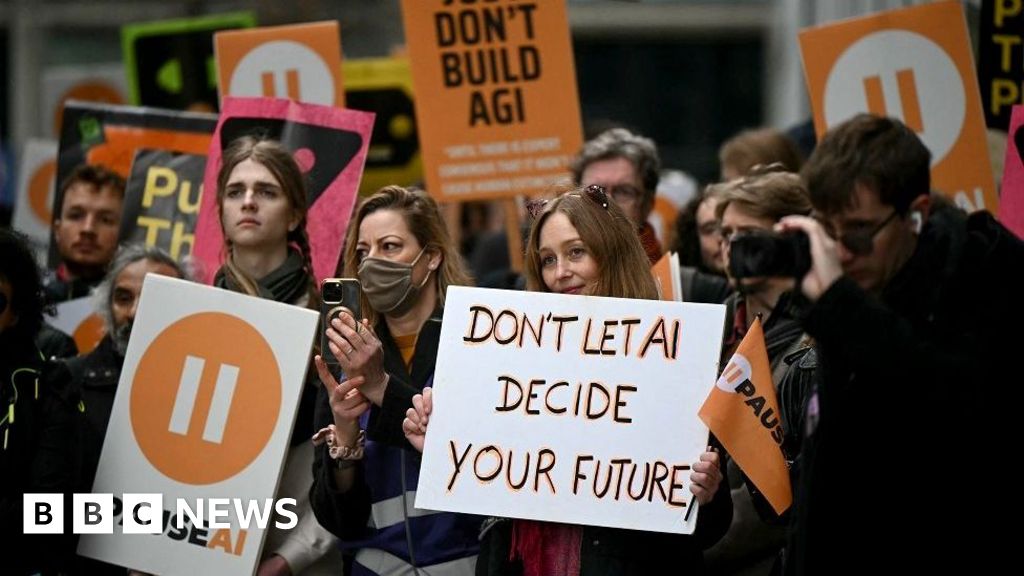
We must heed warnings of AI tech developers, says UK minister
15 minutes ago
 AI News
UK Atomic Energy Authority readies US artificial intelligence collaboration
15 minutes ago
 AI News
Trump claims AI poses no real risk
15 minutes ago
 AI News
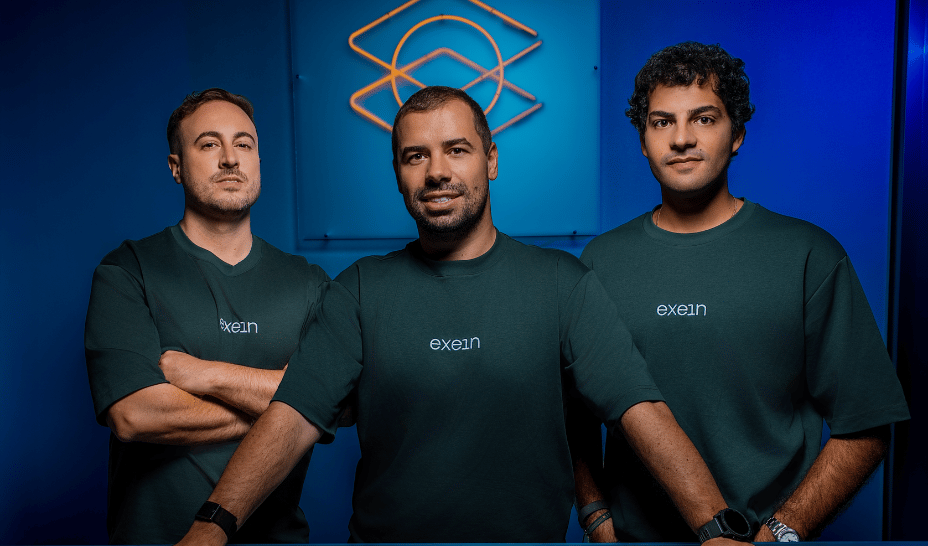
Facing 5,000 new attacks weekly, Exein reaches Unicorn status as it raises €234 million for Physical AI cybersecurity
1 hour ago
 AI News
Trump calls Nvidia CEO to talk AI
1 hour ago
 AI News
GBAPS to launch two AI use, literacy lessons for K-12 students
1 hour ago
 AI News
Trump facing AI backlash in Congress as push for guardrails intensifies
1 hour ago