
Facing 5,000 new attacks weekly, Exein reaches Unicorn status as it raises €234 million for Physical AI cybersecurity
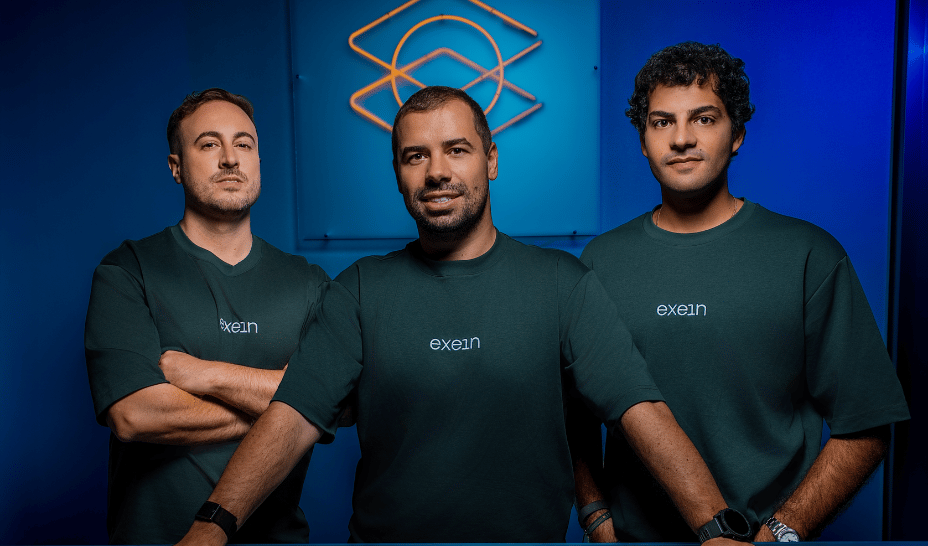
Exein, a Physical AI cybersecurity company out of Rome, today announced €234 million ($270 million) in new funding at a €1.4 billion ($1.7 billion) valuation, reportedly making it the most valuable cybersecurity startup in Europe.
The funding will accelerate Exein’s US and APAC expansion and drive further impacts in Physical AI security: protecting intelligent machines that use AI to perceive, make decisions and act in the physical world, from robots and drones to autonomous vehicles.
The round is led by Headline, with participation from Sofina, Goldman Sachs, European Investment Bank Group through ETCI, KfW Capital and T.Capital, with involvement from previous investors Balderton, HV, Intrepid Growth Partners, 33N Ventures, Lakestar, Supernova Invest, Blue Cloud Ventures and Geodesic Capital.
This is alongside an upsizing of Exein’s existing revolving credit facility led by J.P. Morgan, while KfW joins as an additional lender.
Gianni Cuozzo, founder and CEO of Exein, says: “AI is moving out of the cloud and into the physical world, and this is the transition Exein was built for. We’ve developed deep expertise in how machines operate, invested heavily in the technology needed to protect them and built a global footprint that gives us an understanding of machines at a scale few others can match.
“Frontier models are pushing the patch window to zero. Attacks now happen at machine speed, so defense has to as well. Physical AI is the natural next step for Exein: we’re building machine-time security for machine-time attacks.”
EU-Startups has followed Exein through earlier financings, including a €15 million Series B in 2024 and €170 million raised across two announcements in 2025.
With today’s financing standing substantially above the cybersecurity rounds covered by EU-Startups so far in 2026.
Comparable and adjacent investments include €61.5 million for Belfast-based Cloudsmith to secure AI-driven software supply chains, €25.8 million for Paris-based Qevlar AI’s agentic security operations platform, €17.2 million for Barcelona-based NeuralTrust to secure enterprise AI agents, and €15.4 million for Escape’s AI-powered offensive security platform.
At the connected-device end of the market, Finland’s Test of Things raised €1.2 million to automate cybersecurity testing for IoT products, providing one of the closest comparisons to Exein’s embedded and Physical AI focus.
Across these 2026 cybersecurity and AI-security rounds identified by EU-Startups, approximately €161.4 million had been announced; adding Exein’s latest financing takes the combined amount to around €395.4 million.
Clarey Zhu, Partner at Headline, adds: “As AI moves into robots, vehicles, and critical infrastructure, securing the physical world will become one of the defining cybersecurity challenges of the next decade. Exein’s deep expertise in embedded systems and unique machine data give it a powerful advantage as it scales globally, and that advantage traces back to the team.
“Gianni and his team have incredible technical and commercial depth, they put customer trust above all else, and they have always chosen the harder, long-term-oriented path. We’re honoured to help them build a global leader in Physical AI security.”
Founded in 2018, Exein is a physical AI cybersecurity company distributed across more than two billion connected devices in sectors including industrial automation, automotive, energy, healthcare, semiconductors, aerospace and robotics.
Exein is a global business, with around 50% of its revenue coming from Asia-Pacific and operations spanning Europe, Asia-Pacific and the United States. According to the company, their valuation has increased thirty-fold in two years; the company’s H1 2026 ARR was up 4x year-on-year.
Earlier this year, they launched Photon, its preemptive runtime security architecture, which operates at kernel level to block malicious execution before an attack can run, an approach particularly suited to autonomous machines where security must respond at machine speed.
Exein is now combining this runtime expertise with its machine data advantage to develop a proprietary foundation model designed specifically for Physical AI security.
Unlike general-purpose AI models trained largely on human-generated data, Exein explains that their model learns from data showing how machines actually operate, a dataset built through years of real-world machine activity that would be difficult for competitors to replicate.
The model will power autonomous security agents capable of understanding and protecting the systems on which they operate at machine speed, without waiting for human intervention.
Exein plans to introduce its new agentic security architecture by the end of 2026, with its first foundation models expected in Q1 2027.
This development comes as AI transforms the cyber threat, allowing attacks that previously required highly specialised human expertise to be executed at machine speed. Exein is now seeing around 5,000 new, non-repetitive attacks across its network each week, five times the level recorded a year ago.
The funding will further accelerate its expansion in key markets, including the US and APAC, as investment in robotics, autonomous systems and Physical AI grows.
Over the next two years, Exein plans to increase US hiring, customers and partnerships, while also aiming to open a new office in the San Francisco Bay Area.
Related Stories
 AI News
Technology company xSeek acquires Montreal startup LLMonade
11 minutes ago
 AI News
We must heed warnings of AI tech developers, says UK minister
12 minutes ago
 AI News
UK Atomic Energy Authority readies US artificial intelligence collaboration
12 minutes ago
 AI News
Trump claims AI poses no real risk
12 minutes ago
 AI News
Trump calls Nvidia CEO to talk AI
1 hour ago
 AI News
GBAPS to launch two AI use, literacy lessons for K-12 students
1 hour ago
 AI News
Trump facing AI backlash in Congress as push for guardrails intensifies
1 hour ago
 AI News
Artificial Intelligence in Recruitment: Navigating Tanzania’s Regulatory Landscape
1 hour ago