
ASEAN must strike a balanced AI relationship with China
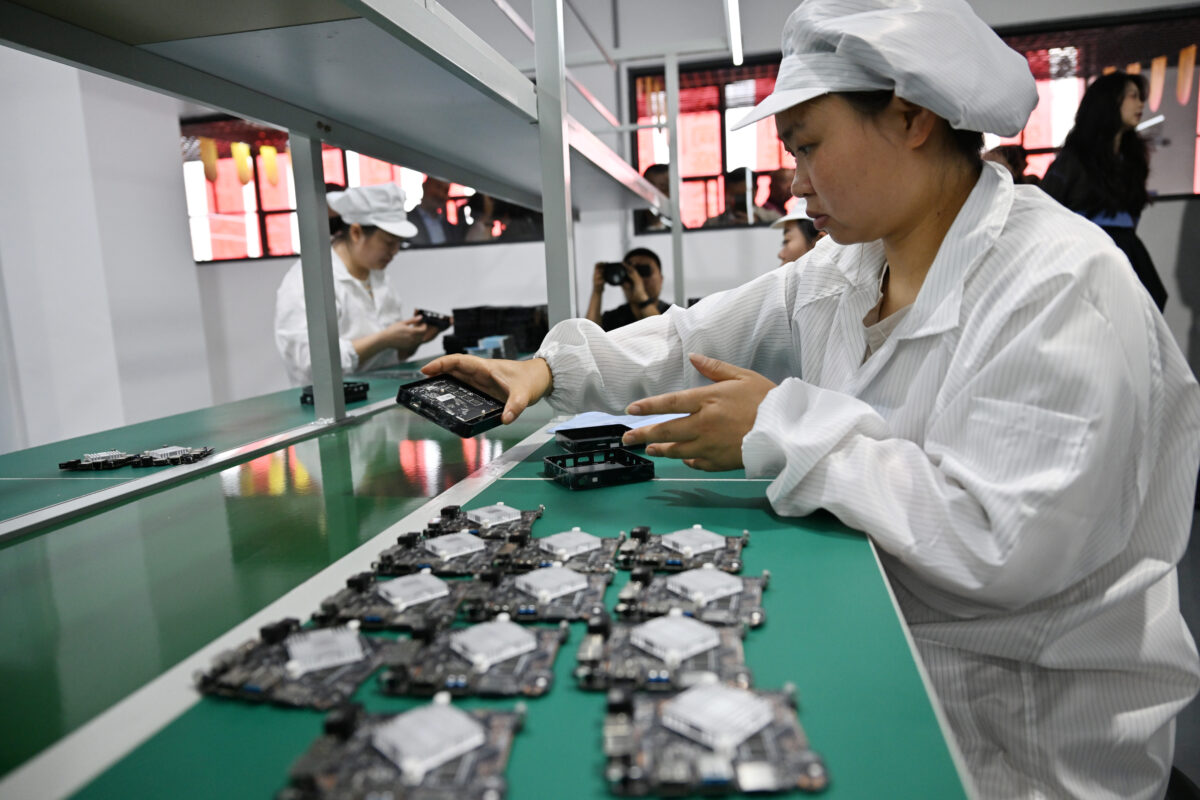
With China as a global artificial intelligence (AI) leader alongside the United States and the European Union, ASEAN countries find themselves increasingly pulled between competing AI ecosystems. China’s AI rise helps ASEAN capture AI’s economic benefits, but this carries dependency and political risks. ASEAN should take a pragmatic and balanced approach to engagement with China on AI development and adoption.
As global AI governance becomes increasingly fragmented, regional initiatives are becoming more important, creating strategic space for middle powers like ASEAN to exercise agency. Much of ASEAN’s emerging AI governance architecture has been shaped by Singapore’s leadership and close engagement with both Western and Asian technology ecosystems.
China has increasingly promoted its own international AI governance vision through the Global AI Governance Initiative and later Action Plan, which place a strong emphasis on sociopolitical order and coherence with broader Chinese Communist Party-led development and security priorities. This includes advocating for cyber laws that facilitate strict control over internet content. They have campaigned heavily, particularly at the United Nations, for building AI capacity in the developing world, deepening relations with the Global South and fostering a global AI marketplace for China’s AI industry to engage with.
China’s development-oriented posture has already encouraged closer AI engagement with ASEAN. They have held China–ASEAN AI cooperation forums and ministerial dialogues. The 2026 ASEAN Digital Ministers’ Meeting reaffirmed their commitment to deepen AI cooperation with China, including announcing a joint AI Industry Innovation Center and Digital Academy. China has also pursued bilateral AI cooperation initiatives with Malaysia and Cambodia.
That ASEAN has so far welcomed this engagement is unsurprising given its real benefits — coming at a moment when the United States has shifted from safety-led multilateralism toward a more transactional, competition-focused AI posture, leaving space for China to deepen its regional presence. China offers ASEAN advantages across the AI stack — from open-source models and digital services to cloud infrastructure, semiconductors, telecommunications equipment and renewable energy systems needed to power AI deployment. Accessing Chinese AI expertise through knowledge-sharing arrangements is already a cornerstone of ASEAN’s 2025–30 Responsible AI Roadmap.
Yet unconsidered and unfettered integration carries risks. While China’s overlapping tech-industrial ecosystems make precise market share measurement difficult, it is clear that Chinese AI products are increasingly entangled in Southeast Asia’s AI landscape. In 2025, Singapore’s national AI models adopted Alibaba’s architecture. Chinese semiconductor fabrication plants are also taking root in Malaysia and Chinese firms are leading fixed-asset investment across the region. Over-reliance on any single external AI ecosystem carries sovereignty risks.
Though China’s political leverage is well-documented, the United States’ inward turn under the second Donald Trump administration is a reminder that US technology access is equally contingent on geopolitical winds. This is especially worrying if AI soon becomes central to rapid economic growth and indispensable for ASEAN to remain internationally competitive. Like its 2025 restrictions on US access to rare earths, China could wield AI access as a bargaining chip for policy concessions.
ASEAN cannot assume that open-source access alone will safeguard long-term AI sovereignty. Even openly available models often rely on Chinese-controlled cloud infrastructure, semiconductor supply chains, technical standards and ongoing engineering support. Commercial pressures, security concerns or geopolitical tensions could also push open ecosystems towards more restricted and proprietary models.
Leaning too heavily towards China could also strain relations with the United States. Malaysia experienced this in 2025, when the government endorsement of a Huawei-led AI chip project prompted a negative response from the United States, forcing Malaysia to retract the statement. Tensions are also simmering over the alleged smuggling of US export-controlled chips through ASEAN countries. Many of the world’s most commercially influential AI systems, developer platforms and enterprise tools continue to originate from US firms, making them deeply embedded in global digital value chains.
ASEAN can mitigate dependency risks by moving from ad hoc, state-level hedging towards coordinated regional strategy. Individual ASEAN members already source AI infrastructure from both the United States and China, but with coordination, each state is left exposed to bilateral pressure alone. The ASEAN Digital Economy Framework Agreement, concluded in May 2026, offers a critical vehicle for embedding a collective approach. At the same time, ASEAN will need to invest in domestic AI capability, regional compute infrastructure and local innovation ecosystems to avoid long-term technological dependence on any external power.
ASEAN must also recognise its unique points of leverage. Some ASEAN countries are attractive locations for AI infrastructure buildouts due to cheap land and maturing digital economies. Accelerating AI adoption, expanding AI education and upskilling workers can drive domestic AI demand, making ASEAN a desirable market for AI deployment.
ASEAN can also lean on its maturing AI governance framework to navigate AI relations with China. The Working Group on AI Governance could lead discussions on how to manage dependency concerns, maximise beneficial relations and strengthen ASEAN’s AI economy. The ASEAN AI Safety Network could also build relations with China’s own AI Safety and Development Association. Governance cooperation will clarify mutual expectations and values around AI development, identifying possible points of contention in advance.
The question is no longer whether ASEAN engages China on AI, but whether it can do so without surrendering strategic autonomy.
Kelly Forbes is President and Executive Director of the AI Asia Pacific Institute.
Cass Maughan is Intern at the AI Asia Pacific Institute.
Related Stories
 AI News
CN train derails in Truro, blocking key crossing; no injuries reported
41 minutes ago
 AI News
OpenAI Cancels Cursor Partnership Citing Distrust of Elon Musk
44 minutes ago
 AI News
The 10 Most In
1 hour ago
 AI News
Moulton says Sen. Markey, 80, is too old for another term. Young Massachusetts Democrats are divided
1 hour ago
 AI News
'Almost dystopian': Should AI be used to write work emails?
1 hour ago
 AI News
'A wave of AI attacks on critical infrastructure is coming', tech giants warn
2 hours ago
 AI News
Xero Adds AI, Google Targets Law Firms And Claude Beats ChatGPT: 5 Small Business Tech Stories
2 hours ago
 AI News
LTM inaugurates global delivery and AI competency center in Kolkata
3 hours ago