
Thomas Jefferson recorded the weather, then declared independence
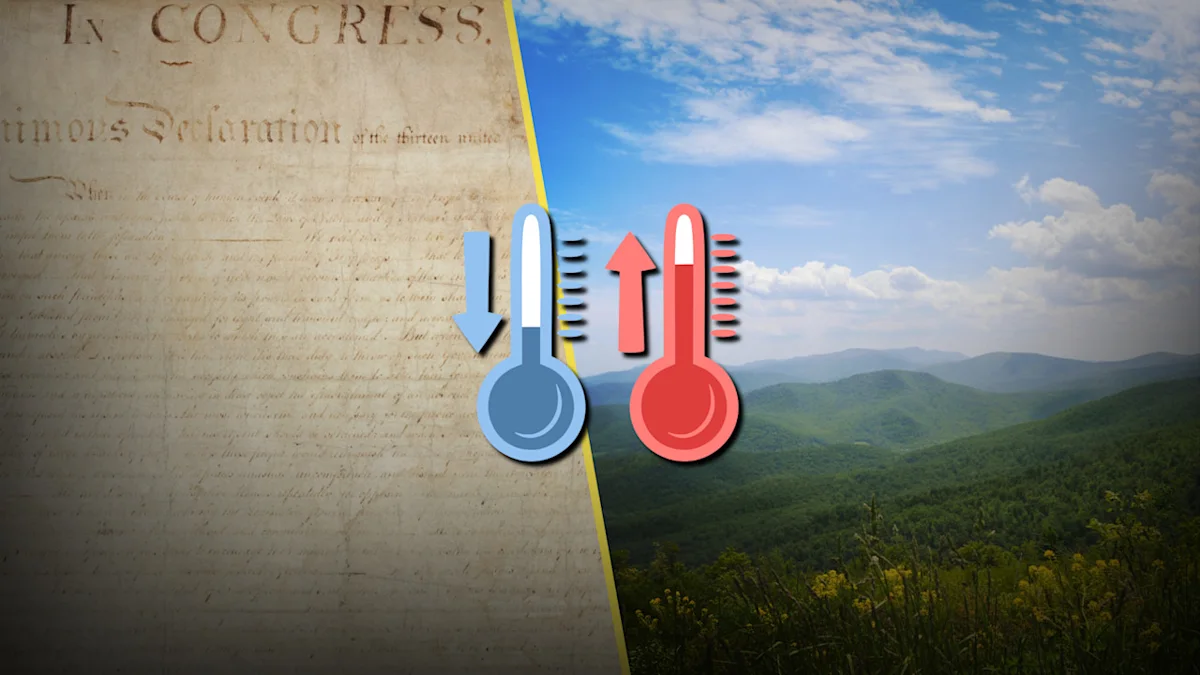
"We hold these truths to be self-evident, that all men are created equal…"
The preamble to the U.S. Declaration of Independence contains one of the most well-known sentences in the English language. What's less well-known is that the document's author forged history on more than one front during that summer in 1776.
One of Thomas Jefferson's many nicknames is the "father of weather observers." His meticulous habit of recording daily temperature, precipitation, and conditions helped lay the foundation for the modern science of meteorology.
DON'T MISS: Canadian researcher cracks 135-year-old 'unsolvable' code
Jefferson was a complex figure and a lifelong academic whose curiosity led him to everything from law to architecture to winemaking.
Weather also piqued his interest. In a society built on agriculture, Jefferson recognized that tracking weather patterns was critical to a grower's success.
Meteorology was mostly a mystery back in the 18th century. Calibrated weather instruments wouldn't come along for decades, and accurate predictions were generations down the line.
Using a rudimentary thermometer, Jefferson began a routine of documenting conditions several times every day, beginning with a 81.5°F (27.5°C) reading in Philadelphia at 9:00 a.m. on July 1, 1776.
Three days later, the American colonies declared their independence from the British crown.
Delegates approved the revolutionary document in Philadelphia's Independence Hall on July 4, which saw a 1:00 p.m. temperature of 76°F (24.4°C). The first public reading took place on July 8, when the daytime high reached 81°F (27.2°C).
And through it all, Jefferson kept up his weather journal.
The founder was so invested in maintaining detailed weather records that he continued routine observations during his ambassadorship in France, throughout his two terms as president, and well into his retirement.
According to the Thomas Jefferson Foundation, he even planned to assemble the first network of weather observations throughout Virginia, but it never came to fruition. The first dedicated weather station network wouldn't form until 1849.
Today, meteorologists have access to more than 1,700 weather stations across Canada and many thousands more across the U.S. Just about all of these stations provide up-to-the-minute information on temperatures, moisture, precipitation, visibility, and more.
Related Stories
 AI News
Ottawa police rescue woman held hostage for more than 14 hours
18 minutes ago
 AI News
Eight of the 10 most populous countries are not in the World Cup
18 minutes ago
 AI News
Mali government reports rebel attacks targeting northern towns
19 minutes ago
 AI News
Why Romania’s ‘walking forests’ seem to move without anyone noticing
19 minutes ago
 AI News
Pope praises US history of welcoming migrants in implicit rebuke to Trump
19 minutes ago
 AI News
Opinion: Former concert producer says council got it right
19 minutes ago
 AI News
Federal government invests $9 million into southern Alberta projects
19 minutes ago
 AI News
20,000 protest against AfD party conference in Germany
19 minutes ago