
ASENAV to Build Hybrid Research Vessel for UC San Diego
ASENAV to Build Hybrid Research Vessel for UC San Diego
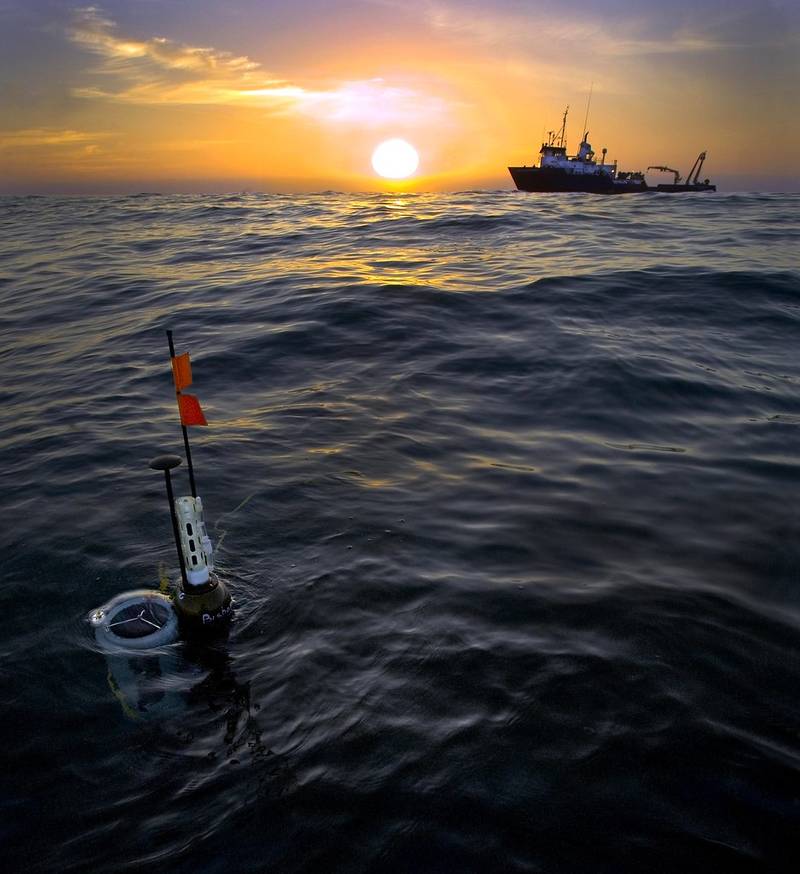
Chile will export its first floating laboratory to the United States after ASENAV signed a contract to build a hybrid vessel dedicated to ocean research for the University California of San Diego.
From its home port in San Diego, California, the 38-meter vessel will serve hundreds of scientists and students each year along the Eastern Pacific coast as part of the U.S. Academic Research Fleet. The NB 201 project, designed by US-based naval architecture firm Glosten, will replace Research Vessel Robert Gordon Sproul, the current coastal research vessel being retired after nearly four decades of service.
The electrically propelled vessel will carry up to 20 people (crew, students and scientists) and will serve missions for Scripps Institution of Oceanography.
The project has an estimated timeline of 24 months and covers a comprehensive scope of design, construction, testing, and trials through to delivery of the vessel, projected for July 2028.
The ship will be capable of operating more than 200 days per year at sea to fulfill operations demanding the highest scientific, acoustic, and environmental standards.
Chilean Naval Engineering at the Service of Marine Research
The vessel will be designated in the U.S. Academic Research Fleet as a Coastal Class Research Vessel. It will feature a monohull design, with a length of 38.0 meters, beam of 10.2 meters, and draft of 3.0 meters, propelled by dual azimuthing L-Drive stern thrusters and a bow thruster. The propulsion system will allow the ship to maintain precise control over its speed and position. During expeditions, the vessel will efficiently operate at various working speeds: transit at 10 knots, survey at 8 knots, towing at 2 knots, and maintaining exact positioning using dynamic positioning at low or no speed.
The ship will support up to twenty crew and scientists on board for missions lasting up to eleven days at sea, with the ability to carry up to forty students on one-day educational deployments.
The vessel is designed to support up to 55 missions per year over 200 days at sea, operating 24 hours per day.
Intended as a general-purpose research vessel, the ship will include many different capabilities to support scientific missions in biology, chemistry, geology, geophysics and physical oceanography:
A key technical aspect of the project will be compliance with performance guarantees related to speed, range, power quality, airborne noise, exhaust emissions, and low underwater radiated noise at survey speeds between 1 and 10 knots, a condition of particular importance to avoid interference with scientific measurements and the marine environment. Glosten's subsidiary, Noise Control Engineering, LLC, will lead the vessel's airborne and underwater noise analysis to help ensure the acoustic performance requirements are achieved.
The vessel will feature hybrid battery propulsion and low-emission certifications, incorporating solutions designed to reduce the environmental impact of its operations. The design further includes a mandatory UPS system for critical science, navigation, and mission loads, ensuring operational continuity for the vessel's essential systems.
Integration into the U.S. Academic Research Fleet will require compliance with a range of mandatory technical standards, including classification requirements of the American Bureau of Shipping (ABS), regulations of the United States Coast Guard (USCG), and compliance with applicable federal, state, and local regulations in the United States.
Related Stories
 Explainers
Trump laying groundwork to impose national emergency by sowing election distrust
45 minutes ago
 Explainers
Handy Helpers: Electric Underwater Tools and Manipulators
1 day ago
 Explainers
Build intelligent security for healthcare APIs with Amazon Bedrock
2 days ago
 Explainers
Car salesman becomes Belgian prince after royal lineage legally confirmed
2 days ago
 Explainers
Council with no leader faces government takeover
2 days ago
 Explainers
Prove you won't take government benefits: US issues details of new Green Card rules coming into effect on
4 days ago
 Explainers
What is Ebola and why is the outbreak in DRC causing so much concern?
4 days ago
 Explainers
Quantum computing may be facing a replication crisis
5 days ago