
Canada could become the EU's first 'associate member.' What does that mean?
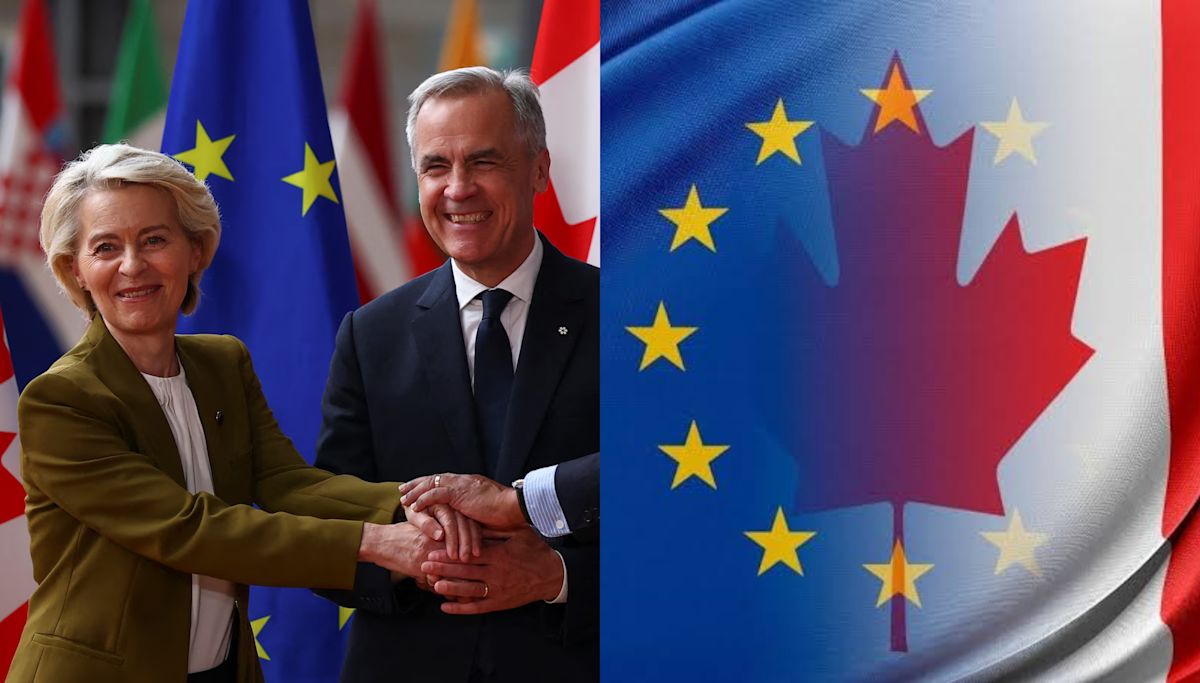
Canada could become the European Union's first "associate member" under a proposal unveiled Wednesday by European Commission President Ursula von der Leyen.
Von der Leyen made the announcement in front of Prime Minister Mark Carney during her annual State of the Union address in Strasbourg, France, calling for a new kind of relationship between Canada and the 27-member bloc.
The proposal would not make Canada an EU member. Instead, it would create a new status as Canada and Europe look to deepen ties beyond their existing trade relationship.
"I would like to work with you on opening the door for Canada being the first associate member of the EU," von der Leyen said, prompting a standing ovation from European lawmakers. Carney rose from his seat and shook her hand.
Carney met with von der Leyen and European Parliament President Roberta Metsola in Strasbourg on Wednesday, where they discussed deepening the Canada-EU partnership in areas including critical minerals, energy, defence, research and advanced technologies, according to the Prime Minister's Office (PMO).
The PMO said Canada is seeking stronger relationships with trusted partners to build "strategic autonomy, resilience, and sovereignty."
But for Canadians, the announcement is raising a much bigger question: What would this actually mean for Canada?
Would associate membership change how much control Canada has over its own policies, and could it affect areas such as trade, immigration or regulation?
To understand what is actually on the table, we spoke with Achim Hurrelmann, a Carleton University professor of political science and co-director of the university's Centre for European Studies, who specializes in Canada-EU relations.
So, what exactly is an EU associate member?
"There is no such thing as associate membership in the EU," Hurrelmann said in an interview with Yahoo News Canada. "That means that it's very unclear."
Achim Hurrelmann is a professor of political science and co-director of Carleton University's Centre for European Studies. (Image courtesy: Carleton University)
The EU has historically drawn a fairly firm line between being inside the bloc and being outside it.
“It’s very interesting that this Pandora’s box is now being opened. We absolutely do not know what associate membership would look like.
Hurrelmann pointed to the Brexit negotiations as an example, when the EU repeatedly stressed that the United Kingdom could either be in or out, rather than occupying some halfway position.
Hurrelmann said the proposal needs to be understood in the context of the changing geopolitical relationship between Europe and the United States under the Trump administration.
"It's very clearly to be understood in the context of the Trump administration in the United States and the changed geopolitical landscape that that has triggered," he said.
For Europe, that has meant a renewed focus on what it calls "strategic autonomy," Hurrelmann said.
"That means to become less dependent on external partners," he said, pointing to areas including defence and energy.
Canada also brings practical and symbolic importance to that effort, he said, particularly because of its resources and its close relationship with Europe.
Would Canada become part of the EU?
No. Hurrelmann said the biggest distinction between full EU membership and a close relationship with the bloc is access to the EU's single market.
Canada already has several agreements with the EU, including the Canada-European Union Comprehensive Economic and Trade Agreement (CETA), its trade agreement with the bloc, as well as a strategic partnership agreement and a security and defence partnership.
But Canada is not part of the EU single market.
"That means, most importantly, that Canadian goods are still subject to the EU's product and safety regulations and so-called non-tariff" barriers, Hurrelmann explained.
The EU has its own rules governing when and how goods can be placed on its market, he explained.
Would Canada have to follow EU rules?
That remains one of the biggest unanswered questions, said Hurrelmann.
"It's hard to answer because we don't know what associate membership means," Hurrelmann said.
Canadian Prime Minister Mark Carney meets with European Commission President Ursula von der Leyen and European Council President Antonio Costa at the G7 summit in Evian-les-Bains, France, Monday, June 15, 2026. (AP Photo/Vadim Ghirda)
If Canada were pursuing a relationship similar to Norway or Switzerland, he said, the answer would be different.
"If Canada were interested in a status like Norway and Switzerland, yes, that's absolutely what this would entail," he said.
But Hurrelmann does not believe that is what the Canadian government is seeking.
"If associate membership is just a new label for what we already have, then no," he said. "But then the question is, why do we need this label? It's really not clear to me."
So what does this actually mean for Canada?
For Canadians hearing about the proposal for the first time, Hurrelmann said it is important not to treat the announcement as though Canada is suddenly on a path to joining the EU.
"I think they should understand that it's primarily, at this point at least, a symbolic proposal," he said.
"It's primarily meant to emphasize, as I said earlier, that Canada and the EU are not alone in the world and Canada and the EU are close friends."
The two sides want to signal that they intend to build an even closer relationship, he said, both to their own populations and to the wider world.
"There are no concrete proposals in the work that would make a huge difference in the relationship anytime soon," he said.
What about Canadian sovereignty?
The label itself could make Canadians question whether closer ties with Europe could come at the expense of Canadian sovereignty.
"I find it understandable that a label like Associate Member triggers those concerns," Hurrelmann said. "That's why I personally am not a big fan of this label."
But he pointed to the more concrete initiatives currently being discussed between Canada and the EU, including a digital trade agreement covering issues such as data transfers and cybersecurity.
"They are working on more collaboration on critical raw materials and potentially creating something like a joint stockpile of critical raw materials," he said.
There are also discussions around Arctic initiatives and potentially opening elements of Europe's Erasmus student exchange program to Canadian university students, he said.
"So those are the concrete initiatives that are being discussed," Hurrelmann said.
For now, those individual initiatives offer a clearer picture of where Canada-EU relations could be heading than the undefined term "associate member."
From 'I'm here for it' to 'EU is a dumpster fire': Canadians weigh in online
Canadians took to social media with plenty to say about the prospect of Canada forging a closer relationship with Europe.
Some welcomed the idea of stronger ties with the European Union, while others questioned what closer integration could mean for Canada's sovereignty and ability to make its own decisions.
One social media user strongly criticized the proposal, calling the EU a "dumpster fire" and accusing the Canadian government of taking Canada in the same direction.
Screengrab of X comment courtesy: @augustagirl61/X
Another commenter welcomed the idea, arguing that Canada is "more European than American."
Screengrab of X comment courtesy: @dejager420/X
Another commenter welcomed the prospect of closer ties with Europe, saying Canada should be free to trade with the EU, China and the U.S. rather than choosing a single partner.
Screengrab of X comment courtesy: @ChidiNwatu/X
Another commenter criticized Carney, accusing him of circumventing Parliament's processes and calling on him to return to Ottawa.
Screengrab of X comment courtesy: @BlueBell67475/X
This commenter chimed in strongly opposing the proposal, saying they do not support Canada becoming an EU associate member.
Screengrab of X comment courtesy: @nowollovreyz/X
Related Stories
 Canada
Albertans head to polls in historic referendum on whether they want to stay in Canada
3 weeks ago
 Canada
In the news today: four soldiers killed, Alberta referendum, AI privacy fears
3 weeks ago
 Canada
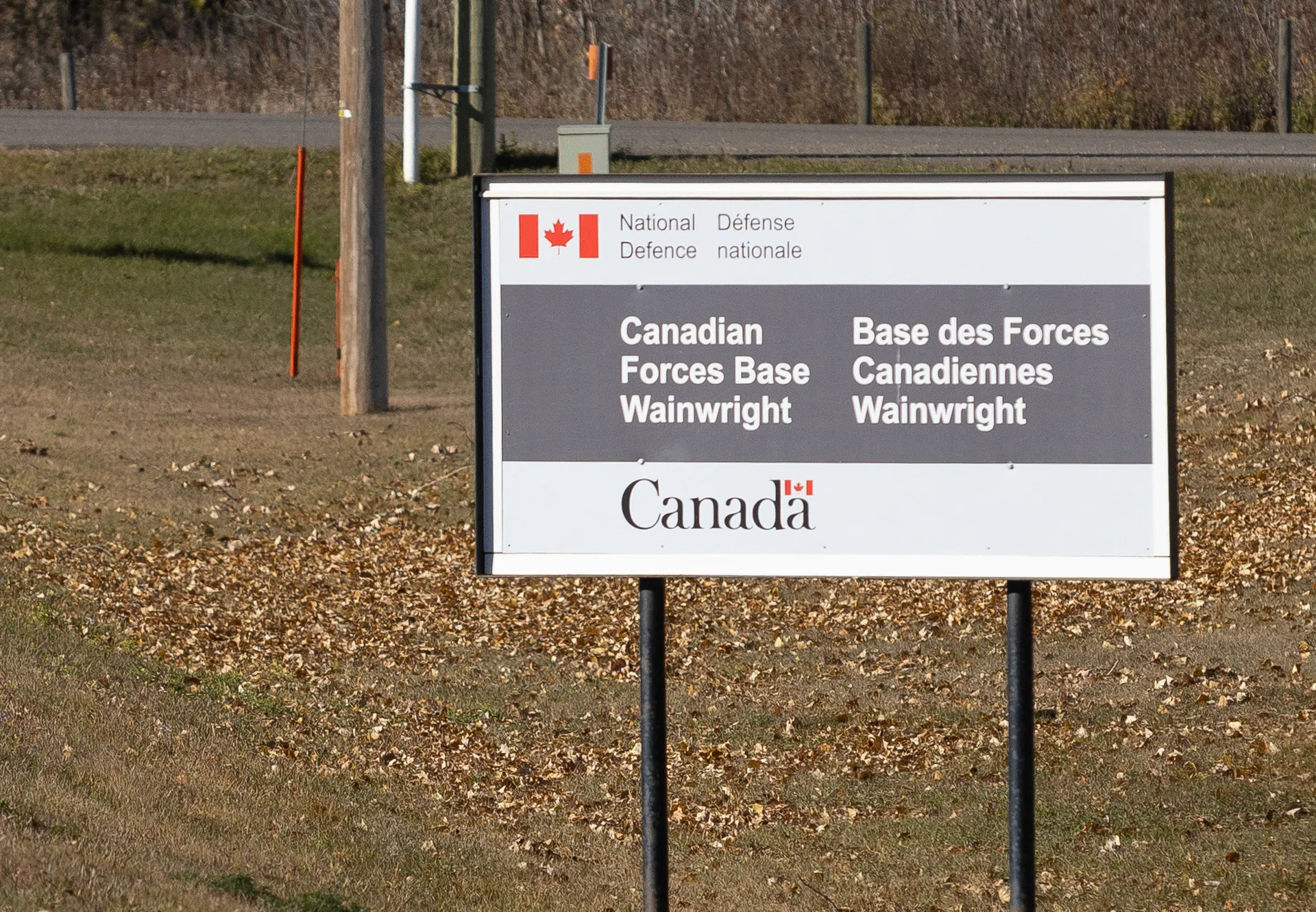
How a grass fire at a Canadian military base killed four soldiers
3 weeks ago
 Canada
How will household electricity rebate reduction, temporary winter pricing change impact Ontarians?
3 weeks ago
 Canada
Residents told to boil tap water due to bacteria
3 weeks ago
 Canada
Oil
3 weeks ago
 Canada
Albertans vote on path to independence as Carney fights to keep Canada united
3 weeks ago
 Canada
Two of 4 soldiers killed in fast
3 weeks ago