
Canada high court refuses to hear Aboriginal title appeal on New Brunswick private land
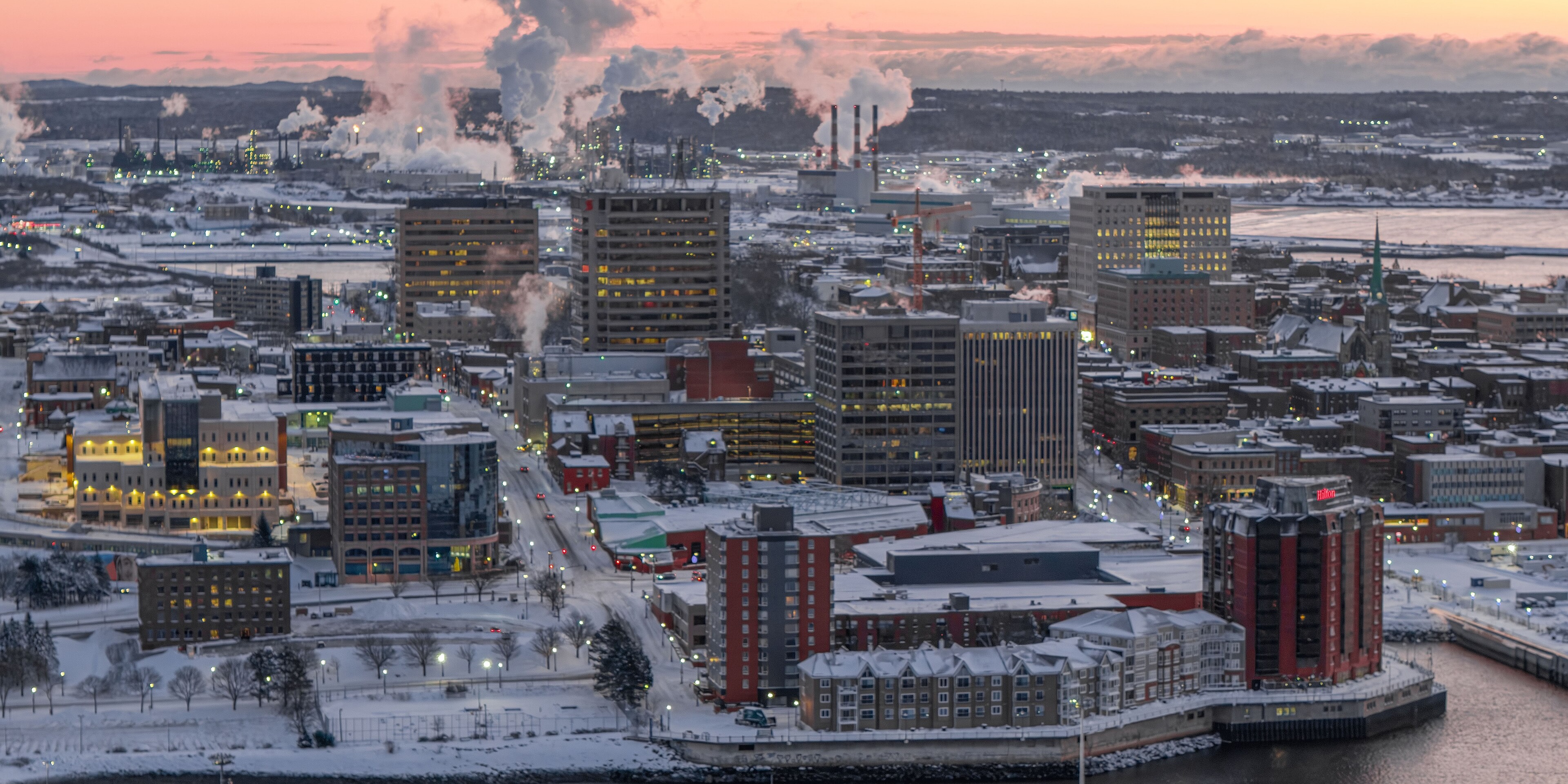
The Supreme Court of Canada refused on Thursday to hear an appeal of the six Wolastoqey communities in New Brunswick, seeking to assert Aboriginal title over private lands.
The issue before the court is whether First Nations can assert Aboriginal title over privately-owned lands, a fee simple interest in land. The top court’s refusal to hear the appeal makes final a lower court’s decision, holding that the Wolastoqey Nation cannot seek declarations of Aboriginal title over privately-owned lands but could seek damages against the government for its unjustified infringement of Aboriginal title, if established.
In response to the refusal, the Wolastoqey Nation maintained that it does not remove the government’s duty to consult the First Nations or provide clarity on the law. Chief Patricia Bernard of Madawaska said, “The fight for our homeland will continue.”
In 2021, the six Wolastoqey communities commenced an action against the federal Canadian and provincial New Brunswick governments, and other private companies. They sought to assert Aboriginal title over government and private lands owned by the defendants. Justice Kathryn A. Gregory removed the private defendants from the case because they had no direct legal relationships with the Wolastoqey. However, the ruling still allows the plaintiffs to claim against the government and establish Aboriginal title over all lands in question.
In December 2025, however, a three-judge panel at the Court of Appeals of New Brunswick unanimously limited the claim to assert Aboriginal title only over government lands. While the Wolastoqey Nation can prove Aboriginal title existed before the government assigned the land to private owners, they can only seek compensation from the government. The court found that removing the private defendants from Aboriginal rights litigations is legally correct. However, after removing the private defendants, asserting Aboriginal title, if established, over privately-owned lands would violate their right to be heard.
In August 2025, the Supreme Court of British Columbia adopted a different approach to the overlapping Aboriginal title and private ownership. Justice Barbara M. Young held that Aboriginal title and fee simple interest can coexist on the same land, urging the government to negotiate with the First Nations communities. She suspended a declaration that would render the fee simple interests defective and invalid for 18 months, allowing time for negotiations. The federal and provincial governments are appealing the decision.
At the House of Commons, conservative lawmaker Jamie Schmale proposed a motion on Monday, calling on the government to take all necessary actions to prioritize private property in the Cowichan case over all other titles. All parties except the Conservatives voted against the motion.
Related Stories
 Canada
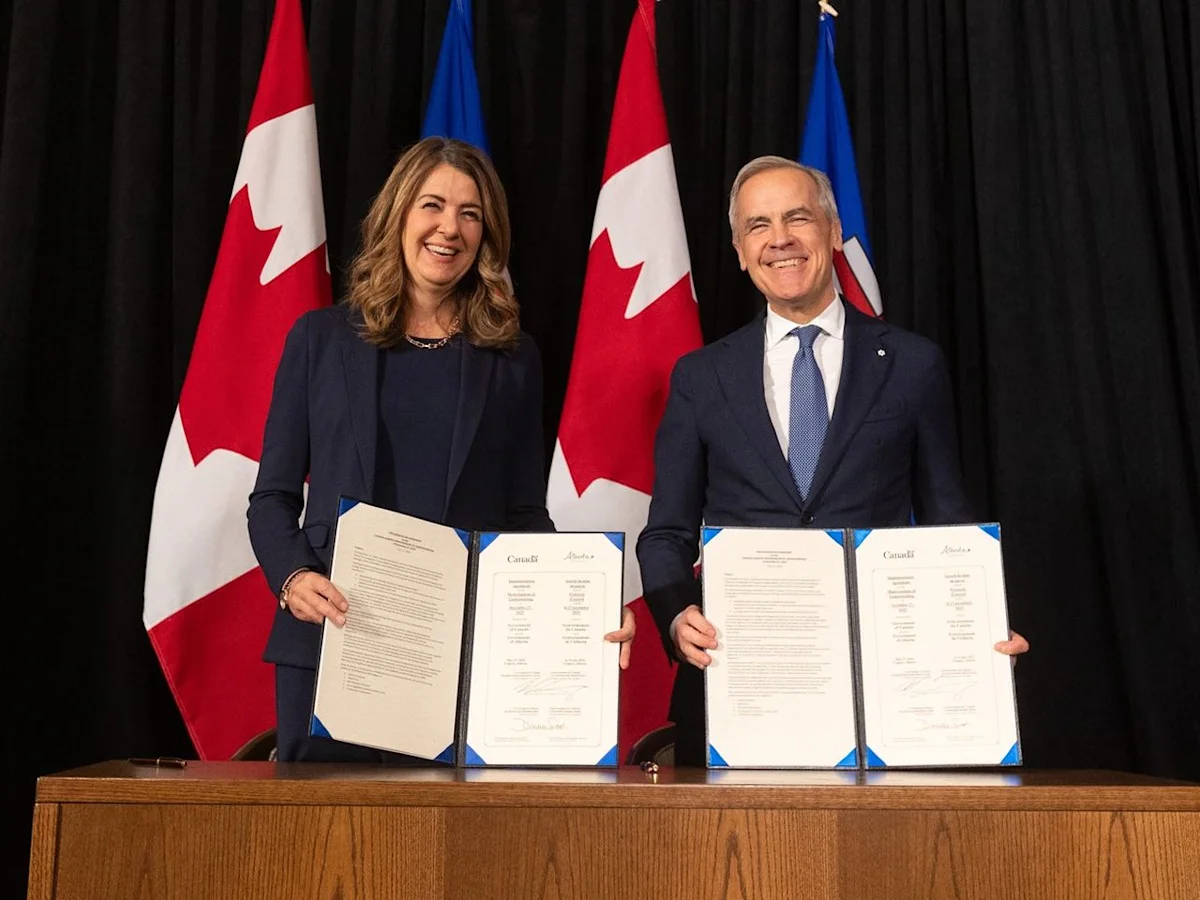
The MOU is a vision; Canada still needs the pathway
20 hours ago
 Canada
‘This crosses partisan lines’: Canada Day singalong seeks national unity
20 hours ago
 Canada
H
20 hours ago
 Canada
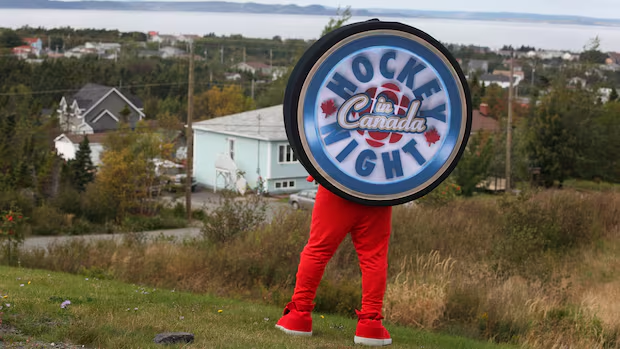
'Major shock': Canadians grapple with loss of CBC's Hockey Night in Canada tradition
4 days ago
 Canada
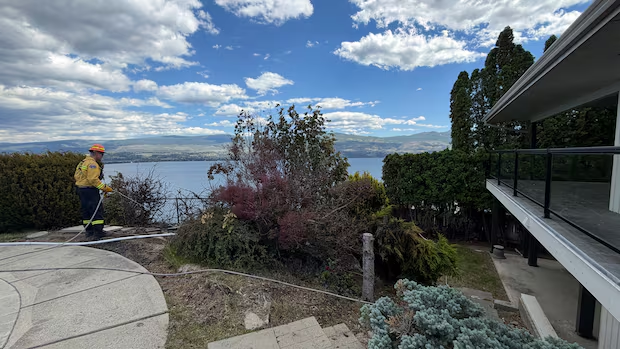
Hundreds of families return home after crews bring West Kelowna, B.C., wildfire under control
4 days ago
 Canada
Davies' status for Canada
4 days ago
 Canada
Winnipeg judge removes high
4 days ago
 Canada
Victoria firefighters fight blaze at Canada’s oldest Chinese temple
4 days ago