
Canada’s biggest taxonomy lab to call Esquimalt home
Canada’s biggest taxonomy lab to call Esquimalt home
Published 1:30 pm Thursday, August 6, 2026
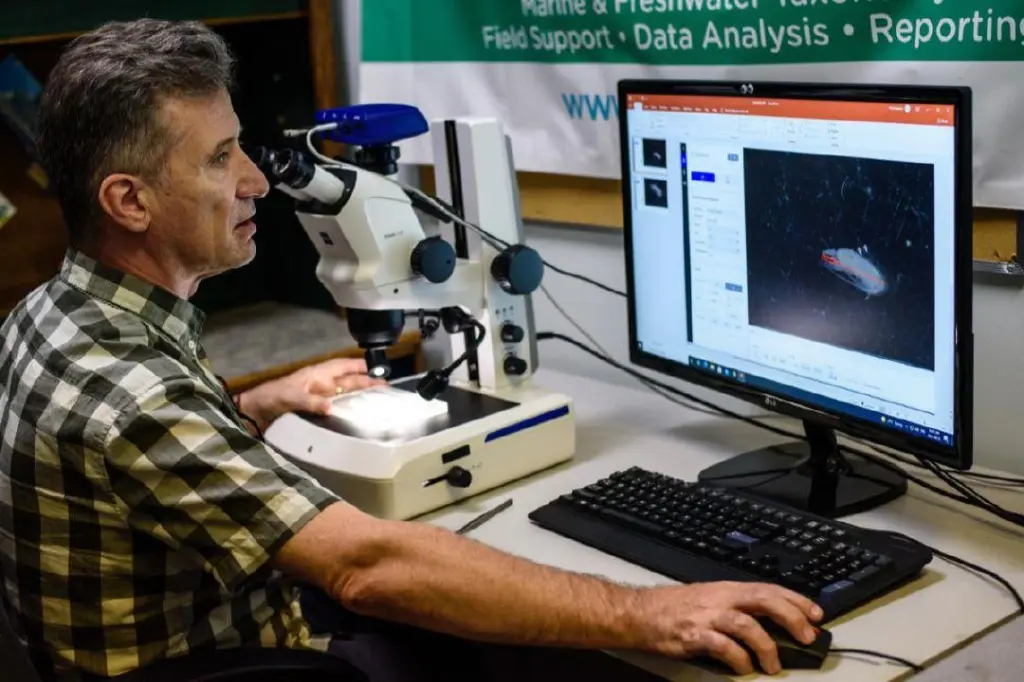
Canada’s biggest taxonomy lab, rooted in Victoria, supporting environmental monitoring programs across the country for decades, is moving to Esquimalt.
Biologica Environmental Services Ltd., established in 1994 as a specialized aquatic environmental laboratory, currently houses 34 scientists, technicians, taxonomists, and support staff in 488F Bay Street.
Speaking to Victoria News, president Tara Macdonald said that they chose to move to Esquimalt because they think it is an operational fit, is a more transit-accessible location with cycling infrastructure, and most prominently, is a natural fit, given that it is located within Esquimalt’s marine community.
The move was mainly triggered by a need for industrial zoning and a lot of office space, as well as a lab.
“I’m realizing what a vibrant community it [Esquimalt] is…So, I’m kind of looking forward to that part of it,” she said.
Their primary service is to receive samples from aquatic habitats that are being monitored, and to identify and count the critters such as worms, clams, insects or other species.
The service is helpful for industries that are putting effluent into the water, such as mining, oil and gas, municipal water quality monitoring, pulp and paper, and aquaculture.
They look for algae, zooplankton, invertebrates, and sediment-dwelling invertebrates in freshwater and marine habitats. They are a full-service laboratory for taxonomy, where they have expertise in aquatic habitats across marine, freshwater and estuarine systems.
The company extends support to projects including environmental impact assessments, environmental risk assessments, aquatic effects monitoring programs, and ambient monitoring programs.
Their strength is their knowledge in a lot of different services, which makes them strong across the board, Macdonald said.
Speaking of why the company is prominent among those providing similar services in Canada, she said that the rare expertise makes them stand out.
“To become a person who’s really skilled at identifying a certain group of invertebrates or algae or zooplankton takes many years…They’re kind of experts in that work alone,” she said.
“I think what distinguishes us is we’re really a collection of these experts.”
Related Stories
 Canada
'Space Academy': Trump announces new U.S. Space Force school
53 minutes ago
 Canada
Union, industry leaders urge government not to rush trade talks with the U.S.
53 minutes ago
 Canada
Canada
53 minutes ago
 Canada
‘This is our lake’: Canadian brands rally around Lake Ontario with new merchandise
53 minutes ago
 Canada
U.S. civil rights groups make urgent plea for voting rights in D.C., ahead of midterm elections
1 hour ago
 Canada
While Trump targets Canada, U.S. lawmakers decry toll of 6
1 hour ago
 Canada
Interprovincial trade barriers are falling. But rewriting old rules will take time
1 hour ago
 Canada
U.S. may seek win with Mexico in wake of collapsed trade talks with Canada, says ex
1 hour ago