
Canada's population growth continues to slow, consistent with lowered immigration targets
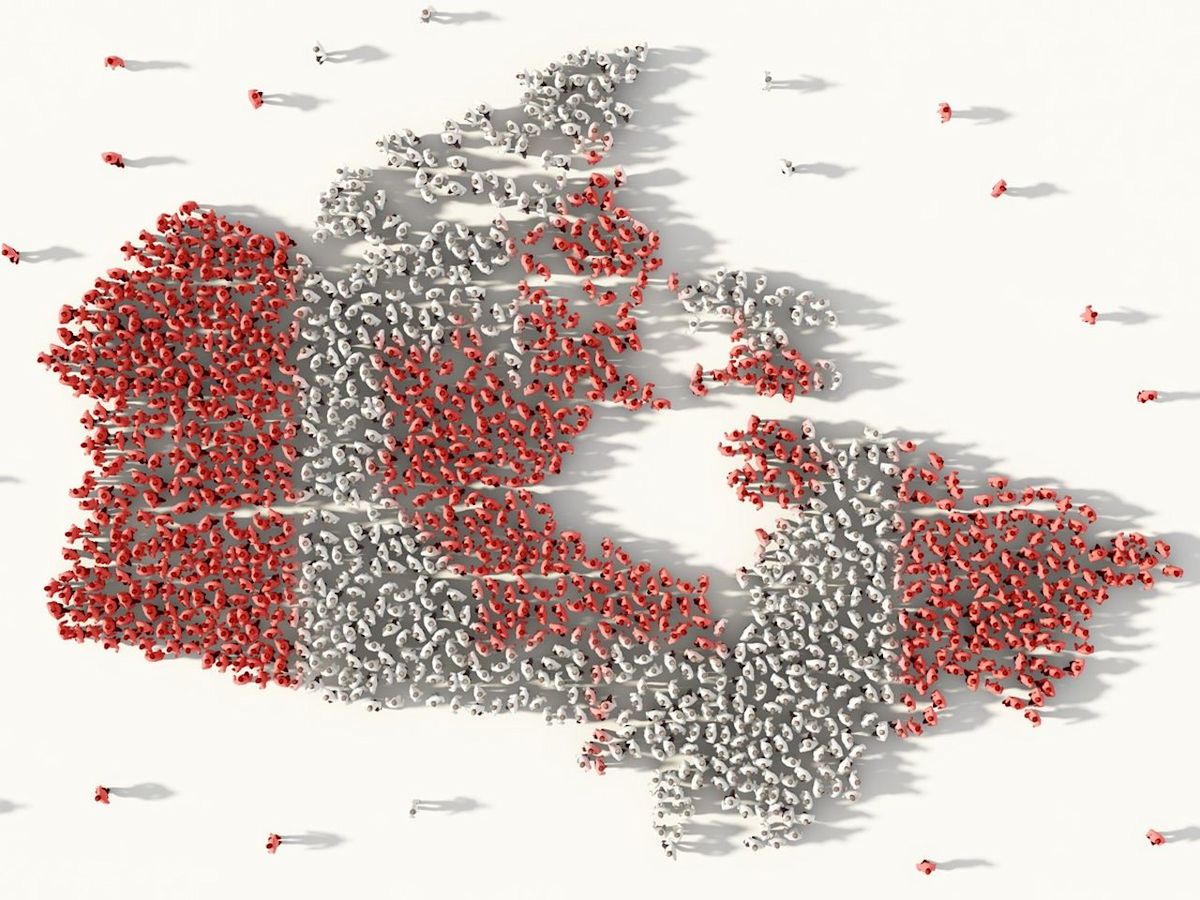
Canada has just marked its lowest year-over year population growth since the Second World War, according to a new report from Statistics Canada.
The population reached an estimated 41,798,407 people on July 1, 2026, an increase of 189,425 people from July 1, 2025, however this is the lowest annual growth since 1944/1945, says StatCan, when it grew by 126,000.
"The rapid changes in the population growth rate since 2020 are almost entirely attributable to changes in international migration," states StatCan.
Immigration targets under the Trudeau government were increased in 2016 from an annual average of 617,800 between 2000 to 2015 to approximately 1.4 million for 2016 to 2024. However, public concern about the impact on the affordability of housing resulted in substantial reductions, noted a Fraser Institute report. In the 2025 federal budget, the Carney government unveiled a new plan for 2026-28 immigration levels, outlining a more moderate approach, while focusing on steady economic immigration growth.
"In 2018, 3.3 per cent of Canada's population were temporary residents. By 2024, that number had more than doubled to 7.5 per cent, an unprecedented rate of growth that put pressure on housing supply, the healthcare system, and schools," according to the 2025 Annual Report to Parliament on Immigration, which states that "Canada's new government recognizes that this system is no longer sustainable, and we are determined to make it so, for everyone who lives in and comes to this country."
The number of new immigrants to Canada fell for the fourth consecutive year, down to 368,224 in 2025/2026, says this week's StatCan report. That is "consistent" with lower targets set by Immigration, Refugees and Citizenship Canada, notes StatCan. It's the first time since 2021/2022 that the annual number of immigrants has fallen below 400,000.
Permanent immigration dropped in all provinces and Yukon, though it increased in the Northwest Territories and Nunavut.
Consistent with that drop, the number of non-permanent residents in Canada fell by 154,614 people on a July 2025 to July 2026 basis, settling at 2,779,774 as of July 1, 2026, or 6.7 per cent of the total population. StatCan says that is down from a high of 2,984,285 non-permanent residents on October 1, 2024, or 7.2 per cent of the total population. This year's drop was the largest decrease in non-permanent residents since comparable records began in 1971/1972.
The largest decreases in 2025/2026 were among study permit holders, down 140,827 and work and study permit holders, down 81,163. (Statistics Canada says it applied adjustments to the estimates of non-permanent residents for this report. In an explanatory note, the agency said the increase in the number of permit extensions and the time required to process them has made it increasingly important to better account for individuals who remain in Canada while their extension application is being processed.)
This year's growth was lower than the growth during the first year of the pandemic, when it grew by 211,226, despite border restrictions put in place to slow the spread of COVID-19. In 2021-2022 says StatCan it grew by 1.8 per cent, then 2.7 per cent in 2022/2023, reaching a high of 2.8 per cent growth in 2023/2024. However, the July-to-July population growth rate has since slowed. It fell to a 0.5 per cent increase in 2025/2026.
Despite these nationwide declines, Alberta continues to have the fastest growing population of all the provinces. From July 1, 2025 to July 1, 2026, Alberta's population jumped by 1.5 per cent, says StatCan.
Growth was slower in all provinces over the same period, with the three largest provinces in Canada growing more slowly than the country overall: Ontario (+0.3 per cent), Quebec (+0.2 per cent) and British Columbia (+0.1 per cent). Those provinces tended, says StatCan, "to welcome the largest share of international migrants and are thus more affected by changes in international migration levels."
High numbers of international migration from 2021/2022 to 2024/2025 resulted in decreases or stabilization of the average age. But now Canada's population is aging again, with the average age on July 1, 2026 at 42.1 years.
The two five-year age groups with the largest decreases in 2025/2026 were 20 to 24 years (down 63,838 or 2.4 per cent) and 25 to 29 years (down 91,135 or 3.1 per cent). In total, says StatCan, there was a drop of 154,973 people in their 20s, which "is (again) consistent with the fall in the number of study permit holders in the country, since international students tend to be young adults."
Meanwhile, the number of people in the 60-to-64 age group (2,658,594) has fallen for the past two years. Before 2024/2025, says StatCan, this age group had not decreased since 1996/1997. However, the smaller Generation X is entering this age group and the larger baby boomer generation is coming to the end of their lives.
Canada, U.S. both roll back welcome mat for international students
Policymakers should be prepared for a 'new reality' after immigration cuts, think tank warns
Our website is the place for the latest breaking news, exclusive scoops, longreads and provocative commentary. Please bookmark nationalpost.com and sign up for our daily newsletter, Posted, here.
Related Stories
 Canada
Canada’s first F
50 minutes ago
 Canada
PM Carney prepared for ‘risk’ that Trump might order U.S.
50 minutes ago
 Canada
Carney tells NYT he studied risk of U.S.-led military action in Canada
50 minutes ago
 Canada
Mark Carney says he has considered possibility of US military action against Canada
1 hour ago
 Canada
CNN and MS NOW reporters now back at the White House, hours after judge ordered Trump to lift ban
2 hours ago
 Canada
RCMP say Quebec man researched chemical weapons, planned attack for ISIS
2 hours ago
 Canada
‘We shouldn't have to beg,’ says chief of First Nation facing decades of mercury poisoning in Ontario
2 hours ago
 Canada
Feds’ tariff response requires a ‘Team Canada’ approach, expert says
2 hours ago