
Canada’s Wonderland shut two coasters after a fatal U.S. accident. Are safety checks different here?
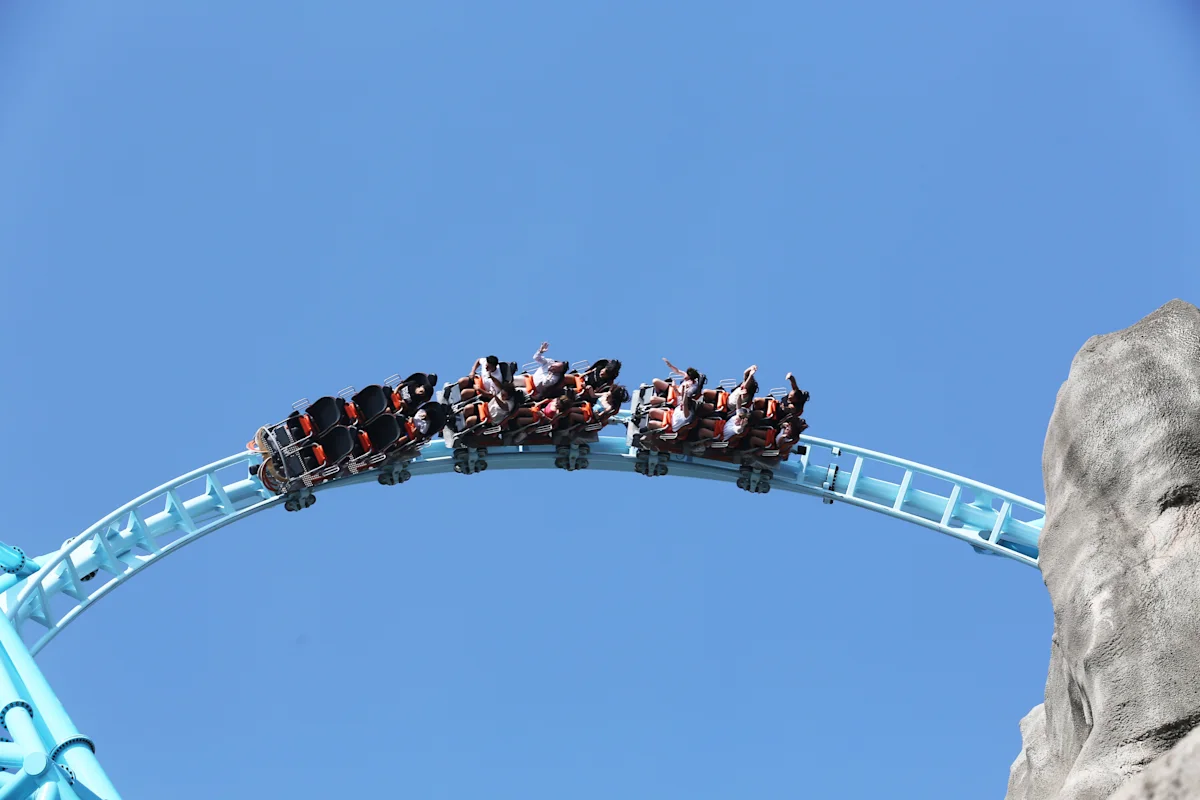
Two of Canada's Wonderland's biggest roller coasters remain closed after a fatal accident on a similar ride in Atlanta, Georgia — and the incident has raised questions about how rides are checked on this side of the border.
Leviathan and Behemoth at Canada's Wonderland were temporarily shut after 42-year-old Hassan Jihad Ibn Kariem was ejected from Goliath at Six Flags Over Georgia on Oct. 12.
Six Flags closed several similar rides across North America "out of an abundance of caution." Investigators have not yet determined what caused the fatal incident.
So, are roller coaster inspections in Ontario tougher than those in Georgia?
Not necessarily. On paper, the two systems share quite a bit.
How are roller coasters inspected in Ontario?
Canada's Wonderland falls under Ontario's Technical Standards and Safety Authority (TSSA).
The regulator says amusement rides are inspected before they begin operating and then again every year before the season starts. Once approved, rides receive a permit valid until Dec. 31.
TSSA inspectors can also conduct unannounced checks while attractions are operating.
But government inspections are only one part of the process.
Ontario regulations require operators to inspect and test each ride before opening it to the public every day. Those checks must follow the ride's technical specifications and manufacturer instructions, and the results have to be recorded.
How are roller coasters inspected in Atlanta, Georgia?
Georgia has a similar framework for permanent amusement rides.
Stationary rides must be inspected by the state before they first open and at least once a year after that. Operators are also required to carry out daily inspections and tests, while maintenance and inspection records must be kept up to date. State inspectors can show up without notice.
Georgia's Office of Insurance and Safety Fire Commissioner is now carrying out what it described as an "in-depth and comprehensive review" of the Goliath incident.
How common are fatal ride accidents?
Fatal amusement-ride accidents remain rare on both sides of the border. Canada's deadliest known roller-coaster accident happened in 1986, when the Mindbender derailed at West Edmonton Mall, killing three people and seriously injuring another rider.
More recently, Ontario's TSSA recorded zero fatalities across 923 permitted amusement devices in fiscal 2025. Its 10-year average was 0.2 fatalities annually, although that category includes everything from roller coasters and water slides to go-karts and ziplines.
The U.S. does not maintain one directly comparable national count for permanent amusement-park rides. Historically, the Consumer Product Safety Commission documented 46 deaths involving fixed-site rides between 1987 and 2004, while a recent review lists several fatal roller-coaster incidents since 2003.
The biggest difference is not necessarily how often the rides are checked. It's who oversees them.
In Ontario, TSSA provides one province-wide regulatory framework.
The U.S., meanwhile, does not have a federal regulator for permanent rides at major amusement parks. The Consumer Product Safety Commission oversees mobile amusement rides, but fixed attractions are left largely to individual states.
That means safety rules and inspection systems can vary depending on where a park operates.
None of that proves Ontario's system is safer than Georgia's. Investigators also have not established whether an inspection, restraint or mechanical failure caused the Goliath death.
For now, Six Flags has not announced when Leviathan and Behemoth at Canada's Wonderland will reopen. Manufacturer Bolliger & Mabillard says it is investigating the Georgia incident.
Related Stories
 Canada
2 RCMP officers charged after N.W.T. man died in police custody in 2025
42 minutes ago
 Canada
Man seriously injured in Parliament LRT station assault
42 minutes ago
 Canada
‘Major fire’ spreading through municipality after incident at Canadian Forces Base: officials
42 minutes ago
 Canada
EDITORIAL: Brad Bradford our choice for Toronto mayor
42 minutes ago
 Canada
Prime Minister makes final pitch for Canadian unity in Alberta
42 minutes ago
 Canada
Ottawa warns Stelco owner of legal action amid layoffs
1 hour ago
 Canada
Do Alberta’s temporary residents pay little tax, reap lots of benefits? We asked economists
1 hour ago
 Canada
Fisherman, 71, killed by 3.7
1 hour ago