
Canadian dollar rising as U.S. economy weakens
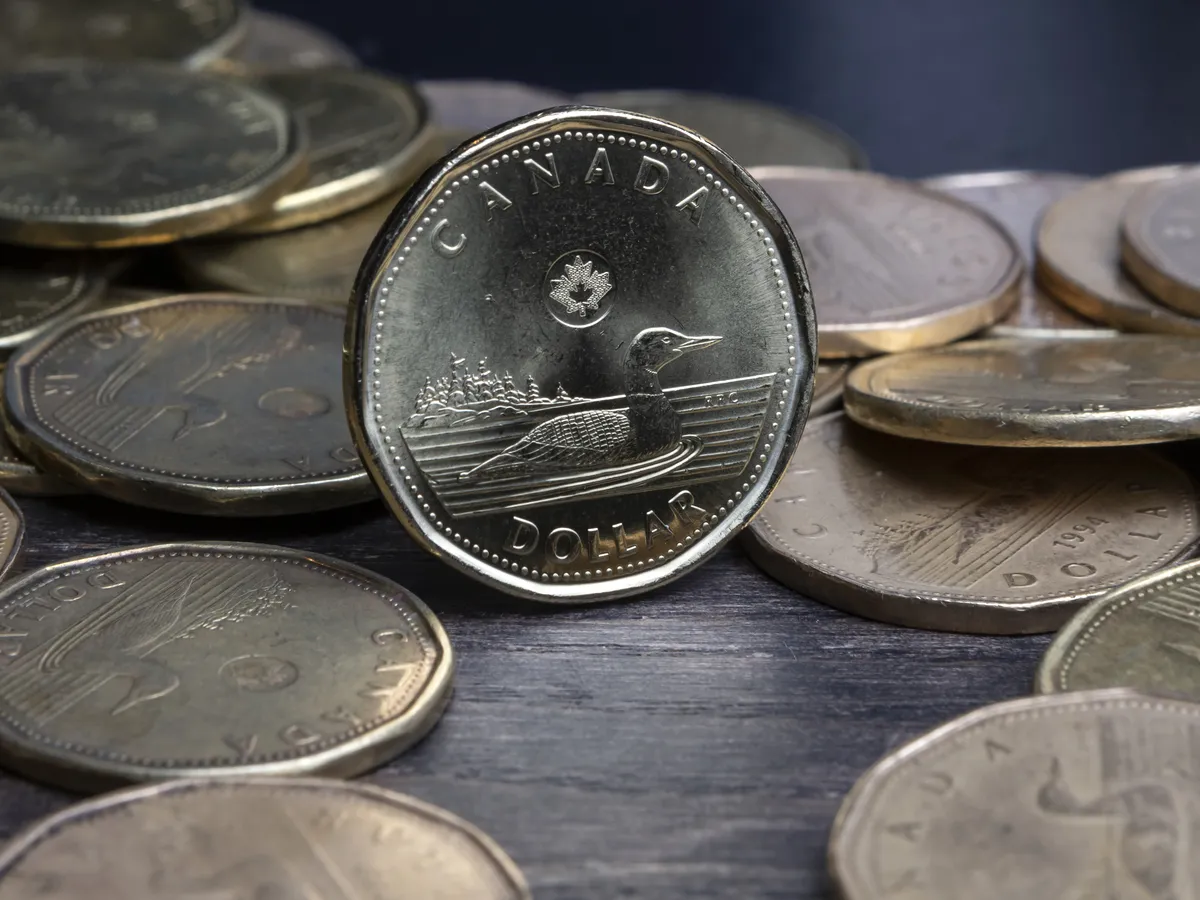
The Canadian dollar on Friday pushed past 72 cents U.S., continuing its reversal that started in late June due to a sliding greenback as bets fade for the United States Federal Reserve to hike interest rates.
“Spread compression (on interest rates) is a clear motivation for the (Canadian dollar),” Shaun Osborne, currency strategist at Bank of Nova Scotia, said in a note on Friday.
After nearly falling below 70 cents U.S. in late June, the loonie has rebounded 2.6 per cent as the rate differential between the United States’ and Canada’s two-year bonds has shrunk by 25 basis points since a late July peak, helping to support the Canadian dollar.
Those short-term differentials, driven by central bank interest rate outlooks, have narrowed as markets cut back on bets for the U.S. Federal Reserve to hike.
Bets for a Fed rate hike in September fell to a 30 per cent chance on Friday from about 65 per cent at the start of the month, with poor U.S. economic data driving the change.
The U.S. Census Bureau on Friday said stateside retail sales fell 0.6 per cent month over month in July, the first decline since May 2025.
This “should remove any threat of a Fed rate hike, now and in the near future,” David Rosenberg, president of Rosenberg Research & Associates Inc., said in a note on Friday.
Other economic data impacting Fed rate hike bets include U.S. inflation in July, which cooled year over year, and a slowing labour market. Both of those metrics, Osborne said, should allow Fed chair Kevin Warsh “to keep the hawks (those calling for hikes) at bay.”
As bets for U.S. hikes fade, bets on Bank of Canada rates are holding relatively steady at the toss of a coin for a hike in December.
Osborne said the Canadian dollar is also among those currencies catching a wind on Friday from commodities, several of which were “sitting at or near the top of the intraday performance table” for Group of 10 currencies.
There could be more upside for the loonie as the trends line up against the greenback, potentially pushing the Canadian dollar as high as 72.4 cents U.S., with a range of 73 cents U.S. to 74 cents U.S. a possibility, he said.
One near-term hurdle, however, is the Aug. 19 deadline for the imposition of new U.S. tariffs of 50 per cent on a variety of Canadian goods.
Luis Hurtado, executive director of Latin American fixed income, currency and commodities at CIBC Capital Markets, said in a note on Friday that currency markets currently remain “impervious” to the “noise” around the date and “are waiting for concrete action.”
Headlines currently point to a possible concession or an agreement, he said.
CIBC is calling for the Canadian dollar to close out the year at 73 cents U.S. “as U.S. data continues to cool.”
• Email: gmvsuhanic@postmedia.com
Related Stories
 Economy
How 50% U.S. tariffs will impact the average British Columbian
11 hours ago
 Economy
New Fed chair faces critical test at Jackson Hole as inflation fears mount
1 day ago
 Economy
Asian shares mostly decline as bond market pressure mounts
1 day ago
 Economy
Iran’s foreign minister calls threat of new US economic sanctions ‘desperate’
2 days ago
 Economy
Global Markets Weekly Update
4 days ago
 Economy
US debt hits $40 trillion: Who does Washington owe and why does it matter?
4 days ago
 Economy
US debt has hit $40tn – Will that be a wake
4 days ago
 Economy
Iran rejects Trump's threat of 'economic warfare' on 'unprecedented scale'
4 days ago