
CesiumAstro Buys 1Aardvark in Third 2026 Deal
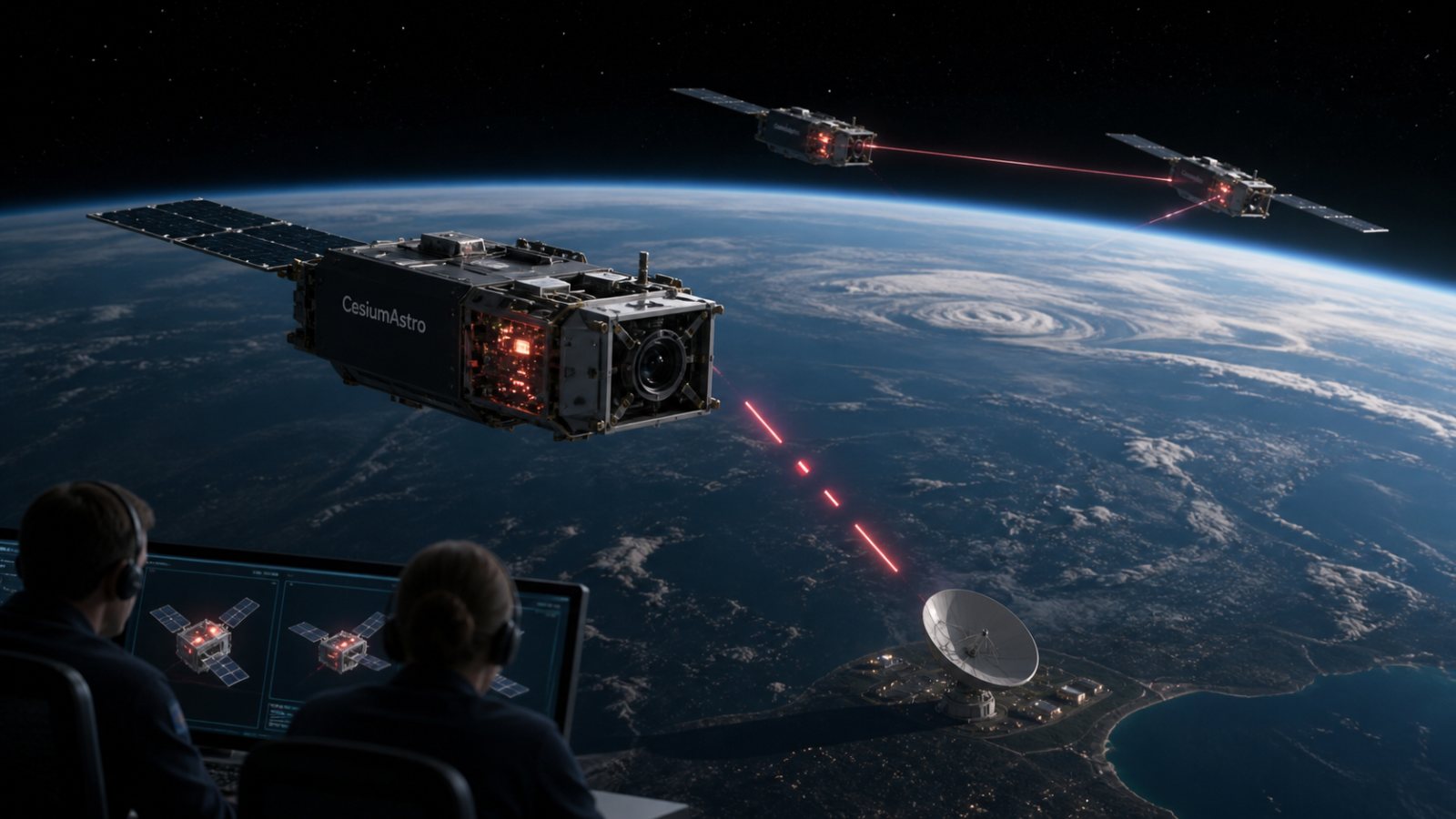
CesiumAstro’s August 25, 2026 acquisition notice identifies 1Aardvark as a Manassas, Virginia-based specialist in mission software, algorithms and systems engineering for national-defense programs. The Austin-datelined release also lists edge processing, distributed architectures and autonomous systems among the acquired capabilities; financial terms were not disclosed.
The transaction is CesiumAstro’s third acquisition of 2026, following Vidrovr in February and Jariet Technologies earlier in August. Via Satellite’s same-day account independently identifies it as the company’s third deal that year and describes the combination of CesiumAstro’s satellites, communications and computing capabilities with 1Aardvark’s mission software.
1Aardvark adds mission execution above the hardware
The acquired capability is not another spacecraft component. 1Aardvark’s software is designed to help distributed systems coordinate and execute missions in contested or disconnected environments, including circumstances in which spacecraft must respond to changing conditions without dependable connectivity.
That puts 1Aardvark near the operational decision layer: determining how assets share available information, distribute work and continue pursuing mission objectives when a ground connection or another network link is unavailable. Its disclosed defense work includes missile defense and missile tracking, although no specific customer program was identified as using an integrated CesiumAstro–1Aardvark system.
CesiumAstro already had software-defined communications and onboard computing, so the deal is not its first move into software. The addition is more specific: mission logic and systems-engineering expertise intended to coordinate the wider operation above the company’s existing spacecraft, communications and computing layers.
Disrupted connectivity is the central operating problem
The strategic rationale centers on defense missions that cannot assume continuous communications. Edge processing moves some computation closer to the point where data is generated, while a distributed architecture spreads functions among multiple assets. Mission software then provides the coordination needed to keep those assets working toward a common objective.
The proposed combination would allow spacecraft to adapt to changing conditions and continue operating when a connection is limited or disrupted. That is an intended capability, not a publicly demonstrated performance result: the available materials include no integration benchmark, completed test or deployment result showing how long a combined system can operate without connectivity or which decisions it can make autonomously.
For government customers, the potential change is also organizational. Spacecraft, radio-frequency communications, onboard computing and mission-execution software would sit within one supplier’s portfolio. Whether that structure produces faster delivery or more resilient operations will depend on later contracts, demonstrations and deployed programs; the acquisition itself does not establish those outcomes.
Three acquisitions map to analysis, silicon and mission software
Sorting CesiumAstro’s three 2026 targets by their principal contribution shows an expansion in both directions across the technology stack:
Together, the purchases form a vertical-integration pattern rather than three versions of the same transaction. Jariet extends CesiumAstro downward into the RF signal chain, Vidrovr adds analysis and workload decisions at the edge, and 1Aardvark addresses coordination and execution across the mission system.
The boundaries are not absolute. Vidrovr and 1Aardvark both touch autonomy and edge computing, while Jariet’s programmable signal-processing technology interacts with higher software layers. The map therefore describes each target’s primary contribution, not three isolated technical compartments.
Purchase terms and integration milestones remain private
The public materials reviewed do not provide 1Aardvark’s purchase price, revenue, headcount, transaction structure or a timetable for integrated products. They also do not specify whether the acquired business will retain separate branding or identify contracts that changed because of the deal.
References to missile defense, missile tracking and disconnected operations define relevant capability areas. They do not demonstrate that every CesiumAstro platform now contains 1Aardvark software, and no named government program has been presented as a customer for a newly combined offering.
What is established is narrower: CesiumAstro has made its third acquisition of 2026 and added mission-software expertise to a portfolio expanded through AI analysis and semiconductor design. The next material evidence would be a named product, integration test, contract award or deployed mission showing how those acquired capabilities work together.
Related Stories
 Technology
Chipmaker Marvell Edges Above Estimates But Stock Falls
57 minutes ago
 Technology
Why Nvidia loves funding startups
1 hour ago
 Technology
Marvell Technology, Inc. Reports Second Quarter of Fiscal Year 2027 Financial Results
1 hour ago
 Technology
First Thing: Meta agrees to make sweeping changes to apps for teens
2 hours ago
 Technology
YZi Labs invests $12M across 24 startups in EASY Residency Season 4 cohort
2 hours ago
 Technology
Kitchener, Ont. company creates technology that lets vehicles ‘talk’ to traffic lights
2 hours ago
 Technology
Russia says UK ‘playing with fire’ amid reports CIA chief has warned Kremlin not to attack Nato
4 hours ago
 Technology
A social media app that feels like the old Instagram days raised $21 million
4 hours ago