
Cheap Leafs aren't the only big news coming from Nissan Canada
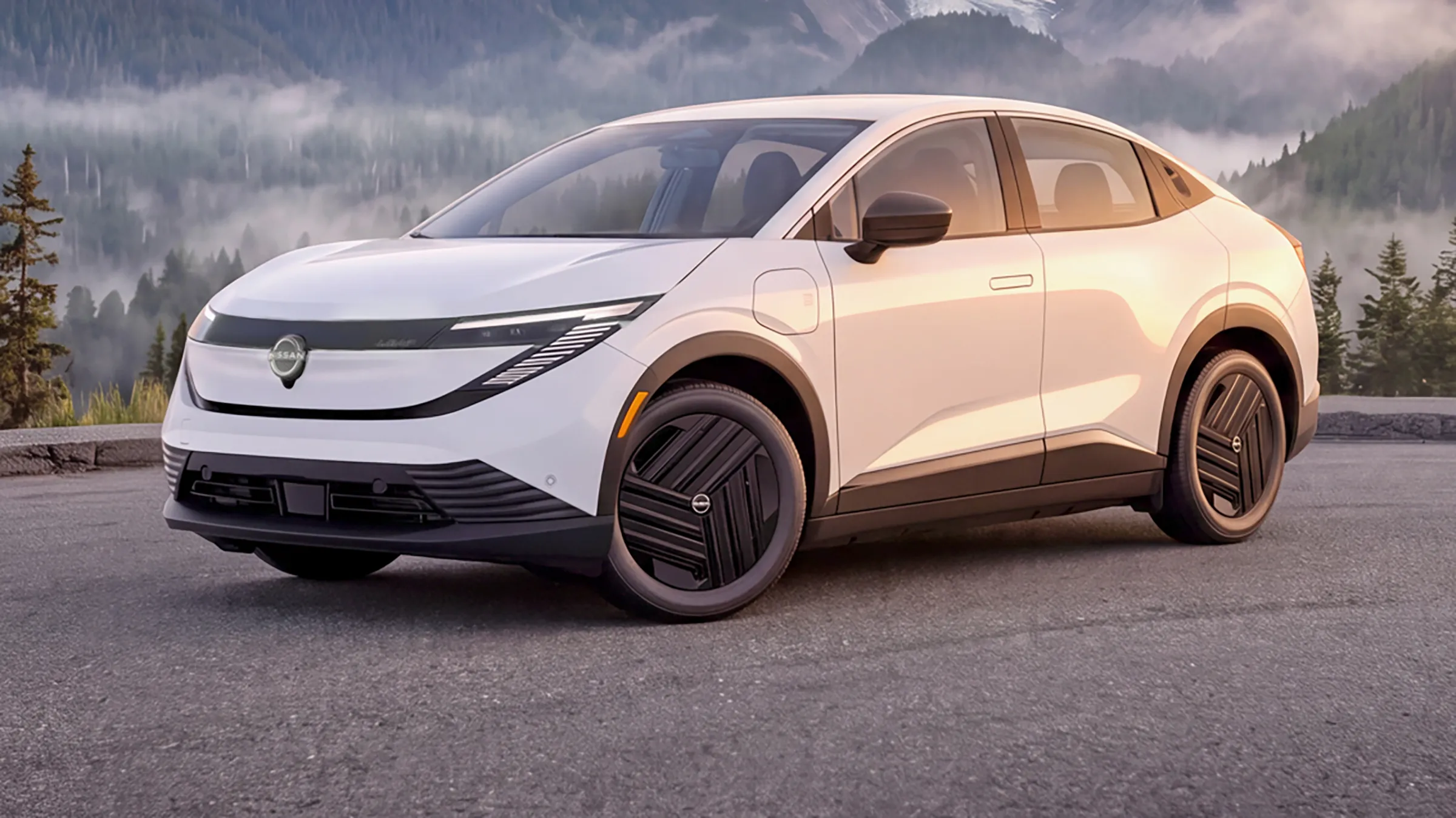
If you are a student of the 21st-century EV revolution, you’ll know Nissan was at the leading edge of that movement. When the Nissan Leaf debuted on August 1, 2009, it was the world’s first mass-market EV, and went on to be the best-selling all-electric vehicle on the planet from 2011 to 2014, and in 2016. For the rest of that decade, it battled it out for top-seller status with the Tesla Model 3.
However, while things were going great in the showrooms, they were unravelling in Nissan’s C-suite, with the well-documented – and at times downright bizarre – scandal involving CEO Carlos Ghosn, who was arrested in Japan in 2018 for financial misconduct.
Since that time, and until just recently, Nissan seemed lost in the wilderness, with a somewhat uninspired model lineup. More importantly, the stagnation saw the automaker lose much of the huge momentum it had built up in the EV segment, with other automakers, particularly the South Koreans, bringing some first-rate all-electrics to North America.
We were in Japan in the spring to witness what can only be described as the rebirth of Nissan, with an ambitious and refreshed model stable and a renewed sense of relevance in many global markets. Here in Canada, that means the arrival of the 2027 Rogue e-Power hybrid this fall; a refreshed 2027 Ariya EV early next year; and the just-announced 2027 Leaf S, which also arrives this fall and will be the least expensive EV available in Canada. And this year saw the first-ever Nissan plug-in hybrid go on sale in the country, the 2026 Rogue PHEV.
To find out more about how these vehicles fit into Nissan’s re-invention in our country, and how the company is navigating the choppy and uncertain waters that are roiling the automotive industry, we chatted with Nissan Canada president Steve Rhind; and chief marketing manager Abhishek Bhatia. Here’s what we learned.
What’s the thinking behind the 2027 Nissan Leaf S?
We’ll start with the big headline for Nissan this month, and that is the announcement that the 2027 Leaf S will be less than $30,000 after government rebates. The Leaf S was developed and is built in Japan, so tariffs aren’t an issue. The S will be sold only in Japan, Canada, and Europe. For Rhind, it’s a big win for Nissan Canada.
“We’ve been working on this for the past couple of years, so it wasn’t that it just happened overnight,” the Nissan Canada president said, adding that the motivation was simple. “To be able to bring a really strong price-point in the Canadian market, to ultimately make EVs more affordable, to encourage adoption, and help people make that transition.”
As to sales expectations as a percentage of 2027 Leaf sales, Rhind was pretty conservative. “We expect it be about 10% of the mix, and we have a good supply of that to be able to do that right out of the gate.” Nissan Canada expects B.C. and Quebec to be the strongest markets for the Leaf S — as they are for all EVs — but it will be available at dealerships across Canada. “I would say the next highest supply would be in Ontario, but again, we are making it available to all of our dealers across the country.”
Expectations for the 2027 Nissan Rogue e-Power hybrid
We had the opportunity to briefly drive the new Rogue equipped with Nissan’s very interesting e-Power hybrid powertrain during that spring visit to Japan, and Nissan Canada has big expectations for the technology. “We’re really, really excited about this car,” said Rhind. “It’s bringing [to Canada] that technology, which we’ve had in other markets around the world for many years now. In fact, almost two million vehicles have been sold with e-Power. “
The Rogue e-Power uses the all-new third-generation e-Power system powered by an all-new turbocharged 1.5-litre three-cylinder engine. Only that gasoline engine won’t power the wheels. Instead, electric motors mounted on both axles will get their power from a battery, which will get power from the three-cylinder engine, which essentially serves as a generator.
We’ve been working on this for the past couple of years, so it wasn't that it just happened overnight
So, what are sales expectations for this new powertrain? “Rogue sales are this year, but only with the ICE models, so I want to be able to keep ICE volume but add on the hybrids as incremental sales to really help us grow in Canada,” Rhind said, noting that since the Rogue e-Power hybrid is built in Japan, he expects that supply will not be an issue. There is no word on pricing yet, but “what we can say is, we will be very competitive versus the comparable vehicles. We’ve got a really good product.”
Where does the 2026 Rogue PHEV fit into Nissan Canada’s plan?
Nissan’s Rogue has been a big success in Canada since it arrived in the fall of 2007, and this year a plug-in hybrid version went on sale here, the first-ever Nissan PHEV in this market. It has a decent full-charge range of 61 kilometres, and with seating for seven is an efficient family-hauler. But according to Rhind, it’s not going to replace the ICE Rogue any time soon. “It’s been quite small volume,” the Nissan Canada president said. “It’s at about a thousand units and we’ll sell 39,000 rogues this year, so it’s a very small percentage of the business.”
As to future Nissan PHEVs coming to Canada, Rhind said the company is always considering what fits with the customer base here, so he wouldn’t rule it out.
Will Nissan bring Chinese EVs or PHEVs to Canada?
While the Rogue PHEV is the only plug-in hybrid built by Nissan, the Japanese automaker has a joint venture partnership with Chinese automaker Dongfeng Motors and builds several EVs and PHEVs under both the Nissan and Dongfeng brands for the Chinese market. With the Canadian market opening up to Chinese vehicles with a tariff of just six per cent, could we see some of these vehicles in Canadian Nissan showrooms?
“It’s something we’re looking at, to try to see what opportunities we have, what cars would make sense, how quickly can we do it,” Rhind said. “I think the biggest hurdle we have at the moment is the government has not specified how they will allocate, you know, a percentage of the total.”
Chinese-built vehicles need to be homologated, or certified to meet Canadian safety, emissions, and technical standards, a process that can be costly, so if the projected sales volume is too small, it doesn’t make sense to do this for the Canadian market.
“I need to have an understanding of how many cars can I expect to sell in the Canadian market to be able to justify the expense of homologating the (Chinese-built) cars for here, but we’re still moving along, creating the business case for what we want to do and why, but that’s a fundamental piece that I need to know from the Canadian government.”
How is Nissan Canada dealing with tariffs?
Tariffs have roiled the global automotive industry, with the United States instigating punishing import taxes for automakers building vehicles outside of its borders. In turn, affected countries, including Canada, have put retaliatory tariffs on U.S.-built automobiles. Nissan currently builds the Frontier, Pathfinder, and Murano in America, and on the Infiniti side, the QX60 and the QX65. In terms of Nissan sales in Canada, approximately 80% of those vehicles come from Japan and Mexico. Therefore, it’s not really seen great exposure to the whims of the unpredictable U.S. administration. But that doesn’t mean Nissan Canada has not felt the pinch.
“Last year we did pause some of the U.S.-built product, which was kind of our immediate reaction to when the 25% tariffs were implemented, but we’ve since brought back that production as of April of this year,” said Rhind. “We have some flexibility in terms of where we can source products globally, and how we adjust to handle those situations.”
The Canadian automotive landscape is much better with a healthy and relevant Nissan Canada, so it is heartening to see the company re-energized and bringing some great vehicles to Canadians. It will be interesting to see how well the Leaf S does, given how many consumers have said they are waiting for an affordable EV.
Rhind expects about nine per cent of the company’s sales this year to be EVs, or about 9,000 vehicles, which, while not Earth-shaking, is decent given it has just two all-electrics, the Leaf and the Ariya. Also, that’s up about 160% versus last year’s ratio, and this past August saw the most Leafs sold since August of 2018, which was the best month of Leaf sales ever in Canada. And that’s before the Leaf S has arrived. Nissan is certainly a company to watch in the coming year.
Sign up for our newsletter Blind-Spot Monitor and follow our social channels on X, TikTok, and LinkedIn to stay up to date on the latest automotive news, reviews, car culture, and vehicle shopping advice.
Related Stories
 Canada
Canada’s politeness problem: How to stop playing nice and assert itself more
2 minutes ago
 Canada
DEAR ABBY: Self
2 minutes ago
 Canada
Michael Higgins: Canada's unimaginative media can't get enough of these academics
1 hour ago
 Canada
As referendum looms, 70% of Albertans want province to remain in Canada
1 hour ago
 Canada
What Canadians should know about cellphone searches at U.S. border
1 hour ago
 Canada
With time running out, new poll suggests Alberta separatism support is slipping
2 hours ago
 Canada
N.B. population rises as StatsCan revises estimates that showed decline
2 hours ago
 Canada
What are young people's top municipal election issues?
2 hours ago