
China warns India on Dalai Lama's succession: How Tibet’s spiritual leader’s escape reshaped India
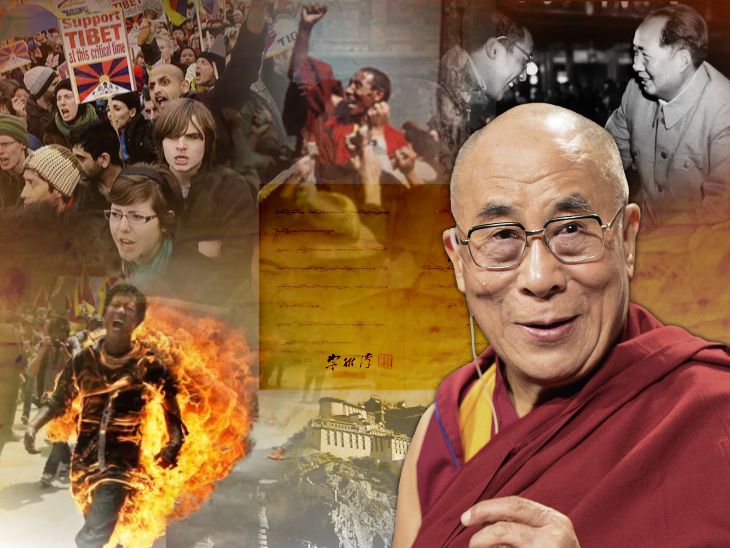
ExplainedChina tells India to stay out of Dalai Lama succession:Is New Delhi’s silence after 65 years of hosting Tibet’s spiritual leader a calculated political signal?
China has asked India to stay away from the issue of the succession of the Dalai Lama, saying the process of identifying his reincarnation and successor is entirely an internal matter for Beijing and will not tolerate external interference.
Chinese Embassy in India spokesperson Yu Jing said in a statement that the reincarnation of the Dalai Lama follows centuries-old religious customs and historical traditions.
The statement also urged India not to provide a platform for activities linked to Tibetan independence, saying such actions could affect regional stability and India-China relations.
China’s remarks came ahead of the swearing-in ceremony of Penpa Tsering, head of the Central Tibetan Administration (CTA), the Tibetan government-in-exile based in Dharamsala. The ceremony is scheduled for May 27 and may be attended by the Dalai Lama.
The Dalai Lama is considered the highest spiritual authority in Tibetan Buddhism and is believed to be the human manifestation of Avalokiteshvara, the Bodhisattva of Compassion.
The title “Dalai Lama” means “Ocean of Wisdom”.
The current Dalai Lama, Tenzin Gyatso, was born as Lhamo Thondup on July 6, 1935, in a farming family in northeastern Tibet, now part of China’s Qinghai province.
At the age of two, Tibetan monks identified him as the reincarnation of the 13th Dalai Lama after a traditional search involving visions, spiritual signs and religious tests. He was formally enthroned in 1940.
The institution itself dates back nearly 600 years and has historically combined both spiritual and political authority in Tibet.
Why China wants control over the succession
China considers Tibet an inseparable part of its territory and views the Dalai Lama as a separatist figure, despite his repeated calls for autonomy rather than independence.
Beijing fears that an independently recognised Dalai Lama could strengthen Tibetan identity and resistance to Chinese rule.
To tighten control over Tibetan Buddhism, China formally introduced regulations in 2007 requiring state approval for the reincarnation of all major Tibetan Buddhist leaders.
Beijing also revived the Qing dynasty-era “Golden Urn” system, under which names of possible reincarnations are selected through a ceremonial draw.
The Dalai Lama has repeatedly rejected China’s authority in the matter. He has said his successor could be born outside China and urged Tibetans not to accept any candidate chosen for political purposes by Beijing.
For China, therefore, the succession is not merely religious, it is about state control, legitimacy and national unity.
How Tibet became a global issue
The roots of the modern Tibet dispute lie in 1950, when Communist China sent troops into Tibet shortly after Mao Zedong came to power.
In 1951, Tibet was formally incorporated into China under a controversial 17-point agreement. Tibetan resentment grew steadily as Beijing tightened political and military control over the region.
The turning point came in March 1959.
Rumours spread in Lhasa that Chinese authorities planned to detain the Dalai Lama during a cultural event hosted by Chinese military officials.
Thousands of Tibetans gathered around the Norbulingka Palace to protect him, triggering a mass uprising against Chinese rule.
Chinese troops launched a brutal crackdown, killing thousands according to Tibetan accounts and international observers.
Days later, the Dalai Lama escaped disguised as a soldier and undertook a dangerous two-week journey across the Himalayas before entering India through Arunachal Pradesh on March 31, 1959.
Why India gave asylum to the Dalai Lama
Prime Minister Jawaharlal Nehru granted political asylum to the Dalai Lama on humanitarian grounds despite concerns that the move would anger China.
The Dalai Lama first stayed in Mussoorie before moving to McLeodganj in Dharamshala in 1960.
Dharamshala later became the headquarters of the Tibetan government-in-exile and the global centre of Tibetan political and cultural activity.
Over the next year, nearly 80,000 Tibetan refugees followed the Dalai Lama into India.
India officially recognises Tibet as part of China, but hosting the Dalai Lama and the Tibetan exile community has remained one of the most sensitive issues in India-China relations.
How Tibet became linked to the 1962 India-China war
The Tibet issue deepened mistrust between India and China during the 1950s.
At the same time, China was building a strategic highway through Aksai Chin, territory claimed by India, connecting Xinjiang and Tibet.
Beijing also became increasingly suspicious of India after it granted asylum to the Dalai Lama.
Relations deteriorated rapidly despite diplomatic negotiations.
In October 1962, China launched a military offensive across the disputed Himalayan border, leading to the Sino-Indian War.
Many historians believe Tibet and India’s support for the Dalai Lama became major factors contributing to the breakdown in ties between the two countries.
Union Minister Kiren Rijiju had said that only the Dalai Lama and Tibetan Buddhist traditions could decide the next successor. China reacted sharply, warning India against interfering in Tibet-related matters.
Soon after, India’s Ministry of External Affairs clarified that New Delhi does not take any position on religious practices and matters of faith.
The balancing act reflects India’s larger strategic dilemma:
India hosts the Dalai Lama and over 100,000 Tibetan refugees.
At the same time, it seeks stable relations with China after years of border tensions, especially following the 2020 Galwan Valley clash.
The succession battle has also become part of the broader geopolitical rivalry involving China and the United States.
The US has repeatedly supported Tibetan religious freedom and opposed Chinese interference in selecting the next Dalai Lama.
American lawmakers have warned Beijing against imposing a state-backed successor.
For many countries, the issue now represents a larger question: whether religious traditions can survive under state control in authoritarian systems.
The biggest possibility, and perhaps the biggest risk, is the emergence of rival Dalai Lamas in the future:
One recognised by Tibetan Buddhist authorities and followers in exile.
Another selected and endorsed by China.
Such a scenario could deepen divisions within Tibetan Buddhism and intensify geopolitical tensions involving China, India and the West.
For Tibetans in exile, the succession is ultimately about preserving identity, religion and cultural continuity.
For China, it is about sovereignty and political control.
And for India, it remains one of the most sensitive fault lines in its relationship with Beijing.
Related Stories
 India
India
Starlink, Ambani’s venture should get equal treatment, let consumers decide: Shashi Tharoor
6 days ago
 India
India
Lawrence Bishnoi’s rise: Student politics, first murder and a sprawling crime network | India News
6 days ago
 India
India
India’s finance minister says market liquidity makes it easier for investors to exit
6 days ago
 India
India
India news: CJP alleges 'deliberate' delay in leaders' release
6 days ago
 India
India
Indian Diaspora Holds Pro-Modi Counter
6 days ago
 India
India
Clashes Erupt in London as Diaspora Divided Over India's Election Chief and Electoral Roll Controversy
6 days ago
 India
India
London: Indian diaspora rallies in support of PM Modi, criticises CJP protesters
6 days ago
 India
India
Cabinet Approves Go
6 days ago