
CJP Protest: How Gen Z Ended the Fear Era

The Cockroach Janta Party (CJP) started as a joke and very quickly went on to helm a Gen Z protest that shook the establishment. It achieved the unthinkable when Dharmendra Pradhan resigned as Union Education Minister (the first Cabinet-rank Minister to resign from the Narendra Modi government). In an interview with Frontline, Saurav Das, a co-convenor of the CJP, spoke about the impact of the protests on the Modi government and the road ahead for the CJP. Excerpts:
It has been quite a phenomenal journey for the CJP.
I think it really shows the power of the young generation of this country because it started off as a joke, and now it has brought an arrogant government to its knees. Getting to something as serious as a resignation of a Minister under this kind of government shows our resilience too. This is historic because in the past 12 years, nothing of this sort has happened. There was an atmosphere of fear that was created, fear around Modi also. All of this is gone now.
It all started with a tweet which Abhijeet Dipke had put out.
It’s almost as though the universe opened a door for India through its young. When this tweet went viral, he put out a membership form for people to join the CJP. And then he put out a manifesto. He shared that link with me to amplify. More than 8 lakh people joined in no time. There were many calls asking us to use this kind of following and online influence and convert them into on-the-ground action. And I’m very glad that Abhijeet took that leap of faith and stopped whatever he was doing in the US and came back to India despite death threats and online abuse. The rest is history.
Tell us a little bit about how the core team of the CJP came together.
Once the tweet grew so big, Abhijeet reached out to Ashutosh [Ranka] and me. He knew Ashutosh because both of them had worked as part of the AAP for some time. Ashutosh was active with the AAP about two-three years ago. Abhijeet was active with the party until the time he went to the US to study.
He reached out to me for the role of chief spokesperson. I was a bit hesitant because I had my career going in journalism. I was also pursuing a couple of stories at that point. So I was a bit sceptical. However, I did ultimately [agree]. And Ratna [Singh] I knew. Of course, Abhijeet was also aware of Ratna’s work online. Afreen [Nawaz] we identified during our Bengaluru protest. Abhijeet already knew Vaishnavi [Gaur] and she was there from day one, creating the website and all of that. Deepak Baliyan was Ashutosh’s friend, a farmer activist. So Ashutosh brought him in. Vijeta [Dahiya], our ex-spokesperson, was Dhruv Rathee’s recommendation. So me, Ashutosh, and Vijeta were first announced when Abhijeet was still in the US. And after that, we had other people coming in publicly.
CJP co-convenors Saurav Das and Ashutosh Ranka at the protest after Education Minister Dharmendra Pradhan’s resignation, in New Delhi on June 25. | Photo Credit: Vipin Kumar/ANI
Questions have been asked about the funding of the CJP.
Our funding is the people’s goodwill. During the protest, we had this donation box and people contributed generously. Lot of times, we didn’t even need funds because people were themselves ordering food for everyone. There were people who blessed us and gave us envelopes on the stage. So it was really people’s goodwill that funded us, which made this entire protest possible.
On July 20, there was a surge of youngsters coming into the national capital. What does that tell us about the state of mind of the youngsters, their fears, and their aspirations?
I think there was anyway a mass discontent against this government. It found a channel through the CJP. The NEET paper leak was the immediate trigger. However, there were several issues that people were unhappy about, and all of that came to the fore. By the end of it, the sentiment on the ground was more than about Pradhan. It was about joblessness. It was about various other paper leaks. It was about the growing inflation... and the atmosphere of fear that people were up against.
Were you surprised by the number of people who came in response to your call?
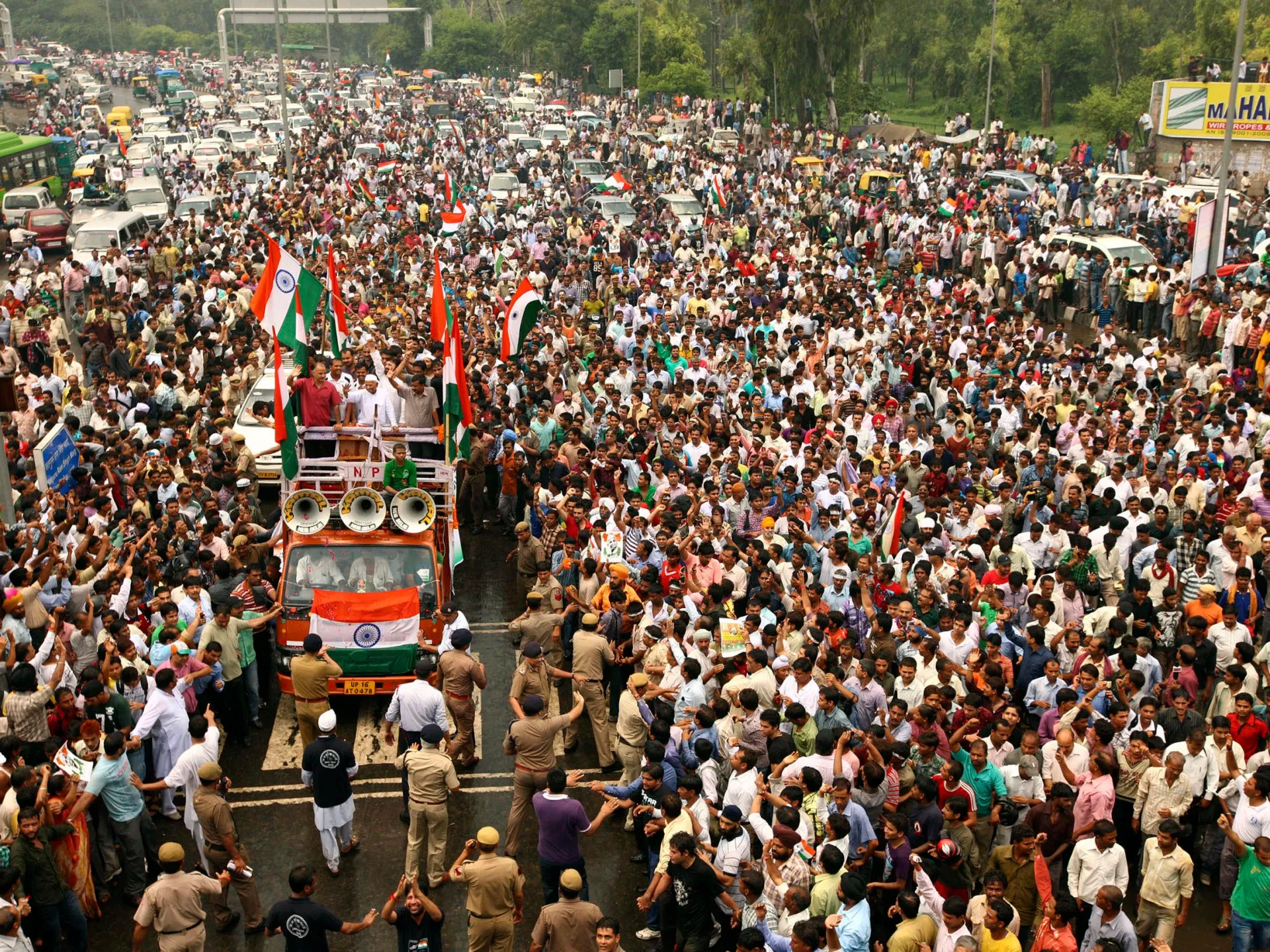
It was quite expected because there’s a lot of support for the CJP on the ground. People from all over the country had visited Jantar Mantar until then, during our sit-in protest. By July 19, before the Chalo Sansad march, more than three lakh people had already visited. People who came would tell us that in the villages also there’s a lot of talk about the CJP. People knew of its existence. They might not have had too much clarity on what we stand for or what we are doing. But there was definitely a lot of support for the CJP and for the young people of this country to do something. So we were quite sure that we would see this kind of response. And that is what happened. Lakhs came to the streets in Delhi and elsewhere. The protests happening in other States were also very, very big.
Were you taken aback by the police action against the protesters on July 20?
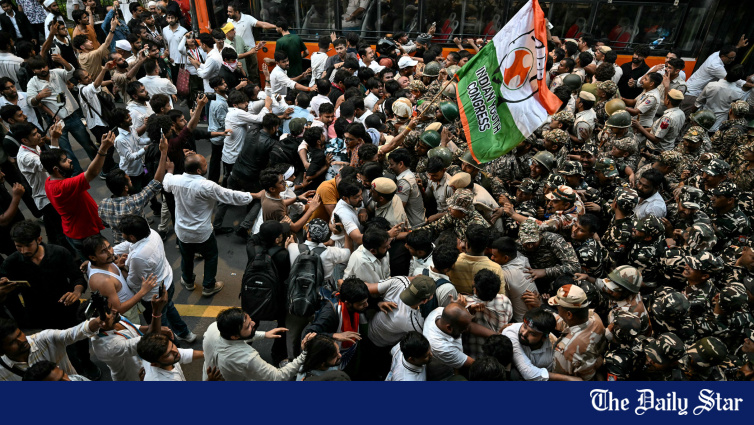
Absolutely, because that kind of brutality was unseen in a long, long time in the national capital. And these people are not terrorists. They are the youth of this country. They are the future of this nation. For them to be treated in this manner where [lathis] were aimed at their heads instead of legs as allowed per the SOP [standard operating procedure]. Their heads were broken, arms were broken, legs were broken, pellet guns were used. All of this was happening in the national capital with so much media presence. It was absolutely terrible.
And I think that worked to create a greater solidarity. You saw a kind of outpouring of support for the young generation. It actually backfired on the regime, and they too realised that they did something terribly wrong and people wouldn’t forgive them for the crime that they have committed. We are also very clear in our resolve that each and every police personnel, RAF [Rapid Action Force] personnel who committed this kind of monstrous crackdown ought to be prosecuted. They will have to go to jail when the time comes, and we’ll ensure that each one of them goes to jail for this.
A CJP poster seen on the seventh day of the hunger strike at Jantar Mantar, in New Delhi, on July 4. “There’s a lot of support for the CJP on the ground.” | Photo Credit: Karma Bhutia/PTI
Does the CJP have a plan to ensure accountability for the police brutality on July 20?
We have announced a platform called Sakshi—it’s on our thecockroachjantaparty.org.in page—where people can upload pictures and videos of police brutality. A team of lawyers that we have will be going through all that content, identifying police officers, and filing complaints and FIRs against them. And if need be, they will go to the court, get those FIRs registered and ultimately help people secure justice in the long term.
As you know, [Member of Rajya Sabha] Kapil Sibal also has made a generous contribution to the CJP—a Rs.1 crore grant, which we’ll be using strictly for legal aid purposes. We’ll be launching a website shortly wherein lawyers from all over India will be able to volunteer help to protesters. So this way, we want to formalise or structure this organisation so that nobody goes without legal help.
Leader of the Opposition in the Lok Sabha, Rahul Gandhi, has taken up the issue of police brutality in a strong manner and demanded the resignation of Union Home Minister Amit Shah. Does the CJP concur with this demand?
The political opposition also has certain stands to take. It has a role to play. Our demands were quite clear. And our demands are being met. The main demand has been met: Pradhan’s resignation. The FIRs are being slowly withdrawn in several States. Guarantees are coming to that effect. And the compensation is also being worked on. I would just tell the government through you not to cheat the young generation of this country. If the government cheats them, then the next time they are on the roads, it’s going to get very difficult for this government.
Now it is for the opposition to take this forward in the manner they deem fit. If they’re asking for answers from the Home Minister, I’m always up for accountability. Shah should answer those questions in Parliament if he’s not in the wrong. But he is hiding [by] not answering those questions. It shows that there’s some culpability. Because ultimately, that kind of brutality, that kind of crackdown by the police couldn’t have happened without the concurrence of the Home Minister. So he should face questions and answer.
Are you satisfied with the process being followed with regard to withdrawal of FIRs against protesters? And also, the government has said that action will be taken against those who have criminal antecedents. How do you see this?
Our demands were very clear. Protesters should have immunity, and it cannot be qualified. Because as soon as you give them that space to decide who is violent, who is not violent, who is peaceful, who is not peaceful, then there is a lot of power to the police to misuse those qualifications. So [we demanded] unqualified protection to all protesters.
We are very clear that criminals or antisocial elements infiltrated our protests at the behest of the BJP-RSS. Now, if such people had come, the police must answer why they were out in public and roaming around so freely. And second, if the police identify them to be doing something very violent, then they should go back to the courts in their cases and seek cancellation of bail. However, you do not file an FIR for our protest and try to malign our protest using them. What the police will ultimately do then is use those cases to rope in all the peaceful protesters also. We don’t want that kind of a situation.
Are you satisfied with the pace at which the FIRs are being withdrawn?
The pace is slow. We would only urge the government to expedite the process, give us a time period within which all of this will be done.
The government called you for talks on July 20, the very day that you were supposed to take out the march. Were you surprised by the timing? And had the government reached out to you before July 20?
Before July 20, the government did not reach out. We kept telling the police that we want to speak to the government, but the government wasn’t forthcoming.
There was no overture from the government?
Nothing at all. But on 20th, with the kind of crowds that they saw, I think the government got jittery and wanted to speak with us. We were very clear from day one that when the government calls us, we’ll be talking to them.... So when the police came to us and started offering positions to speak with, we said we are open to talks; however, it has to be with a senior Cabinet Minister or the Prime Minister. Then we got [J.P.] Nadda’s call at around noon and we went.... He kept us waiting for four hours before any talks took place. In those four hours, our phones were taken away initially. After we threatened to hold a dharna right there, they allowed us to take our phones and communicate with the outside world. A lot of brutality was taking place during those four hours. They sort of put us under illegal house arrest at Nadda’s place. After that, when people again gathered, we were very clear that we would meet [officials] only at a neutral place. We would not go back to the Minister’s house or his office.
Posters at Jantar Mantar, in New Delhi, on June 6. “This is the language of the young.” | Photo Credit: SUMIT/ANI
Did the government tell you that Pradhan could be shifted to some other Ministry?
Yes, I mean, not directly, but then they did tell us that which minister [is to be] where is the prerogative of the Prime Minister and that maybe a Cabinet reshuffle could take place in the future. Now, we were very clear that if everything was the prerogative of the Prime Minister, then what was left to discuss, right? So that was not really a rational argument to have, and we told them that Pradhan has to go. That was non-negotiable, and this was beyond any one of us because what had resonated most on the ground was Pradhan’s resignation. People were out for this particular demand. And if we went back to them without this, they were not going to accept it. The government understood this and the very next day they had to give up Pradhan. It was a major, major win for the young.
The protest found a lot of online resonance, especially on Instagram. They used so much humour. What do you make of this?
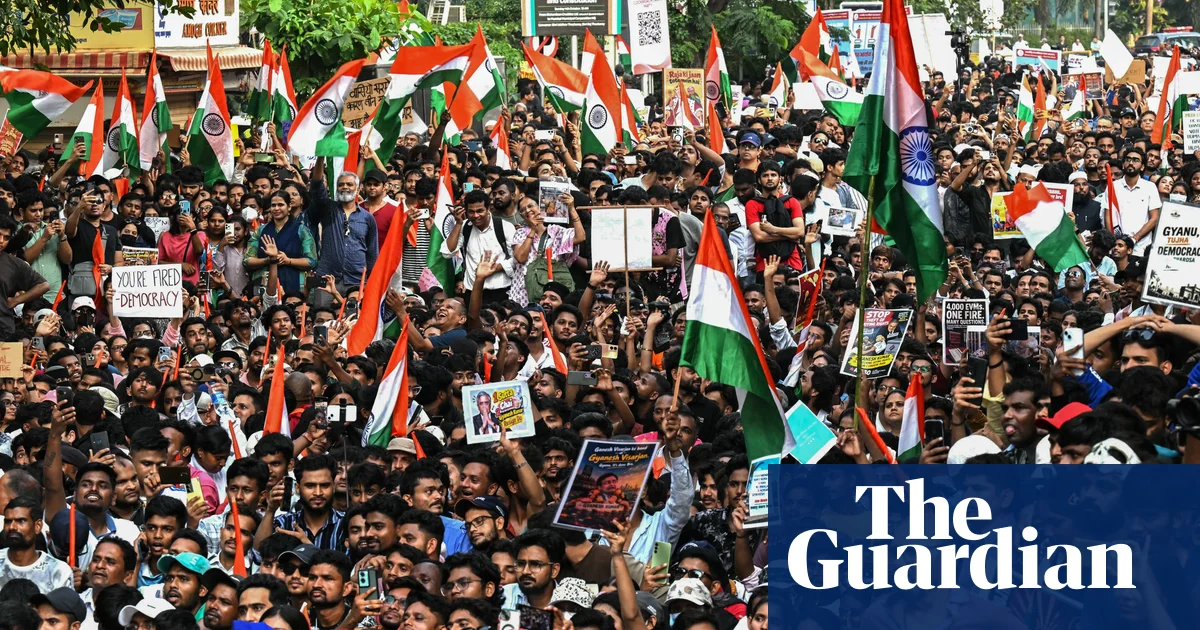
I think [it was the] kind of language the government was not ready to deal with. The language of the young, of Gen Z. And that caught them off guard because they are so used to protests having a certain kind of language, a very formal tone, within certain limits of maryada [dignity] and all of that. But when Gen Z came and stormed the streets, all kinds of content was being made, humour and sarcasm was being used. And that is what worked like magic because this government has controlled the narrative so much. When this was happening on Instagram, they didn’t know what to do at all. And then Mr Modi was making videos at 12:30 am.
He came on Instagram. He held a Cabinet meeting, I’m told, where he asked all the Ministers to start making reels. It doesn’t work because this is the language of the young. You are not young any more.
The uncles and aunties of the WhatsApp world were so offended by the kind of content that they saw online. They called it ashlil [offensive], without maryada, and whatnot. Instead of focussing on the demands of the youth and the values they stand for, they would rather look at how they are dressed or their manner of speaking, calling them a casual generation.
How do you assess the measures that the government has announced to deal with the issues raised during the protests? Fast-track courts, a stronger law, and a task force has been set up to reform the exam process. Are these measures satisfactory?
What about the 2024 task force that was set up under [K.] Radhakrishnan? All those measures have not been implemented till now. Yet another task force has been put in place. We don’t know what is going to [come] of it.
The government also has to engage with the CJP delegation in future, which they have already promised to do in a month’s time. And a lot of [the government’s] focus is on what happens after leaks. But what we need now is to prevent leaks because we don’t want students to be going through all of that pressure and anxiety all over again.
A systemic foundational reset from point zero is required. We need to rethink this system, how we engage with protesters... how are people going to engage with the education system.
[About] fast-track courts like I had said before, if you have a judge of questionable integrity, a corrupt judge in that seat, that system is not going to work. How are you going to resolve that?
You have brought in Pralhad Joshi [as Education Minister] now. He was one of the Ministers who was garlanding Bilkis Bano’s rapists, right? So what message are you sending to the youth? That does not inspire confidence. I think the government has completely lost the plot. And I think they’re on their way out now. Because Pradhan might have been our rallying point for the protest. But there was mass discontentment against this entire establishment.
What is going to be the CJP’s plan for the future? What are your plans in the coming days and months?
We need to take this movement to the grassroots. We’re going to tour the country, go to cities and villages, listen to the young because nobody’s listening to them. And we want to come up ultimately with an agenda for the youth of this country. That is going to be our future. We want to create awareness at the grassroots, empower people there so that whichever political party is in power, they’ll be able to make [the party] work for them.
Would you be engaging with the current political set-up, the ruling party as well as the opposition, with regard to your issues?
The opposition has its own role to play. We as a pressure group have our own role to play. I think synergies can be found. Be it whichever party, we’ll try to listen to them. If there are issues that can be raised, we’ll help them. We’ll seek their help also.
And that is the way forward because there needs to be a lot more discussion, deliberation, and debating. That hasn’t been happening in the last 12 years. And now that culture is slowly being reclaimed. Democracy is being restored. The atmosphere of fear is going away. So that’s a positive sign for our country.
Also Read | A counter culture is born
Also Read | How Gen Z hijacked the Monsoon Session
Related Stories
 India
India
What India’s current protests mean, and what they do not
3 hours ago
 India
India
How protests have shaped India: From anti
3 hours ago
 India
India
Shock, anger and a crackdown: why a contentious electoral revision has sparked outrage
4 hours ago
 India
India
Income Tax Act, 2025: NRI tax residency in India—182
5 hours ago
 India
India
Prime Minister Carney speaks with Prime Minister of India Narendra Modi
7 hours ago
 India
India
Indian voter list row: Delhi police detain top CJP leaders after flash protest
9 hours ago
 India
India
High tea, hard talk: INDIA bloc closes ranks against CEC Gyanesh Kumar at meeting called by Rahul Gandhi
16 hours ago
 India
India
Constitution torn up, fighting to restore democracy in country, says Rahul Gandhi
17 hours ago