
Classroom tech debate reaches Duluth
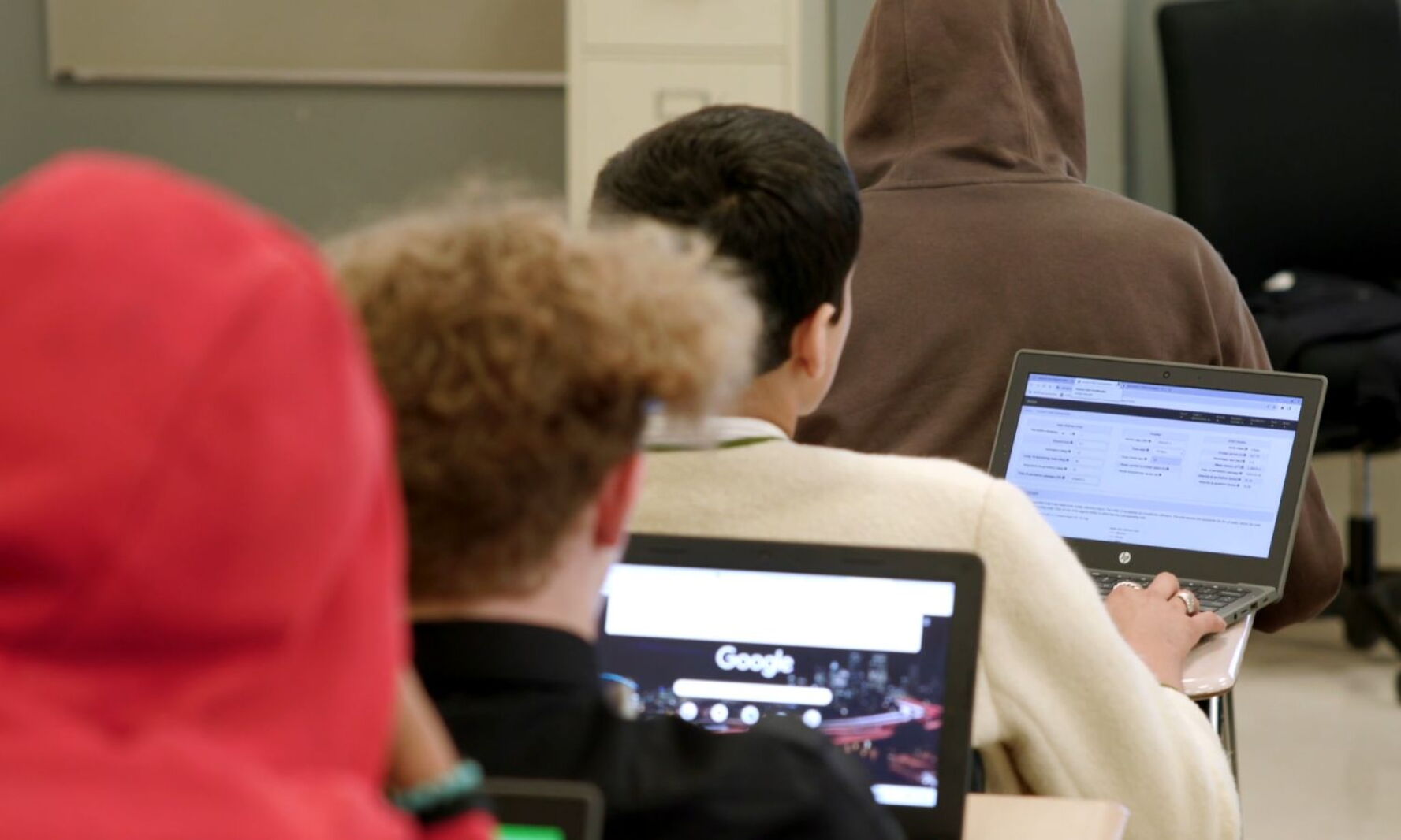
DULUTH — Classroom technology has come a long way since the days of projector screens. Today, easily accessible devices like iPads and Chromebooks have made digital learning part of the educational norm in classrooms across the country.
Over the last several months, though, conversations around artificial intelligence and technology accessibility have given way to a consistent community concern discussed during Duluth Public Schools meetings — has classroom technology use gone too far?
“If you look at how kids actually retain and learn information, kids and adults don't learn in the same way when we take information in on a screen,” said Courtney Stein, a Lowell Elementary school parent who spoke before the Duluth School Board about an initiative to “Take Tech Out” of classrooms in April. “There's all kinds of studies that back this up, and I just really worry about what this means for the future of this generation.”
Stein is one of many district community members to go before the board in recent months, urging reconsideration around screen use and classroom technology. It’s a conversation that has picked up traction not just locally but at the national and international levels.
Distance learning during coronavirus pandemic accelerated the use of digital devices to. By mid-2020, Duluth Public Schools was on its way to being a one-to-one district, with each student receiving a Chromebook in order to participate in online learning.
By the 2024-25 school year, a federal survey found 9 out of 10 schools nationwide had one-to-one school-issued devices for students.
Increasing amounts of research drawing a line between social media and screen use and the negative impacts on the mental, physical and cognitive health of children are now prompting parents and schools to re-evaluate digital access.
The Los Angeles public school district, for example, has imposed strict limits on screen access in classrooms.
“We see the writing on the wall; we know that this is not how kids should be taught," Stein said. "It's kind of like when they knew that cigarettes killed you, or that we needed unleaded gasoline. I think changes are inevitable. It's just a decision of when you're gonna move in that direction, because you can't ignore the research at this point.”
In February, the Duluth school district paused its AI rollout for students, just weeks before the planned launch of Google Gemini on high school Chromebooks. The announcement had been met with pushback, particularly from students, raising concerns over issues of fairness, reliability, environmental impact and the unknown effects of AI on learning.
As of May, the district said that no AI rollout date is set, but that training and conversations around AI integration and use would continue with staff and students.
However, AI and general technology use in classrooms have continued to be a recurring topic at the Duluth School Board’s monthly listening sessions, where community members have a chance to voice their concerns to the district.
Of the nearly 70 people who have spoken since January, more than a third have voiced concerns around the district’s use of technology.
Staff, students, family members and the broader community have brought up myriad technology concerns, expanding beyond AI integration to include the effects of screen overuse for students, environmental impacts of the district's technology use and student ethics.
“Screens are everywhere,” said Marit Knutson, a parent of three Duluth Public Schools students. “It's just like this addiction that kind of creeps and creeps, and there are serious impacts that come with that. ... When you’re giving those screens to a kid, who might not have the ability to self-regulate their own access, it's not a good habit to get into.”
She sees the impacts not just in her own children, but also in her role as a pediatrician at Essentia Health. She often talks to patients and parents about what unhealthy and healthy screen use looks like.
While impacts can differ across age groups, sleep difficulties and loss of movement are a consistent concern for young people, according to Knutson. For young children, excessive solo screen time can contribute to language and fine motor skill delays and impact attention control as they get older.
“I'm not saying that we don't need kids to learn how to use technology, because we do,” Knutson said. “But the unstructured time that kids have with these devices and the multitude of possibilities of things that they're finding and doing that are not educational is really risky, compared to the known benefits of the in-person teaching and staff support.”
Kids who spend more time in front of screens can also be more isolated and not develop necessary social skills, said Knutson, which can lead to behavioral issues down the road.
Following guidance from the American Academy of Pediatrics, Knutson advises that it’s important for children and parents to understand today’s “digital ecosystem” and have conversations around healthy use of technology.
“We set limits in our own home, but it's definitely making our job harder as parents when our kid has a screen that he was given for school,” Knutson said. “You just can’t constantly monitor if he’s using it only for educational purposes, and there are times when he’s not.”
While most districts nationwide have transitioned to school-issued devices, only about half allow students to take their devices home.
For Duluth Public Schools, students 13 and older are able to participate in a “Chromebook loan agreement.” With parent consent, students are assigned a device throughout the school year that goes with them to class and to their homes.
“Tech use in schools, when it's teacher-guided, is common, and that's the way it should be,” said Haakon Nelson, a district parent and teacher at Homecroft Elementary School. “The problem is when kids have their own Chromebook for the down times during the day in school, and then to be able to bring it home and have it 24/7, that's a big leap. And I think that's where problems can arise.”
Duluth district policy includes limits screen time for children in preschool and kindergarten. In elementary schools, Nelson said, there isn’t quite the same level of access to screens that he sees with his son, who entered middle school last year and received a school-assigned device.
“It's challenging for him to finish doing homework on a Chromebook, because there are so many distractions,” Nelson said. “What seems like a simple worksheet takes a long time, because he's checking other tabs, switching to YouTube … and then when he's done with the Chromebook, it's hard to get him to put it away. The act of closing the Chromebook is working against some pretty strong impulses when you want to keep playing.”
Nelson’s concerns mirror those of many of the parents who have spoken before the Duluth School Board.
For Stein, whose children will enter middle school over the next several years, the school-issued devices provide a looming concern over how to balance the need for student education on technology use and the potential harms that come with it.
“I think we really need to look at how much we're spending on this thing that is actually hurting our kids,” Stein said. “I get that technology means a lot of different things, but we're going to have to put a lot of thought into what our education looks like without being behind a screen.”
Related Stories
 Technology
3 Texas Tech Softball Players Injured In Offseason Jet Ski Accident
56 minutes ago
 Technology
Nigerian, Türkiye Strengthen Defence Partnership on Naval Shipbuilding, Technology Transfer
2 hours ago
 Technology
NSU Technology & Entrepreneurship Summit Sept. 30
5 hours ago
 Technology
Leaked DLSS 5 code lets modders test Nvidia’s AI graphics tech
9 hours ago
 Technology
Dual
10 hours ago
 Technology
AWS, Google, NVIDA, Workday & Running Robots: Top Tech News
11 hours ago
 Technology
Newcleo
12 hours ago
 Technology
Snyk was worth $8.5 billion. The price of its employees' stock has collapsed.
13 hours ago