
Claude AI watermark explained: How Anthropic’s system works
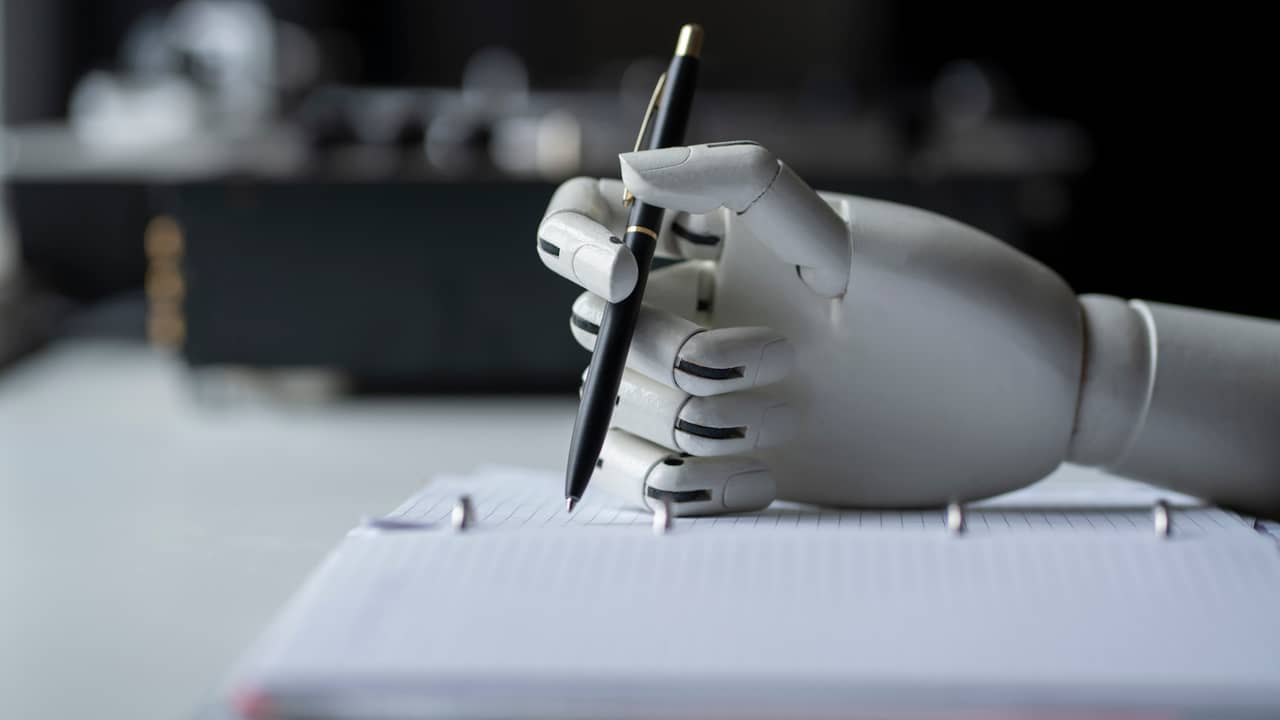
Artificial intelligence company Anthropic is introducing a new way to identify text generated by Claude, without placing a visible label on the words themselves. The company says its watermarking system creates an invisible statistical pattern in Claude’s responses that can later be checked to assess whether the model was involved in producing the text.
The change is part of Anthropic’s effort to meet requirements under the European Union’s AI Act. The company says it is applying the watermark globally for now.
So, how does an invisible watermark work, can it identify a Claude user and what happens when AI-generated text is edited? Here is what you need to know.
How does Claude’s watermark work?
Claude, like other large language models, generates a response one token at a time. At each stage, it considers possible words or tokens and selects one based on the preceding text.
Often, there is more than one reasonable option. If a sentence begins with “The sky was”, for instance, words such as “grey” or “cloudy” might both work without changing the overall meaning.
Anthropic’s watermarking system uses these moments of choice. Rather than allowing the random selection to come from an ordinary random number generator, it uses a secret key and information from the preceding words to influence the selection.
The resulting text does not look unusual. However, across a sufficiently long passage, the choices can form a pattern that someone with the appropriate key can analyse. If that pattern corresponds with what Claude would have produced using the key, it becomes possible to calculate the likelihood that Claude generated the text.
Will the watermark change Claude’s writing?
Anthropic says it should not. There is no visible mark, special character or extra text for a reader to spot. The company says watermarked and unwatermarked responses should appear identical.
It also says internal testing found no noticeable effect on the quality, creativity or readability of Claude’s responses. The approach is based on the SynthID-Text technique developed by Google DeepMind and described in a 2024 Nature paper.
The watermark also does not require Claude to generate additional tokens, meaning Anthropic says it will not make the model more expensive to operate or use. Its impact on speed is described as negligible.
Why won't every sentence carry the same watermark?
The system needs choices to work. When Claude has to produce a precise answer, there may be little room for the watermarking mechanism to influence the output. If a factual statement requires a particular word or phrase, choosing an alternative could make the answer inaccurate.
Code presents a similar problem. Programming languages often require exact syntax and terminology, leaving fewer opportunities for the watermark to operate. Comments, where wording is more flexible, can carry some watermarking, but Anthropic says its effect on the actual code should be negligible.
What happens when Claude edits human writing?
This is one of the system’s limitations. If Claude is asked to proofread an article written by a person, most of the words may remain untouched. The watermark only applies to words selected by Claude, so a lightly edited document may not contain enough of those choices for reliable detection.
More extensive rewriting creates more opportunities for the watermark to appear. In other words, the more text Claude generates itself, the greater the amount of material available for detection.
No. The watermark is designed to identify possible involvement by Claude, not the person behind the prompt. Anthropic says neither the watermark nor its key contains information that can be used to recover a user's identity, organisation or conversations.
It is also not a definitive authorship test. A positive result would indicate that Claude was probably involved, but it would not establish whether the model wrote the original material, substantially edited it or performed another form of processing.
Can people remove the watermark?
They can, particularly through substantial rewriting. Anthropic says minor changes may not eliminate the watermark entirely. A complete rewrite that replaces the original wording, however, can remove it. That also raises a broader question about what should count as AI-generated material once the original text has been extensively transformed.
The system is also less reliable with very short passages because there are fewer word choices from which a statistical pattern can emerge. Longer passages provide more evidence and therefore allow greater confidence in the result.
How will Claude-generated text be checked?
Anthropic says it plans to introduce a watermark detection API, although the company has not yet finalised the implementation details.
This is different from conventional AI detection software. Such tools generally analyse linguistic patterns and characteristics that may suggest a passage was produced by AI. Claude's watermark instead checks whether the statistical choices in a passage match the pattern expected from Claude's watermarking key.
Why is Anthropic introducing it now?
The immediate driver is regulation. Anthropic says the watermark is being introduced to meet requirements under the EU AI Act. The company also says it was among the major AI providers that signed the EU Code of Practice on Transparency of AI-Generated Content in July.
For now, Anthropic is applying the watermark globally because it says it does not have a durable method of restricting the system to a particular region.
The bigger significance is that AI-generated writing could become easier to identify without changing how it appears to readers. Claude's watermark is therefore less like a visible stamp and more like a statistical fingerprint: invisible during ordinary reading, but potentially detectable through the right verification system.
Related Stories
 AI News
Promising Artificial Intelligence Stocks To Keep An Eye On
32 minutes ago
 AI News
Quite Contrary: AI Should Be Used For The Unglamorous Jobs, Not Just Building Fancy Startups, According To Samer Bejjani Of Shootday
1 hour ago
 AI News
US Can Lose Its Lead in AI Technology Race to China
1 hour ago
 AI News
SG's 1982 Ventures joins $400m round in US AI startup Higgsfield
2 hours ago
 AI News
Physical AI in spotlight at Tokyo tech expo
2 hours ago
 AI News
Verascient secures $1.2 million to deploy enterprise artificial intelligence infrastructure
2 hours ago
 AI News
Google Cloud Launches Gemini Enterprise AI Platform for Financial Services
2 hours ago
 AI News
Bill Gates calls for ‘human reserved’ jobs in face of AI takeover
3 hours ago