Claude Mythos AI finds bugs faster than Microsoft patches

In mid-May, dozens of Microsoft engineers and managers gathered inside a conference room at the company's Redmond, Washington headquarters, while others joined remotely, to discuss Project Glasswing. The initiative gives select technology vendors early access to Anthropic's newest AI model built to find software vulnerabilities. Engineers on the call said the model, Claude Mythos Preview, was finding flaws faster than Microsoft's teams could patch them.
A slide shown during the meeting reported that in April alone, Mythos had surfaced 90 vulnerabilities rated critical and 141 rated important inside SharePoint, Microsoft's widely used collaboration platform. The pace increased further during the first half of May.
SharePoint's on-premises servers had already needed emergency attention the year before Mythos entered the picture. In 2025, Microsoft issued emergency, out-of-band patches after flaws in those same servers were actively exploited across dozens of organizations worldwide.
Hans Andersen, an engineering manager on the call, urged the team to clear any bugs still open from April. "Please, please, please if your org has any April bugs, drive those down," he said, telling the group they had about two weeks before May 31, the date he described as the point when the rest of the world would catch up to what Mythos had already found.
One engineer worked through the implication out loud during the meeting. Bugs still unpatched once comparable tools became available to the public on June 1 would effectively sit in adversaries' hands by June 2, he said, and colleagues on the call agreed with that assessment.
Anthropic made Project Glasswing public in April 2026, describing it as an effort to secure the world's most critical software before AI models grow capable enough to be turned against it. Launch partners named alongside Anthropic included Amazon Web Services, Apple, Broadcom, Cisco, CrowdStrike, Google, JPMorgan Chase, the Linux Foundation, Microsoft, Nvidia and Palo Alto Networks.
Microsoft has said those tools will be folded directly into its Security Development Lifecycle, working alongside its existing Patch Tuesday and out-of-band update schedules.
By late June 2026, the Five Eyes intelligence alliance, made up of the United States, United Kingdom, Canada, Australia and New Zealand, issued a joint statement warning that the window for defenders to fix flaws before adversaries could exploit them was narrowing.
The meeting recording and internal Microsoft documents indicate that, for at least part of the company's product line, that window had already closed by mid-May, weeks before the Five Eyes warning became public.
Microsoft's internal presentation outlined a triage plan built around severity. Critical and important bugs would be handled first, roughly 300 moderate-severity flaws were set aside for later attention, and low-severity bugs went unmentioned entirely.
Under Microsoft's own severity classifications, critical flaws include self-propagating exploits capable of spreading across networks without any user action. Important flaws are those that can compromise the confidentiality, integrity or availability of user data.
That triage system runs into a problem specific to AI-driven vulnerability discovery. Mythos can chain several lower-severity flaws together into a single attack path capable of doing far more damage than any one flaw alone.
Vinh Nguyen, a senior technical adviser to Anthropic and senior fellow for AI at the Council on Foreign Relations, previously served as chief AI officer and chief data scientist at the National Security Agency. He said combining several low-level flaws can produce a high-severity outcome, and that Microsoft's current triage approach may be underpricing that risk.
A Microsoft spokesperson responded that the company's triage decisions weigh several factors, including exploitability and customer impact. The spokesperson said vulnerability chaining has long featured in Microsoft's risk-assessment process, even though the internal presentation itself did not mention chaining.
Beyond SharePoint, internal documents show Microsoft had found hundreds of critical or important bugs across Microsoft 365, the Teams conferencing platform and the Copilot AI tool since it began using Mythos earlier this year. Most of those bugs remained unpatched as of mid-May.
Anthropic had given roughly 50 full-time Microsoft employees access to Mythos, with an internal goal of hardening critical services before publicly available tools catch up. The same presentation projected that the SharePoint team would stay focused on critical bugs for months before turning to important-rated ones in August.
Microsoft's June Patch Tuesday release shipped fixes for more than 200 vulnerabilities, a total higher than any previous month. The following release, on July 14, patched more than 600 bugs, all but seven of them rated important or critical, and one of those seven was already under active exploitation.
Dustin Childs, who leads a vulnerability disclosure and bug bounty program that tracks Microsoft's monthly security updates, wrote that "the bug apocalypse has fully descended upon us."
Microsoft has said its overall bug volume is unlikely to level off soon as the company leans further on AI to find and prioritize issues inside its own code.
Separately, Anthropic disclosed additional cryptography research produced with Claude Mythos Preview, distinct from its work on software bugs. Researchers using the model improved attacks against HAWK, a post-quantum digital signature candidate under review by the National Institute of Standards and Technology, and against a reduced, seven-round version of AES, the widely used symmetric cipher.
Anthropic characterized the findings as "substantial research advances, but they do not currently affect any production systems." The company said HAWK remains only a candidate inside the federal standards process, and that the AES work targets a weakened research version of the cipher, not the full 10-round version used in deployed systems.
On July 27, 2026, Nvidia launched the Open Secure AI Alliance, a coalition of more than 50 companies, including Microsoft, working to build open-source tools for AI-driven cyber defense. Anthropic did not join the alliance, nor did it sign a related open-weight AI letter that Nvidia, Microsoft, Meta, Google and OpenAI backed days earlier.
Microsoft has not disputed the figures or the meeting recording described here. The company defended its triage methodology, said security remains its top priority, and said its teams are using AI to find and fix vulnerabilities as quickly as possible, but it declined to say how many Mythos-flagged bugs have been resolved since the May presentation.
Anthropic declined to comment when asked about the internal Microsoft meeting. The May 31 deadline discussed during that call has since passed.
Camila Nogueira is a technology writer who makes complex digital tools feel approachable, useful, and even a little exciting. With a background in UX and digital content strategy, Camila focuses on how people interact with technology—from AI apps and browser extensions to cybersecurity tools and smart devices. At Best Daily, her product reviews prioritize clarity, usability, and long-term value, especially for people who don’t consider themselves tech-savvy. She writes with empathy and precision, aiming to help you feel more confident navigating the digital world.
Related Stories
 AI News
Bill Gross bets AI can help mass
3 weeks ago
 AI News
Nigeria records 93% rise in AI micro
3 weeks ago
 AI News
The Italian gelato maker using AI to invent new flavours
3 weeks ago
 AI News
Closing the Gap Between Agentic CX Pilots and Production
3 weeks ago
 AI News
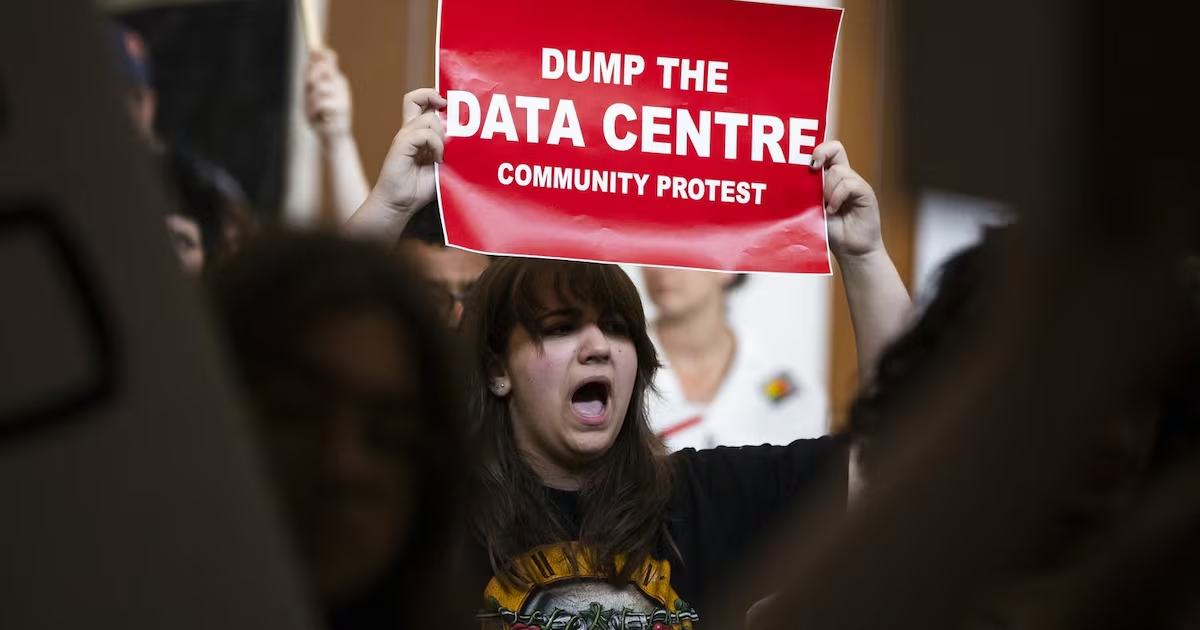
New Brunswick data centre debate highlights cross
3 weeks ago
 AI News
How to Structure an AI Agent Referral Fee Agreement Between Startups
3 weeks ago
 AI News
No, AI didn’t delete a Swedish reality TV series
3 weeks ago
 AI News
There is no AI in Armageddon. Artificial intelligence is a tool, not an apocalypse
3 weeks ago