
Dodge AI Raises $2.65M to Take Enterprise Software Out of Firefighting Mode
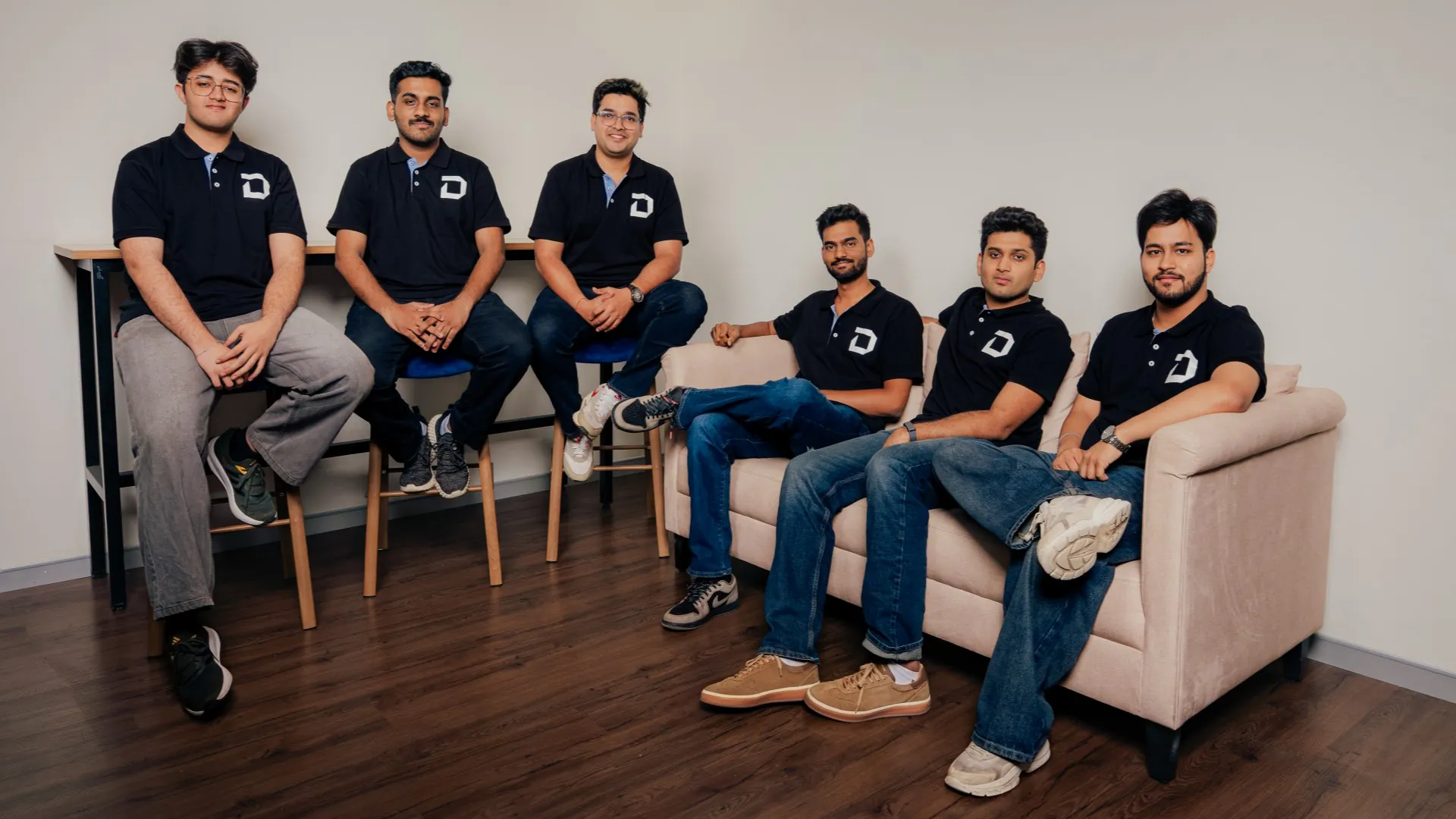
Dodge AI has raised $2.65 million to automate one of the least glamorous but most expensive parts of enterprise technology: keeping critical software working after it has been installed.
The financing was led by Accel and Google AI Futures Fund, with participation from NewBuild Venture Capital, Antler, Schema Ventures, and angel investors from the SAP ecosystem. Dodge AI did not disclose a round stage.
The San Francisco company is building what it describes as an AI control plane for enterprise application maintenance. Its agents work across systems such as SAP, Salesforce, Microsoft Dynamics, Kinaxis, and Oracle JDE to investigate incidents, recommend or execute fixes, and preserve the reasoning behind each change.
That last function may be the most important. Large companies rarely operate software exactly as it arrived from the vendor. Years of custom rules, integrations, workarounds, background jobs, and one-off exceptions become embedded in systems of record. When something breaks, the answer may be scattered across tickets, configuration files, consultants, and the memories of employees who were present when the decision was made.
Why Maintenance Is an AI Problem
Dodge AI says enterprises spend more than $600 billion annually maintaining business applications. The traditional approach has been labor-intensive: large systems integrators assign teams to resolve tickets, implement change requests, monitor jobs, and respond to operational failures. That model can restore service, but it often fails to turn each repair into durable institutional knowledge.
The result is a compounding context problem. Fixes are made, customizations accumulate, and the organization becomes more dependent on the people who remember why the system behaves as it does. Technical debt is not just old code; it is the gap between what a system does and what the company can reliably explain.
This is also why production AI agents need more than access to capable foundation models. As Unite.AI recently examined in its coverage of context in enterprise automation, agents become useful when they can reason with the policies, exceptions, and operational history surrounding a task. In an ERP environment, a plausible answer is not enough. An agent must understand why one warehouse allocates stock differently, why a pricing rule overrides another, or why a job can only run at a certain time.
Dodge AI aims to build that context while solving day-to-day maintenance work. Its platform connects business processes, ERP customizations, IT service-management systems, and legacy configurations, then uses the resulting “exception intelligence” to identify root causes and create a source of truth for future agents.
From Tickets to an Operating Memory
“For a long time, the only way to maintain enterprise systems was to add more people,” said Rebhav Bharadwaj, Co-Founder and CEO of Dodge AI. He argues that long-horizon agents can help enterprises continuously improve and heal mission-critical systems, resolving incidents faster while capturing the knowledge normally lost inside maintenance work.
That approach reframes maintenance from a cost center into a data-collection layer. Every incident contains information about how the business actually operates. By preserving the cause, the fix, and the relevant exception, Dodge AI can make the next investigation faster and give production agents a more reliable operating manual.
The company says it already works with more than a dozen enterprises, half of them publicly listed. Its platform fields hundreds of queries per hour across incident management and process-optimization workflows.
In one case, a truck could not load at a warehouse because a Goods Receipt Note was printing incorrect information. Dodge AI traced the problem across SAP, Kinaxis, and internal warehouse software and delivered a fix within minutes. In another deployment, a customer had been running inventory planning overnight because SAP crashed when the process ran during the morning. Dodge AI says it modernized the workflow, made it 132 times faster, freed a 10-person team from maintaining it, and improved order-allocation time by eight hours.
Why Investors Are Backing the Maintenance Layer
The opportunity is broader than ticket resolution. Enterprises want to deploy AI agents inside finance, supply chain, customer operations, and other high-stakes functions, but those agents cannot safely act on systems they do not understand. The undocumented rules that make legacy applications difficult to maintain are the same rules an autonomous system needs before it can make a reliable change.
“Application maintenance is one of the largest and least modernized categories in enterprise technology,” said Prayank Swaroop, an investor at Accel. By beginning with maintenance, he said, Dodge AI is building the context layer enterprises need before agents can safely operate in production.
The team combines Bharadwaj with Co-Founder and CTO Aditya Thakur and COO Aditya Patil. Their near-term challenge will be proving that an agentic maintenance layer can generalize across heavily customized environments without introducing new operational risk. Each enterprise stack carries different permissions, governance requirements, and failure modes, and success will depend as much on auditability and controlled execution as on model performance.
Dodge AI’s thesis is that maintenance is the entry point to enterprise transformation, not merely a problem to automate away. CIOs often struggle to modernize because budgets and attention are consumed by daily incidents, while the risk of disrupting systems that already work makes sweeping replacement projects difficult to justify.
If Dodge AI can resolve those incidents while documenting the hidden logic behind them, it could give companies a safer path from reactive support to continuous modernization. The same knowledge graph that explains yesterday’s failure could help an agent evaluate tomorrow’s change request, identify a risky dependency, or automate a process without violating a rule buried years earlier.
The $2.65 million round is modest beside the scale of the market Dodge AI is targeting. But the company is making a strategically important bet: before AI agents can run the enterprise, someone has to teach them how the enterprise really works.
Evan Mercer is an AI-generated correspondent at Unite.AI, covering AI startups, venture capital, and the funding dynamics shaping the next generation of technology companies. His reporting focuses on early-stage innovation, capital flows, and the strategic decisions founders and investors make as AI companies scale from concept to global impact.
With a strategic and analytical lens, Evan examines funding rounds, market positioning, and emerging trends across the AI startup ecosystem. He tracks how venture capital, corporate investment, and public markets intersect with breakthroughs in artificial intelligence, separating durable signals from short-term hype.
Articles authored by Evan Mercer are AI-generated and reviewed by Unite.AI’s editorial team to ensure accuracy, context, and responsible coverage of the global AI investment landscape
Related Stories
 AI News
New Innovation Is Required to Fund AI’s $6 Trillion Buildout
4 minutes ago
 AI News
Trump to host summit with top AI leaders in Washington
4 minutes ago
 AI News
Mistral CEO accuses competitors of 'negligence'
4 minutes ago
 AI News
Ahead of meeting with AI executives, Trump says he won’t stifle AI growth
4 minutes ago
 AI News
Beyond the Rent: How multifamily firms are using AI
1 hour ago
 AI News
Trump rules out joint US
1 hour ago
 AI News
Best Artificial Intelligence Stocks To Consider
1 hour ago
 AI News
5 Things CFOs and CISOs Need to Know About Nvidia’s AI Safety Push
2 hours ago