
Duluth schools need to ‘reshape’ tech plans, says district tech director
DULUTH — Over the last year, classroom technology has become a major topic of local discussion, mirroring conversations happening not just across the country but around the world. The pushback has led to a rise in school cellphone bans, policies enforcing age limits on technology use, and legislation reducing classroom screen time.
Here in Duluth, technology concerns — including AI integration, budgetary strains, environmental impact and overexposure to screens — have become the most-discussed topic at School Board public comment sessions.
“I think a message that we're hearing clearly is that technology use should be very intentional,” said Greg Krueger, director of technology for the school district. “It shouldn't just be the default mechanism for teaching and learning in the district,” he said.
Largely, parents' pushback has centered on students' overreliance on screens. Community members have raised concerns about the detrimental effects it may have on learning and the cost of maintaining that technology.
However, Krueger said the technology budget accounts for a relatively small portion of the district's expenses.
Last year, general fund expenditures totaled just under $185 million. The technology budget accounted for less than $4 million of the overall expenses. And, Krueger added, those costs cover much more than just the district’s one-to-one program.
“There's operational technology, there's school safety technology in use, there are information systems that help us analyze data to best serve our students and maintain organization,” he told the News Tribune. “The expenses that we undertake to keep technology running in the district are returning a lot more for us than just the devices that are in students' hands.”
Wages and benefits make up the largest portion of the district's technology budget. During the past fiscal year, Duluth schools spent approximately $1.7 million on labor for the tech department. The department includes 19 full-time employees, including Krueger, who work throughout the district.
The remaining $2.2 million covers all non-labor-related technology costs, including cybersecurity, subscriptions and internet services across school buildings. Approximately $300,000 goes toward “refreshing” technology, replacing aging equipment such as SmartBoards and projectors in classrooms. Parts, supplies and repairs are covered by $100,000 of the technology budget.
Another $300,000 is set aside to supply new devices to incoming sixth graders, which typically remain in rotation throughout their academic careers. Ideally, Krueger said, Chromebooks would be replaced every four to five years. Duluth tends to keep them “well over” that time period.
“It does vary, based on classroom to classroom, school to school,” Krueger added.
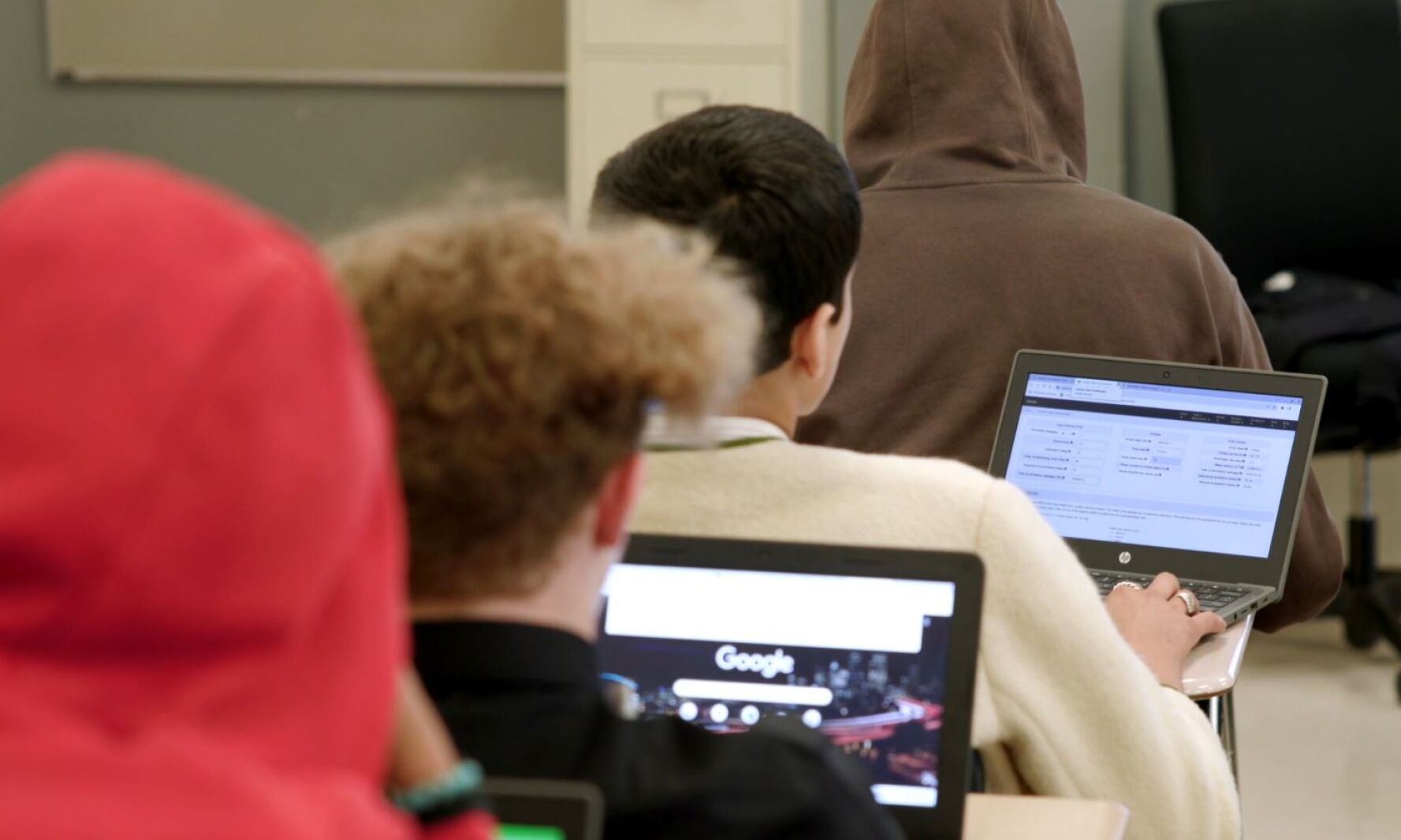
While the district technically has the capacity to provide every student with a device, Krueger said elementary school access is limited, with Chromebook use left to teachers' discretion. In sixth grade, students become eligible to take a device to and from school.
Many of the Chromebooks were purchased using COVID-19 relief money — a funding stream that has long since ended. Now, those devices are “aging out,” said Krueger — and the district is not in a position to replace them.
“We're going to have to reshape what we're doing with technology in the years ahead,” said Krueger. “We have limited funding that can replace, say, a class of student devices across the district, or maybe two classes in a given year. That's really the limits of what we can do right now with our funding.”
Changes to the one-to-one program will likely start in the elementary schools, said Krueger. While a plan is not yet in place, discussions of what technology will look like going forward are happening. Krueger noted that he and other administrators have met with parents and community members on the topic.
There’s a lot of “very valid rationale” brought up in those conversations, Krueger said, noting that he understands the concerns. At the same time, the district needs to ensure students are technology literate when they graduate, and there are times when classroom technology is simply unavoidable.
“I don't think it's a viable path forward to completely remove tech from our classrooms, because so much of our curricular content does involve the use of technology in some way,” Krueger said. “That's not to say that the screen should be up and on all day, not at all. Striking that correct balance is something that we are always trying to do, and we have to take a holistic look at how we can continue to provide for meaningful use of technology in our classrooms going into future years.”
Related Stories
 Technology
Chhattisgarh: NIPUN Mission to integrate startups, skills, emerging technology and employment
29 minutes ago
 Technology
Mercedes-Benz Korea Begins 100
3 hours ago
 Technology
First Focus boosts NZ presence through Resolve Technology buy
3 hours ago
 Technology
Time to plug chip design gap as Semicon 2.0 seeks to boost startups
4 hours ago
 Technology
Calgary plant
4 hours ago
 Technology
AI and autonomous driving technology verification · Mercedes
5 hours ago
 Technology
Racketeering conspiracy trial against Chinese tech giant Huawei begins in New York
5 hours ago
 Technology
Ithaca startups represented among finalists for $1 million agriculture competition
6 hours ago