
Dutch AI chip startup Euclyd raises US$231 million with Samsung backing
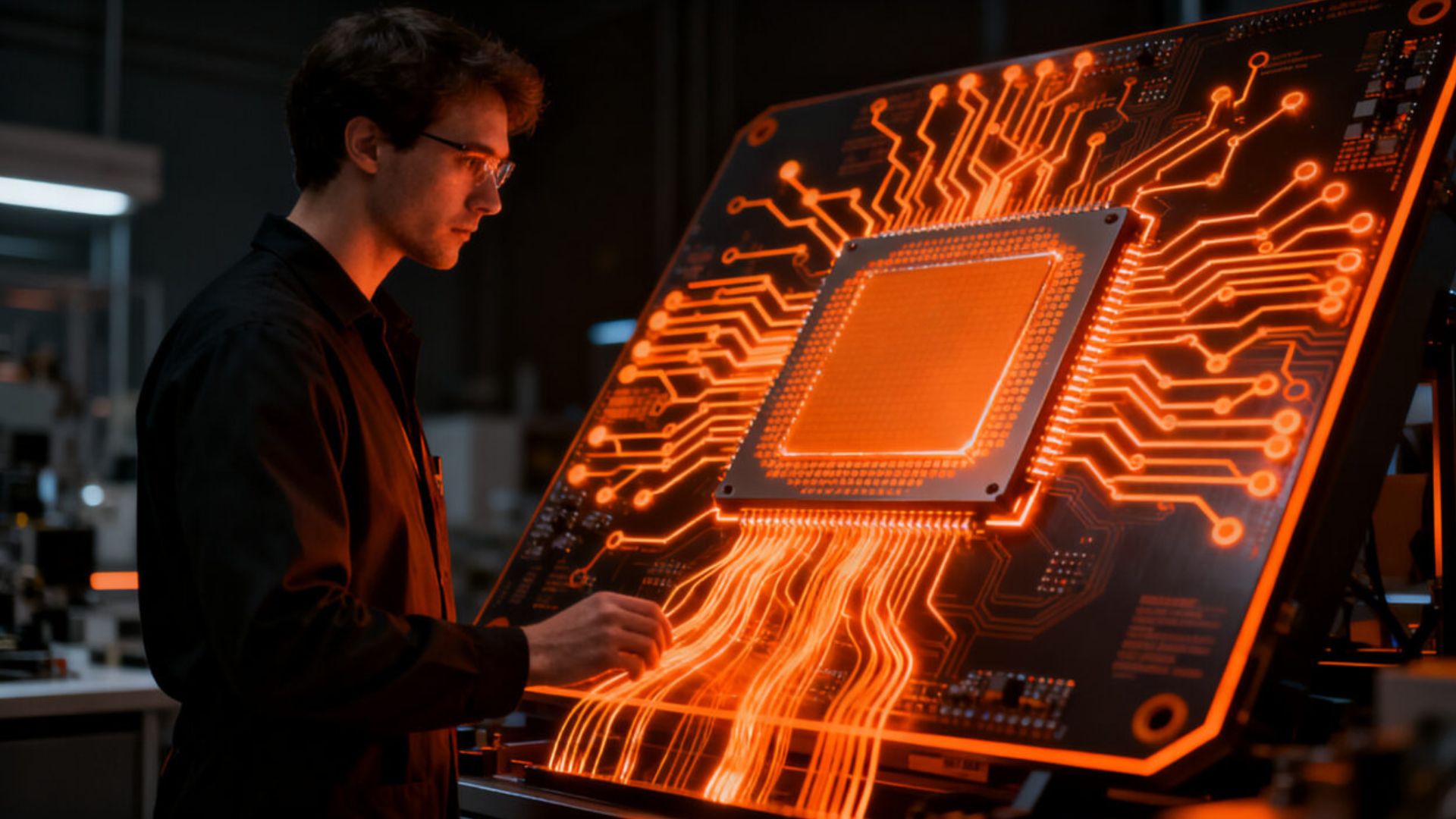
A Netherlands-based semiconductor startup, Euclyd, has raised US$231 million in a funding round backed by Samsung as it works on an alternative to Nvidia’s dominant AI hardware. The company is developing a different chip architecture to help businesses run artificial intelligence inference workloads without relying entirely on conventional graphics processors.
Euclyd was founded in 2024 and is developing technology that combines its own processor and memory architecture. Despite securing substantial funding and support from major technology investors, the startup does not expect to begin shipping commercial hardware until 2028, leaving several years before it can test its technology at scale.
Euclyd targets enterprise AI inference
The company’s Series A funding round raised €200 million and was co-led by Somerset Capital Partners, the Scaleup Europe Fund and Innovation Industries, with Samsung also participating. The investment will support two main areas of Euclyd’s business as it moves towards commercialisation.
One part of the company’s strategy is to sell physical AI hardware and complete rack systems directly to enterprises. These systems are intended for organisations that want to run AI inference workloads on their own premises, potentially giving them greater control over sensitive data and infrastructure.
The second part of the business will focus on licensing Euclyd’s intellectual property. Under this approach, other companies could use the startup’s designs and technology as the basis for developing their own AI chips rather than purchasing complete systems from Euclyd.
Chief Executive Bernardo Kastrup said the company’s approach is intended to address limitations in the infrastructure supporting modern AI systems. “AI is becoming a foundation of economic growth, scientific discovery and national competitiveness, but its potential will remain constrained unless we fundamentally change the infrastructure beneath it,” he said.
Nvidia currently holds a powerful position in AI computing, with its GPUs widely used for both training and inference. The company originally developed its graphics processors for gaming, but they became increasingly important as demand for AI computing accelerated. This expansion helped Nvidia become one of the world’s most valuable technology companies.
Euclyd is therefore entering a market where established chipmakers already have extensive hardware, software ecosystems and relationships with major AI developers. The startup’s technology will need to demonstrate meaningful advantages before it can become a serious alternative for enterprise customers.
Samsung brings more than investment
Samsung’s involvement could give Euclyd access to expertise and resources beyond the investment. The South Korean technology company is one of the world’s largest memory manufacturers and has extensive experience in semiconductor engineering and global supply chains.
Kastrup said Samsung could contribute to several areas of Euclyd’s development. “Samsung can help us in more ways than money. They are one of the biggest memory manufacturers in the world,” he said. “They do a lot of engineering, they know a lot about systems, they know the supply chain, they have a huge network.”
That combination could be particularly relevant to Euclyd because its technology is being developed around both processing and memory. AI workloads require moving large amounts of data between computing and memory components, making memory performance and system design key factors in overall efficiency.
The company expects to begin shipping its chips in 2028 and aims to serve thousands of enterprise customers by 2030. However, those plans depend on Euclyd successfully moving its technology from development into commercial production.
At present, the company’s systems have not been demonstrated at meaningful commercial scale. As a result, questions remain about their performance, efficiency, manufacturing requirements and ability to compete with established AI hardware once they reach customers.
The funding gives Euclyd additional time and resources to address those challenges, while Samsung’s involvement could provide valuable semiconductor knowledge as development progresses. However, the investment does not eliminate the technical and commercial risks of bringing a new AI chip architecture to market.
AI chip competition continues to expand
Euclyd is entering the market as several major technology companies look for ways to reduce their reliance on Nvidia hardware. The growing cost of AI computing has encouraged large cloud providers and AI companies to develop specialised processors designed around their own workloads.
OpenAI announced in August that its first internally developed AI chip, known as Jalapeño, had achieved what the company described as industry-leading speed and efficiency. Google, Amazon Web Services and Meta are also developing their own processors for AI applications and internal infrastructure.
These efforts reflect a broader shift in the AI hardware market. Rather than relying exclusively on general-purpose GPUs, technology companies are increasingly exploring processors designed specifically for AI workloads. Such chips can potentially be optimised for particular applications, although developing and manufacturing them requires significant investment and engineering expertise.
For Euclyd, the challenge will be translating its architectural approach into a commercially competitive product. Nvidia has built a large ecosystem around its GPUs, including software tools, development platforms and hardware that customers can deploy today. A new entrant must therefore compete not only on chip performance but also on the broader infrastructure AI developers and enterprise customers need.
Euclyd’s 2028 shipping target means its technology still has considerable development ahead. Its €200 million funding round and Samsung’s participation provide resources for that work. Still, the startup’s eventual impact on the AI chip market will depend on how its hardware performs once it reaches real customers.
Related Stories
 AI News
Brave New World and Artificial Intelligence: The Tyranny of Happiness
25 minutes ago
 AI News
The AI kill switch, explained: 'It's not too little, but it's probably too late'
25 minutes ago
 AI News
Godfather of AI says it’s time to ‘wake up’ to the existential threat of AI
25 minutes ago
 AI News
What might an AI doomsday look like? Experts have given it some thought
55 minutes ago
 AI News
Google Gemini also Broke Out of Its Test Environment
1 hour ago
 AI News
Consumer Tech News (Sep 14-Sep 18): DOE Backs Quantum Computer With Self
1 hour ago
 AI News
LETTER: Don't fall for artificial intelligence doomsday alarmism
2 hours ago
 AI News
Artificial Intelligence is allegedly pushing its own limits in "unexpected and concerning" ways, reveals OpenAI instances
2 hours ago