
EDITORIAL: An energy policy for the real world
It's long past time for Canadian governments to orient our energy policies to the world as it is, not the world as we would like it to be.
In the real world, fossil fuels today supply 86.2% of global energy, compared to 5.9% for modern renewables, 5.2% for nuclear power and 2.7% for the traditional renewable of hydro power.
As the world's fourth-largest producer of oil and fifth-largest producer of natural gas, complemented by abundant hydro power, safe CANDU nuclear technology and one of the world's cleanest electricity grids, Canada is ideally positioned to become both a conventional and clean energy superpower.
But first, we need to stop getting in our own way, as Conservative Leader Pierre Poilievre has long advocated.
GOLDSTEIN: New pipeline to be financed by a gusher of taxpayer money
GOLDSTEIN: Carney's pivot on climate change the right move, but is it real?
GOLDSTEIN: Carney's green energy plan built on nuclear power and natural gas
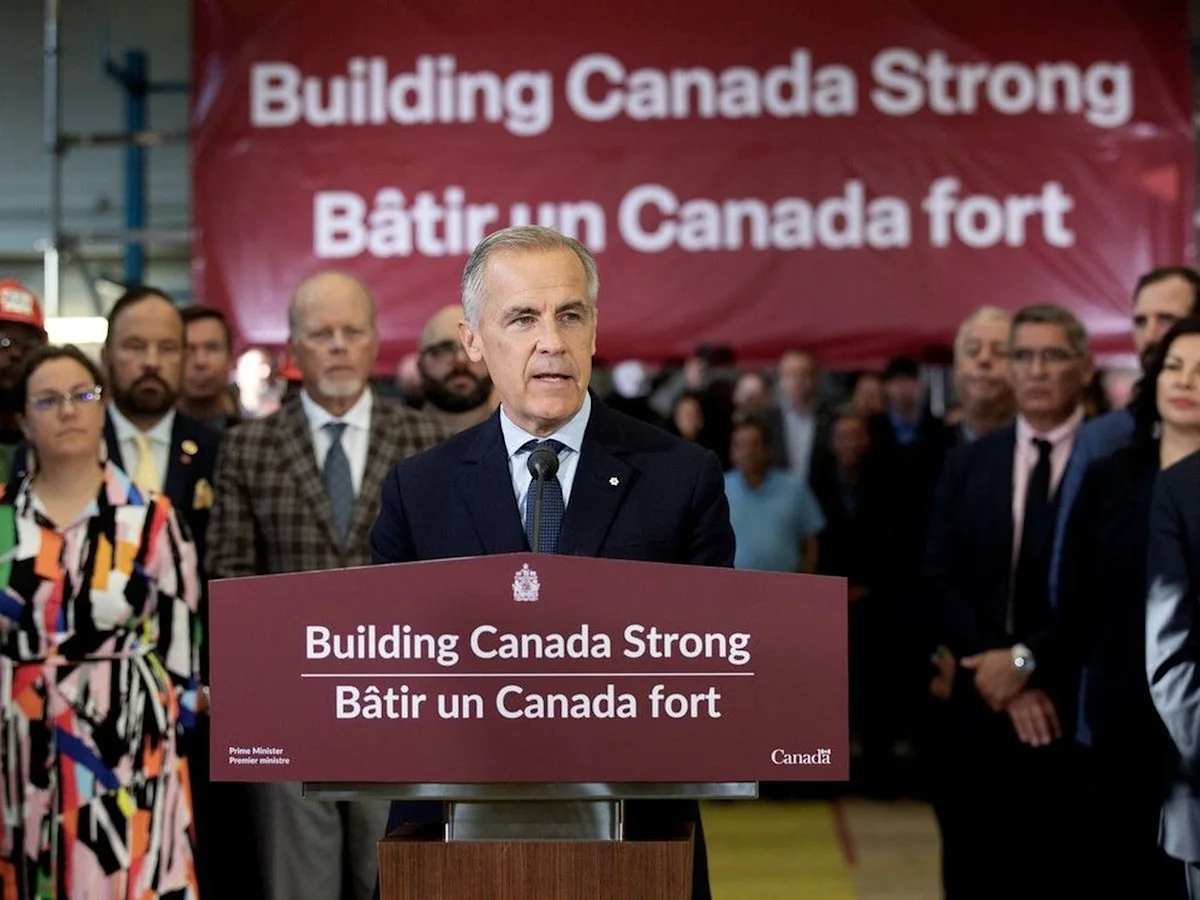
The construction of a new bitumen pipeline from Alberta to B.C. – albeit funded with massive amounts of taxpayer money — is a step in the right direction, but only the first step.
Even moving at "speeds not seen in generations" as advocated by Prime Minister Mark Carney, still means we are years away from getting a second pipeline delivering oil to Asian markets.
Similarly, our ability to deliver natural gas to markets other than the U.S. – where, like oil, it has to be sold at huge discounts – is in its infancy.
We must abandon the cliches of the past.
For example, that the age of fossil fuels is over, or that the world is approaching so-called "peak oil" where incorrect predictions go back decades because they overlooked the fact that while oil is finite, the technology for extracting it continues to improve.
There is also no looming "great reset" in the world's energy mix – remember that long-forgotten phrase dating back to the pandemic?
Yes, the percentage of renewables is rapidly increasing, but so is fossil fuel use, albeit at a slower pace. That means that because of their dominant position today, fossil fuels are going to be around for decades.
Indeed, as Carney himself – whose views on the issue have changed dramatically from his days prior to entering politics as the UN's special envoy for climate change noted recently – has said, for as long as the global economy relies on conventional energy, "as much of that energy as possible should come from Canada, produced responsibly."
Related Stories
 World
World
Former high jump world record
1 minute ago
 World
World
Brilliant Bou defends unbeaten record at TrialGP of France
1 hour ago
 World
World
Typhoon Narra: record flood waters submerge homes and force mass evacuations in China
1 hour ago
 World
World
New Dx World Summit to Unite the Global Diagnostics Ecosystem in Washington, D.C., August 23
2 hours ago
 World
World
How Dolly Parton helped the world
2 hours ago
 World
World
Iran warns of military ship ban in Hormuz under potential deal with Oman and other Middle East news
3 hours ago
 World
World
Why are European leaders staying silent after our summer of climate shock?
3 hours ago
 World
World
Videos show crushing walls of water overtake buildings and bridges on Nepal
3 hours ago