
EDITORIAL: Taiwan Is Not a Pawn
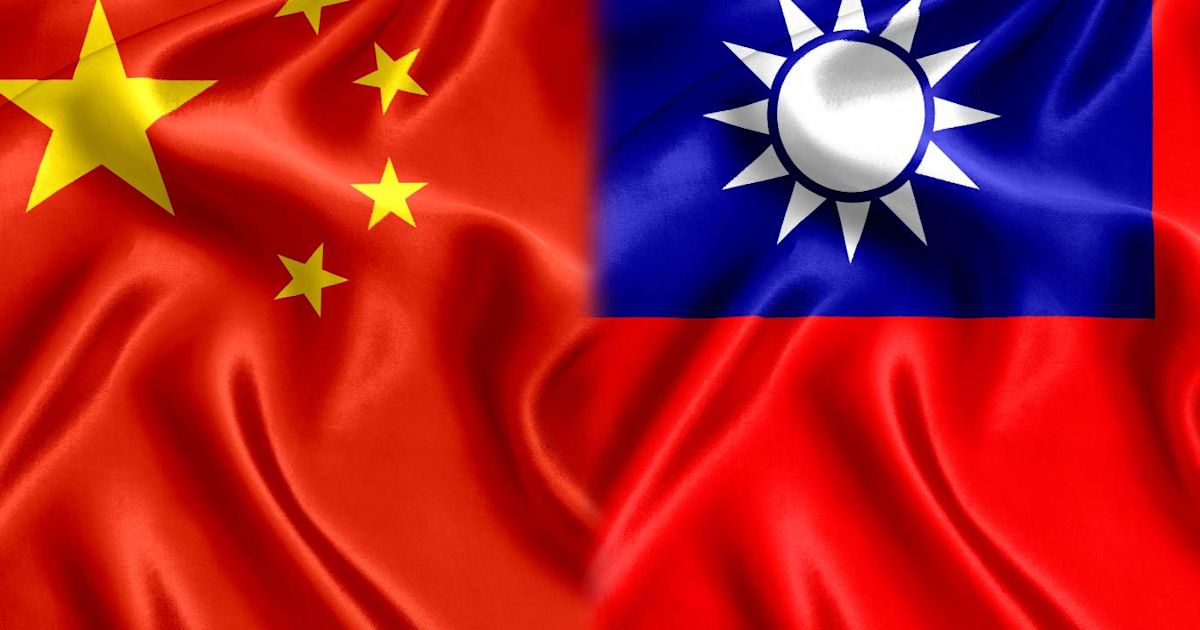
On Thursday evening, following the meeting between Donald Trump and Xi Jinping at the White House, Washington had not released any official statement, according to Focus Taiwan.
Speaking to reporters, neither man addressed the issue of Taiwan. Trump described the meeting as excellent. Nothing more.
Beijing, for its part, has issued a statement. Washington, not yet.
That's where everything could still be preserved-or lost.
Those on watch at the coastal outposts aren't reading any reports either. They're staring at a radar screen, and the coffee is getting cold beside them.
In Taipei, on a Friday morning, people take the subway. They drop off their kids. They check their phones between stops.
There we learn that two presidents have been talking about us. Without us.
Every small country knows that feeling: being the subject of a conversation in a room where you aren't invited.
Taiwan has 23 million residents, according to its Ministry of Foreign Affairs. None of them were in the room.
Outside the White House, Chinese dissident Wang Dan was protesting. The wishes of those 23 million must be respected, he said, according to Focus Taiwan.
As long as Washington hasn't put anything in writing, nothing has been conceded.
Every morning at 6 a.m., the Taiwanese Ministry of Defense releases a report.
Aircraft. Warships. So-called official vessels. Everything the People's Liberation Army moves around the island in a 24-hour period.
On September 25, the report covers the day of the summit. In the sky: 2 sorties. Only one entered the air identification zone, to the east.
The day before and the day before that, the same ministry had counted ten sorties per day.
While Xi was being hosted, the skies quieted down.
Six ships on the 22nd. Six ships on the 23rd. Six ships on the 24th. Six ships on the 25th, plus five additional official ships.
Chinese naval vessels, every morning of the week, at the same level. Taiwanese forces responded as they do every day: aerial patrols, ships, coastal missiles.
On the 20th, the count was eleven ships. On the 21st, seven. Since the 22nd, six, every morning, without exception.
The sky has cleared. Not the sea.
What is withdrawn from the sky is left on the water.
The Chinese transcript, released on the 25th, summarizes Xi's statement on Taiwan.
Beijing's position on "reunification" and territorial integrity is clear, he says. Xi hopes that Washington will stick to the correct position: opposing Taiwan's independence. And handle the issue with caution.
Beijing's term refers to a planned annexation-that of an island the People's Republic has never governed.
Words matter. Everything hinges on them.
In May, Xi called for caution. This time, notes AFP, he went further. He is asking Washington to explicitly oppose independence.
Not supporting it means keeping one's distance. Opposing it means taking a stand against one of the futures that Taiwanese people might one day choose.
It's like closing a door before they've even voted.
A single word in a Chinese statement does not bind Washington. The same word in an American text does.
We stand with Taiwan and its 23 million people. We oppose the request Xi made on September 24 at the White House, and we oppose the freeze on the $14 billion aid package that plays into his hands.
Because the next day, at 6 a.m., six Chinese warships were still circling the island.
Once a concession is made, it cannot be taken back at the next summit.
Taipei responded that very same day.
In a statement dated September 25, the Taiwanese Ministry of Foreign Affairs described this as a routine maneuver. Beijing is distorting the facts to impose its own version of events unilaterally.
The response consists of four assertions.
The Republic of China and the People's Republic are not subordinate to one another. Taiwan's sovereignty belongs to all its people. The Communist Party regime has no right to represent it.
And Taiwan's future can only be decided by the people of Taiwan, collectively, through democratic means.
The ministry adds what Beijing never says: China's harassment and military threats in the East China Sea, the South China Sea, the Strait, and around the island.
It points out who spoke out before the summit: the foreign ministers of the United States, Japan, and South Korea, speaking together. Then eight countries, including France and Germany, in another joint statement.
And more than 60 members of the U.S. Congress, from both parties.
Beijing's efforts to influence other countries' normal exchanges with Taiwan, the ministry adds, are being closely monitored.
President Lai Ching-te, the ministry notes, has reiterated that Taiwan is the party responsible for maintaining the status quo.
Taipei responded with a single sentence. Washington has not yet responded.
What, specifically, did this summit produce?
According to AFP, the only agreements announced were an invitation extended to 100,000 young Americans for exchange programs in China-and the loan of two pandas to an Atlanta zoo.
Two pandas. One hundred thousand young people invited. And a promise-one that was requested.
For Taiwan? Nothing in writing.
Xi speaks of numerous new consensus points. None regarding Taiwan have been released by Washington.
It was his first visit to the White House in eleven years, and his second meeting with Trump this year, as Focus Taiwan notes. They had already spoken in May.
Xi did not respond in public. His statement exists only in the text that Beijing chose to publish. That silence is comfortable: his official account speaks for him.
Trump's silence is of a different nature. It's a blank page. It could be filled with the usual boilerplate. Or with Xi's words.
That is our last hope, and it is concrete. The first U.S. post-summit statement will reveal whether Washington has backtracked.
All it takes is one word changed in a communiqué for Beijing to quote it for ten years.
And yet, that word has not been written. It may never be.
He once again called for avoiding the Thucydides Trap, according to AFP. This theory holds that a rising power will eventually go to war with the established power.
"It must be a race where we catch up," he said, according to Al Jazeera. "Not a struggle where one wins and the other loses."
It's a beautiful phrase. But it has a blind spot.
In this race, Taiwan is not a runner. It is the prize.
The stability that Beijing proposes comes with a condition spelled out in its own statement: that Washington declare its "opposition."
An analyst quoted by AFP sums up the summit's objective: to show that the two leaders know how to manage their rivalry within tolerable limits.
Another, Mitter, from Harvard, notes that Trump is willing to discuss the level of arms sales like no administration before him.
One expert, also according to AFP, says, however, that he sees no sign of a fundamental change in U.S. assurances to Taiwan.
Stability that requires giving up in advance the right to defend a vote is not stability. It is a conditional surrender.
And yet, a sign lies in a single verb. It has not yet been written.
Beijing's stability comes at a price. It has a name.
There is the verb. There are also the weapons.
A $14 billion package of U.S. arms for Taiwan has been on hold for months, according to the Taipei Times.
On September 23, the day before the summit, Secretary of State Marco Rubio reiterated that the matter remains under review. Any sale, he said-to Taiwan or anyone else-is weighed against the United States' own needs.
"When you sell something," he added, "you no longer have it."
This isn't specifically about Taiwan, he clarified. It's a matter of industrial base.
It's a mistake, he added, to believe that Washington views its arms sales through the lens of any single region of the world.
On the same day, a senior administration official pointed out a fact. In December, Trump approved the largest package ever granted to Taiwan: $11.1 billion.
He added that Trump had promised earlier this year to make a decision on the new package within a relatively short timeframe.
A weapon under consideration doesn't deter anyone.
Rubio and the Defense Industrial Base
Rubio's objection deserves to be stated in the strongest possible terms. Here it is.
U.S. stockpiles are not infinite. The war against Iran has been consuming ammunition since February. Every missile sold to Taipei is one less available elsewhere-perhaps where U.S. soldiers will need it tomorrow.
This isn't cowardice. It's industrial arithmetic.
The argument is serious. It deserves a serious response.
And yet, U.S. law does not frame the issue this way.
Section 3 of the Taiwan Relations Act commits the United States to providing Taiwan with the defensive weapons necessary for an adequate self-defense capability.
It specifies that the President and Congress shall determine the nature and quantity of such arms based solely on their judgment of Taiwan's needs.
Sole discretion. Taiwan's needs.
Not the mood at a summit. Not the schedule of a state visit.
The same section requires the President to promptly notify Congress of any threat to Taiwan's security. Six ships a day-that's one such threat.
And a notification does not empty any warehouse. It reserves a spot in the production line.
The law refers to Taiwan's needs. Not Beijing's whims.
Stocks That Are Truly Running Low
We owe it to our readers to explain what's troubling our side.
The argument about stockpiles is valid. It wasn't made up for this occasion. Interceptors are already in short supply elsewhere-in Ukraine, in particular-since the war against Iran diverted shipments.
And Trump isn't the man who abandoned Taiwan. In December, he signed the largest aid package in the island's history.
This also needs to be noted. During the visit, Beijing reduced its flights around the island-from ten sorties to two. That's a gesture.
A gesture that costs little. One that can be reversed overnight. But a gesture nonetheless.
These three facts are true. We're publishing them. We won't pretend otherwise just to win an argument.
None of them justifies keeping an agreement on hold while Xi demands action.
Acknowledge the facts, yes. Acknowledge the action, no.
On September 23, four Republican senators expressed their concern: Mitch McConnell, John Cornyn, Lisa Murkowski, and Thom Tillis.
They quote Trump himself. He described Taiwan as a very good bargaining chip in his dealings with Xi and the Chinese Communist Party.
They write that it's hard to imagine Washington having any influence in the Indo-Pacific if the price of maintaining diplomatic appearances is depriving its partners of deterrent capabilities.
These are not Trump's opponents. They are Republicans.
Al Jazeera quotes Trump's exact words: arms sales to Taiwan are a very good bargaining chip with China.
According to the Taipei Times, the total amounts to more than $15 billion in blocked aid.
The $14 billion package. $300 million in military funding approved by Congress but never released. And $1 billion that the Pentagon has not committed.
Three hundred million already approved. No stockpiles to liquidate in order to disburse it.
At this point, the industrial argument no longer holds water.
All that's left is the token. Nothing else.
What has already been approved is not missing from any warehouse.
December is loaded, September is frozen
We judge actions. Not the person.
December 2025, 11.1 billion for Taiwan: a masterstroke. It arms the democracy most exposed to the West's primary threat.
Hosting Xi, talking, averting a crisis in the Strait: that's not a mistake. Diplomacy isn't capitulation.
Refusing to comment on Taiwan in front of the cameras may even be prudent. Endorsing Xi's stance would not be.
Describing Taiwan as a bargaining chip: a misstep. It tells Beijing that the island's security is up for negotiation.
Keeping $14 billion frozen the very week Xi demanded the word "oppose": a misstep, if it serves Beijing's interests. The events of the week suggest it does.
Beijing thus secures calm waters for the photo op. Beijing thus gets six ships on the water, without a word from the U.S. Beijing thus gets a package that's still under review.
Three gains. No written concessions in return.
A gesture for one side. A gain for the other.
December armed Taiwan. September puts it on the table.
There is a way out. It comes from a man who knows how things work.
Retired Rear Admiral Mark Montgomery, visiting Taipei on the 25th, proposes resuming notifications to Congress after the summit. To break the 14 billion down into smaller packages. To announce them over several weeks.
Notifications are necessary, he says, so that Taiwan can take its place in line. And receive these weapons when they're ready.
This isn't an activist's idea. It's a procedure.
It is the exact response to Rubio's argument. A notification doesn't deliver anything tomorrow. It places an order.
Montgomery adds that weapons alone aren't enough. It's very difficult, he says, to fight together in wartime if we haven't worked together in peacetime.
That's what remains to be saved. A place in line. A schedule. A routine.
Notify. Break it down. Hold on.
I admit to a fear: that the delay-summit after summit-will become the policy itself.
You keep your place in line by staying in it.
Three hundred million and a verb
We demand that the first U.S. post-summit statement reject Xi's verb. No "opposes."
We demand that this statement reiterate what Taipei wrote on the 25th: Taiwan's future is decided by its people, through democratic means.
We demand that the first notification to Congress be sent in the coming weeks, broken up if necessary.
We demand that the 300 million already approved be disbursed. There is no shortage of funds.
We demand that Section 3 of the Taiwan Relations Act be interpreted according to its literal meaning: Taiwan's needs, and only Taiwan's needs.
A verb. A notification. A transfer.
None of this requires a break with Beijing.
Only that we give Beijing nothing it hasn't paid for.
What we are asking for is enshrined in a 1979 law.
Tomorrow morning at 6 a.m., the Taiwanese Ministry of Defense will release a new report.
The sky may once again be full of them. The sea has been that way all week.
Six ships, while two presidents spoke of stability, pandas, and student exchanges.
Six ships, which no one mentioned at the White House.
If Taiwan's weapons become a bargaining chip, what will prevent the next democracy from being put on the table?
The American page is still blank.
It won't stay that way for long.
Six ships this morning. No mention, no comment.
I am not a journalist, but a columnist, expert, and analyst. My expertise lies in observing and analyzing the geopolitical, economic, and strategic dynamics that shape our world. My work consists of dissecting political strategies, understanding global economic trends, contextualizing the decisions of international actors, and offering analytical perspectives on the transformations that are redefining our societies.
I do not claim to possess the cold objectivity of traditional journalism, which is limited to factual reporting. I strive for analytical clarity, rigorous interpretation, and a deep understanding of the complex issues that affect us all. My role is to make sense of the facts, place them within their historical and strategic context, and offer a critical interpretation of events.
This text respects the fundamental distinction between verified facts and interpretive analyses. The methodological rule is consistent: factual information is published only if it is supported by a verifiable source, and the sources actually used in this article are listed under "Sources," never here.
Categories of primary sources used by the publication, when applicable: official press releases from governments and international institutions, public statements by political leaders, reports from intergovernmental organizations, and dispatches from recognized international news agencies.
Types of secondary sources: specialized publications, internationally recognized news media, analyses from established research institutions, and reports from sector-specific organizations.
When an article cites statistical, economic, or geopolitical data, it comes from data-producing institutions (intergovernmental organizations, central banks, national statistical institutes), and the specific institution is listed under "Sources."
The analyses, interpretations, and perspectives presented in the analytical sections of this article constitute a critical and contextual synthesis based on available information, observed trends, and expert commentary cited in the sources consulted.
My role is to interpret these facts, contextualize them within the framework of contemporary geopolitical and economic dynamics, and give them coherent meaning within the broader narrative of the transformations shaping our era. These analyses reflect expertise developed through continuous observation of international affairs and an understanding of the strategic mechanisms that drive global actors.
This article describes a situation documented as of its publication date, not a prediction: subsequent developments may alter these perspectives. No updates are promised in advance; when an article is corrected or expanded, the change is dated within the text.
For any correction requests, please send an email to maximem@mad-max.ca.
Related Stories
 Opinions
Supreme court blocks Trump
20 hours ago
 Opinions
White House blocks CNN from Air Force One in latest escalation with news media
1 day ago
 Opinions
White House TV pool back in operation after ban of news outlets
1 day ago
 Opinions
White House TV pool back in operation after ban of news outlets
1 day ago
 Opinions
2 men charged after woman trapped in tipped
1 day ago
 Opinions
Judge orders Trump White House to restore access to CNN, MS Now and Politico
2 days ago
 Opinions
Tom Cruise's 'Outrageous' Digger Already Looks Set To Become 2026's Most Divisive Film
3 days ago
 Opinions
Which mayoral candidate has the best digital campaign? | Opinion
1 week ago