
Editor’s Note | Tamil Nadu’s New Archaeological Finds Could Rewrite India’s Iron Age Timeline
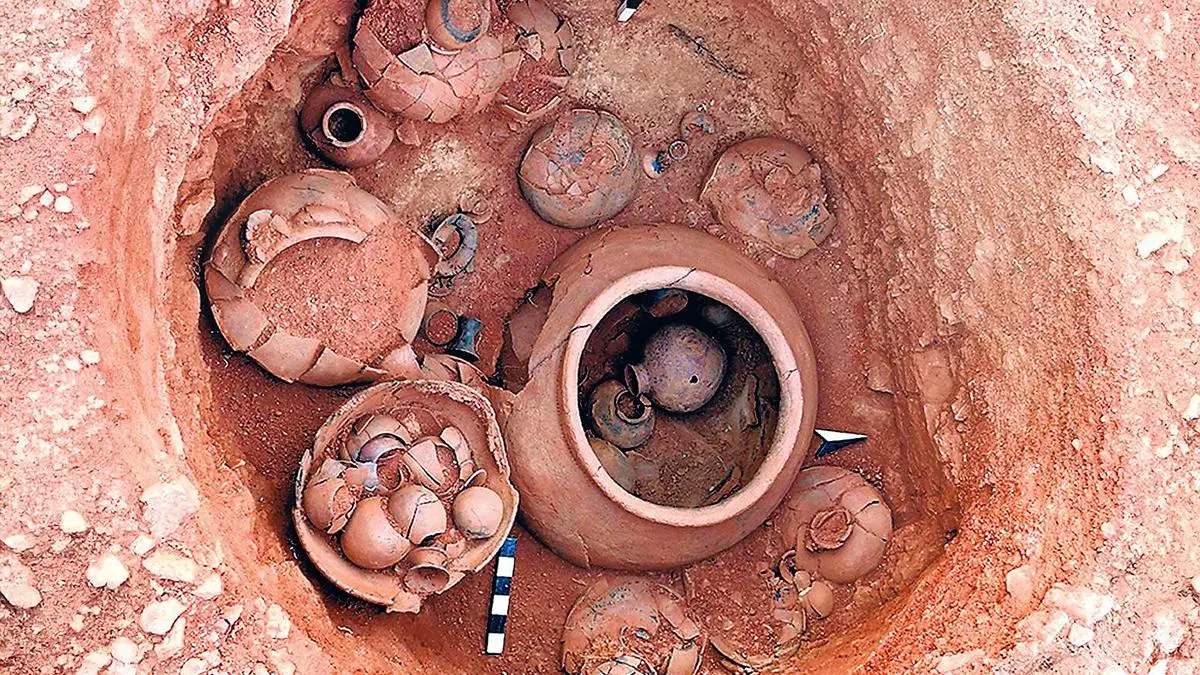
Over the past two decades, the southern tip of the subcontinent has seen some spectacular archaeological breakthroughs. From 2004 on, excavations by the Kerala State Archaeology Department along the coast of central Kerala, in small towns like Pattanam, Paravoor, and Kodungallur—collectively known as the Muziris project—established a flourishing trade link with ancient Rome in the 1st century BCE. This discovery gave a distinct sense of history, heritage, and culture to the region, driving new thrusts in areas like tourism, museums, and the arts.
A decade later, in neighbouring Tamil Nadu, the 2015 excavations by the Tamil Nadu State Archaeology Department, in Keezhadi near Madurai, uncovered the existence of settled communities more than 2,000 years ago (6th century BCE) that bore striking resemblances to the Harappan civilisation, which rekindled older claims that the Indus Valley Civilisation was of Dravidian stock, and not Aryan as claimed by the conventional nationalist historians.
A bombshell, however, came in the last week of January, when Tamil Nadu Chief Minister M.K. Stalin released a monograph that placed the Iron Age in the subcontinent as far back as the first quarter of the 4th millennium BCE. Earlier findings had fixed the antiquity of iron in India to the 1st millennium BCE, then new evidence from sites in Rajasthan and Uttar Pradesh had stretched it to the 2nd millennium. Now, this new evidence from Adichanallur, Mayiladumparai, and Sivagalai takes it further back, to between 2953 BCE and 3345 BCE.
These findings, authenticated by leading international archaeo-labs, endorse Dravidian claims to antiquity on the subcontinent and indicate that the Iron Age existed in this part of the country in parallel with the Bronze Age in the Indus Valley. While Tamil Nadu Minister of Archaeology Thangam Thennarasu states carefully that the findings only indicate close trade and cultural exchange between the Indus and Dravidian civilisations and that the project has no political motivation, a backlash from the Aryanists can be anticipated.
Of course, archaeology as an arena of competitive nationalisms is not new. The cornerstone of modern ethnic nationalisms rests on invented claims of antiquity. From the 19th century, when archaeology developed as a scientific discipline, it has been a handy tool to both discover and manipulate the past. In Europe, archaeology helped Greece and Rome and the Mediterranean belt to anoint themselves the cradles of modern civilisation.
In Africa and Asia, paradoxically, it was colonialism that prompted major excavations in the early 20th century, which helped redraw the contours of the origin of civilisations and shifted the compass to the east. Although Alexander Rea’s excavations in Adichanallur, as early as 1899 to 1904, revealed a wealth of material, including iron objects, the dating techniques were still primitive. Then, a hundred years ago, when Marshall, Cunningham, Wheeler et al. discovered the Indus Valley Civilisation and dated it to 3000 BCE, it injected nationalistic adrenalin into India’s cultural veins. It also initiated jingoistic claims of inflated antiquity, the politics of Aryan primogeniture, and the dogma of “purity”. All that will now have to contend with the precise accelerator mass spectometry dated new claims from the South.
Moreover, the material unearthed in Tamil Nadu—seals, figurines, pots—show startling similarities with those found in the Indus. And this is the fuel that feeds the theory in Tamil Nadu that a Dravidian civilisation flourished coeval with the Indus Valley civilisation.
Regardless of its political implications, the report has the potential to transform not only the understanding of early metallurgy in India but also establish the links that existed between the southern, coastal, and northern regions, whether in trade, culture, or technological exchange. For that reason alone, it is invaluable.
Related Stories
 India
India
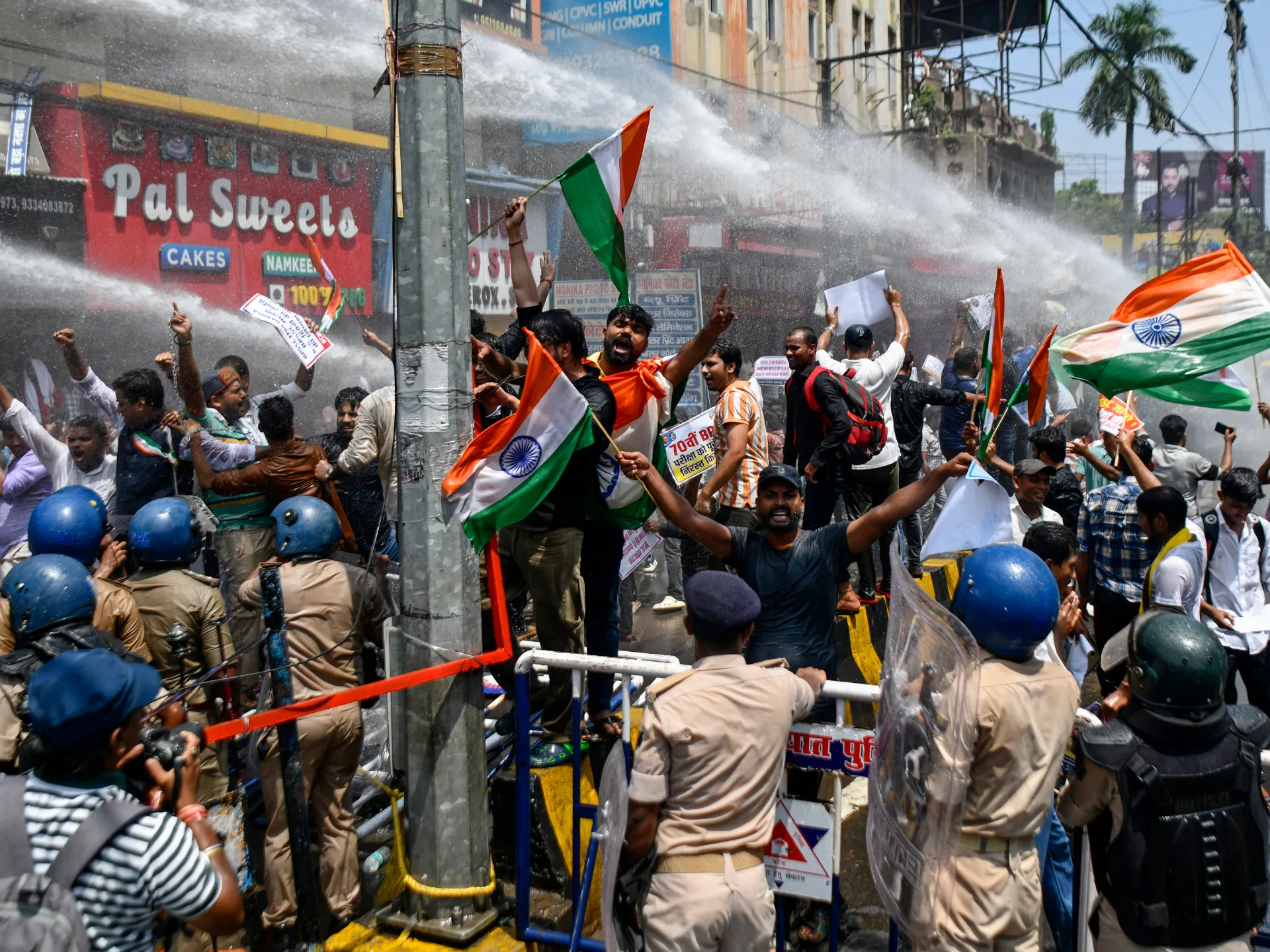
India police clash with protesters a month after Gen Z demonstrations
48 minutes ago
 India
India
No one should engage in 'narrow politics' : Mayawati on hijab row | India News
1 hour ago
 India
India
Piyush Goyal lauds Indian diaspora for strengthening India
1 hour ago
 India
India
Kuldeep Bishnoi’s ‘Sneh Sammelans’ stir Haryana politics, old HJC supporters take centrestage
6 hours ago
 India
India
Indian Parliament: Why Democracy Needs Reform
6 hours ago
 India
India
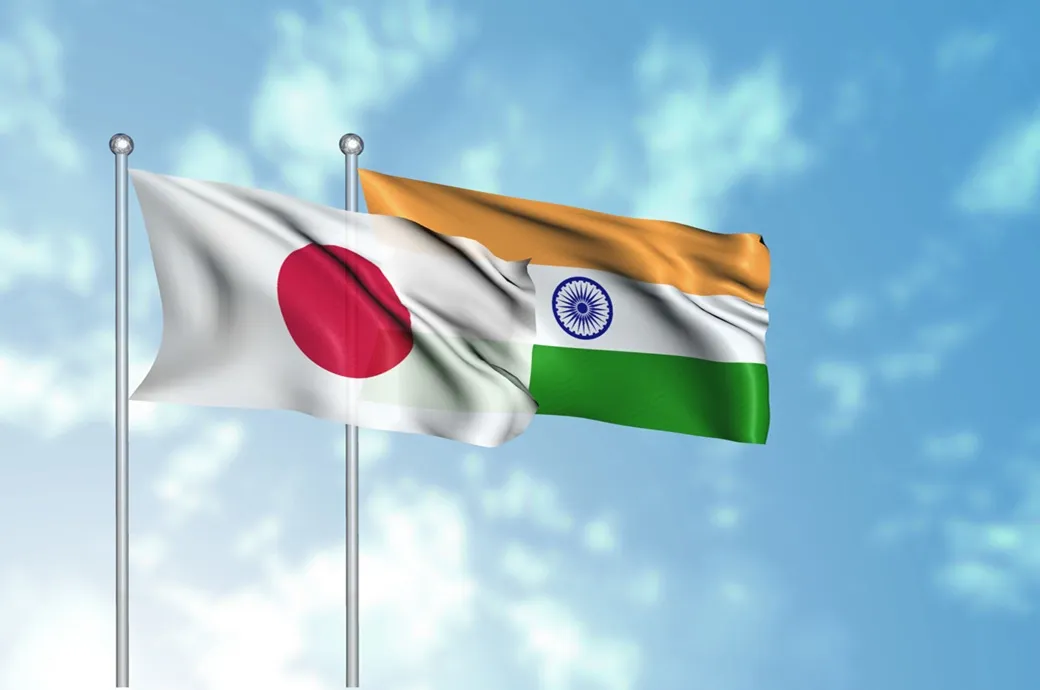
India seeks Japanese capital for technology & manufacturing growth
14 hours ago
 India
India
Panthic politics finds new vehicle as Amritpal’s ADWPD gears up for 2027 polls
18 hours ago
 India
India
Bangladesh
18 hours ago