
Energy groups seek startups and technology companies for projects

Energy groups seek startups and technology companies for projects
Large electric power groups operating in Brazil are expanding open innovation programs with startups and technology companies as a way to reduce operating costs, meet mandatory investments, and accelerate the sector’s digitalization.
A relevant part of these initiatives is linked to the Research and Development (R&D) program of the regulatory agency Aneel, which requires sector concessionaires to reinvest a share of their net revenue in innovation projects.
Since its creation in the mid-2000s, the program has accumulated around 14 billion (bn) reais, equivalent to approximately US$2.7 billion, invested in innovation and sustainability in the electricity sector.
Despite this, there are different direct initiatives by these companies, not related to the regulator, involving equity, venture capital, and co-development.
The third-largest distribution group in Brazil in number of customers, the Equatorial Group has applications open until August 24, 2026 for the first edition of Órbita, an open innovation program conducted by EQT Lab, the holding company’s innovation arm, in partnership with the consulting firm Innoscience.
The initiative seeks startups in the validation or traction stage to work on five challenges: digital validation of the use of individual and collective protective equipment in the field; intelligence on power grid voltage data to prioritize investments in rural areas; automation of water distribution monitoring; sensors and alerts to prevent dangerous approaches and irregular interventions in the energized grid; and a circular management model for operational waste such as poles, concrete, metals, and textile materials.
Registrations can be made through the EQT Lab website, and the program will begin with the selection of startups and a Pitch Day scheduled for September.
According to Equatorial, the selected startups will have access to the group’s assets, structures, and teams to carry out paid proof of concept (POC) projects under real operating conditions, with the possibility of future contracts or partnerships.
The program will last five months, ending in December 2026.
"Órbita reinforces our commitment to open innovation as a way to solve business challenges. We want to bring the company closer to startups capable of bringing new technologies and new perspectives on safety, efficiency, customer experience, and the energy transition", says Lucas Pinheiro, an executive at the Grupo Equatorial Institute of Science and Technology/EQT Lab.
In addition to Órbita, Grupo Equatorial had 10 cases selected for the 5th Latin American Congress of Open Innovation Cases, promoted by 100 Open Startups, which brought together 222 cases from more than 640 entries.
Among the projects presented are the Intelligent Microgrid of the Alcântara Launch Center, developed with the Federal University of Maranhão (UFMA) and which integrates solar generation and battery storage (BESS); Project Horus, which uses AI and climate data to anticipate operations in the face of extreme events; and Delfos, which applies AI and computer vision to monitor in real time in-person service at the branches, in addition to a system that monitors all call center calls.
“Our competitive edge lies precisely in the methodology: we validate the technologies in pilot projects, which are evaluated in a controlled environment. We measure the results and, only then, do we scale the solutions that prove effective for the operation. This model allows us to innovate with greater agility, safety, and focus on concrete results,” said Orlando Santos, Studies and Planning engineer at Grupo Equatorial, in a recent statement.
The group EDP has registrations open until August 23 for the Future Networks module, part of the 10th edition of Energy Starter, the Portuguese multinational’s global innovation program.
The company seeks solutions to increase the capacity and flexibility of the networks, improve operations monitoring, and strengthen resilience in the face of extreme weather events.
Each edition of the program, created in 2016, is divided into three thematic modules: Networks of the Future, Renewable Energy and Solutions for Customers.
In the company format, the selected startups and scaleups take part in a bootcamp at EDP’s headquarters in Lisbon, and the chosen projects are funded by EDP, with access to the company’s assets, data, and teams.
Since the creation of Energy Starter in 2016, EDP has launched more than 200 pilot projects with startups, with 45 commercial implementations and 30 venture capital investments, an amount that adds up to around 140 million euros, equivalent to more than 800 million (mn) reais, considering the set of open innovation initiatives of the company since then.
"Investments in transmission and distribution networks are among the strategic priorities of EDP in Brazil. These are currently essential segments in the country to support renewable energy generation, the energy transition, reliability in energy supply amid climate change, and the opening of the energy market", says Mafalda Magro, Innovation Manager at EDP in South America.
On another front, EDP completed the implementation of the Advanced Distribution Management System (ADMS), a platform that brings together in a single digital environment the information needed to monitor, control, and operate the distribution grid in real time.
The project took 30 months, involved more than 360 professionals and over 4 thousand hours of training, in addition to the construction of a new data center.
"By integrating data, processes and people into a single platform, we have expanded our ability to anticipate events, respond more quickly to incidents and offer an increasingly safe, efficient and reliable service to our customers", said Dyogenes Rosi, CEO of Distribution at EDP in a statement.
Axia Energia, formerly Eletrobras, has been stepping up investments in digitalization, AI and cloud since the integration of the group’s five subsidiaries – Furnas, Eletronorte, Eletrosul, Chesf and CGT Eletrosul – during the 2022 privatization process.
This allowed the creation of centers of excellence dedicated to AI, data and industrial IoT, according to Juliano Dantas, Axia’s vice president of technology and innovation, in an interview with BNamericas.
An example of a project is the digital twin of the Rio Madeira HVDC line, with thermographic sensors and a total investment of around 12 million (mn) reais, of which approximately 5mn reais comes from mandatory R&D with Aneel and the remainder from the company’s own resources.
According to Dantas, the company also maintains the Innovation Grid, a program that connects internal challenges to external startups – among the examples mentioned are Inspectral, for monitoring wildfires, and the expansion of its own network of meteorological stations, currently with 220 units, a 50% increase compared to the national network.
The company is also moving forward with an embryonic neocloud model, or GPU as a Service: it operates 32 Nvidia GPUs and is in the process of acquiring another 64 units, to reach 96 GPUs by the end of the first quarter of 2026.
As part of the initiative, Axia is developing the concept of Computing Power Venturing, making computing capacity available to startups that need processing resources – a project that is still in its early stages.
“We have a computing capacity that is greater than that of the power sector. This puts us in the position of being an important supplier of GPUs. We already are, in fact. We are the first in Latin America, according to Nvidia,” Dantas told BNamericas.
The company also launched, with methodological support from Innoscience, the study Panorama Infrastructure and AI, which surveyed 90 Brazilian startups on the use of artificial intelligence. For 35.6% of respondents, processing infrastructure has already constrained projects, customer service, or solution scalability, and 75.6% expect to increase demand for computing infrastructure over the next 12 months.
"What the data shows is that the discussion about artificial intelligence is moving to a new level. Brazilian startups are no longer just assessing the potential of the technology, but facing concrete challenges of scale, governance, cost, and operation. Infrastructure is becoming a strategic element of competitiveness, as relevant as product, talent, or market access'" says Dantas in a statement.
Neoenergia maintains a Research, Development and Innovation (PDI) program regulated by Aneel, structured as a network hub that integrates 23 companies in the group – five distributors, seven generators and 11 transmission companies.
According to the company, the program moves around 75 million (mn) reais per year in technology development, has more than 1,400 researchers and more than 70 technology partners, including universities, science and technology institutes, industrial partners, startups, and technology-based companies.
The initiatives are organized into four strategic pillars: smart technologies, safety, sustainability, and operational efficiency.
Along the same lines, the Brazilian Micro and Small Business Support Service, Sebrae, through its Sebrae Startups arm, launched Scale IA, a national acceleration program focused on developing artificial intelligence solutions for micro and small enterprises.
In total, 30 startups are part of the initiative, in partnership with the Center of Excellence in Artificial Intelligence at the Federal University of Goiás (CEIA/UFG) and with support from Amazon Web Services (AWS) and Nvidia.
The program lasts six months, until October, and combines mentoring, in-person meetings, and support for market validation.
Among the selected startups, some are focused on health and customer service, another group operates in sales, marketing, and customer relations, and there is also Draives, a startup from the countryside of São Paulo that digitizes asset transactions in the electricity sector, automating documentation and negotiations between investors, generators, and energy traders.
In general terms, the advance of startups focused on collection, payment methods, and customer relations in the sector, such as Draives, is following the digitalization of the energy market, resulting from the gradual opening of the segment and the consolidation of technologies such as Pix, Open Finance and, in the future, Open Energy.
Fintech PAGAR, for example, seeks to reduce the collection costs of the concessionaires and offer a simpler payment journey to consumers.
"For many years, utilities had to deal with expensive, not very digital payment processes with a lot of friction for consumers. The arrival of Pix, Open Finance and new financial technologies created an opportunity to transform this reality, reducing operating costs and significantly improving the customer experience," says Gilson Paulillo, the startup’s commercial director.
According to a survey by Liga Ventures, Brazil had around 270 energy-focused startups at the end of 2024, which raised 841 million (mn) reais in investments.
Distributed generation (micro and mini generation) closed 2025 with 43.5 GW of installed capacity, according to Aneel data compiled by the Brazilian Association of Distributed Generation (ABGD), with a projection of reaching 50 GW by the end of 2026, expanding the base of consumers connected to digital energy management solutions.
(The original version of this content was written in Portuguese)
Subscribe to the leading business intelligence platform in Latin America with different tools for Providers, Contractors, Operators, Government, Legal, Financial and Insurance industries.
News in: Electric Power (Brazil)
Gustavo Gusmão, partner at EY-Parthenon for the government and infrastructure sector, spoke with BNamericas about market perceptions and prospects ...
Follow the main news published by BNamericas in the last 24 hours.
Subscribe to Latin America’s most trusted business intelligence platform.
Other projects in: Electric Power (Brazil)
Get critical information about thousands of Electric Power projects in Latin America: what stages they're in, capex, related companies, contacts and more. Request Demo
Other companies in: Electric Power (Brazil)
Get critical information about thousands of Electric Power companies in Latin America: their projects, contacts, shareholders, related news and more. Request Demo
Related Stories
 Technology
When Tech Companies Die, What Happens To The Products They Leave Behind?
10 hours ago
 Technology
Two Finns supplying Russia with missile tech worth tens of millions
10 hours ago
 Technology
Drones with pepper spray, four
11 hours ago
 Technology
Micron Technology stock pre-market at EUR 800.50: memory storage - ad
12 hours ago
 Technology
TAIEX Ends at 4
12 hours ago
 Technology
ZAWYA: Technology, start-ups can double India
13 hours ago
 Technology
Czech government to consider CZK 1 billion fund for startups
13 hours ago
 Technology
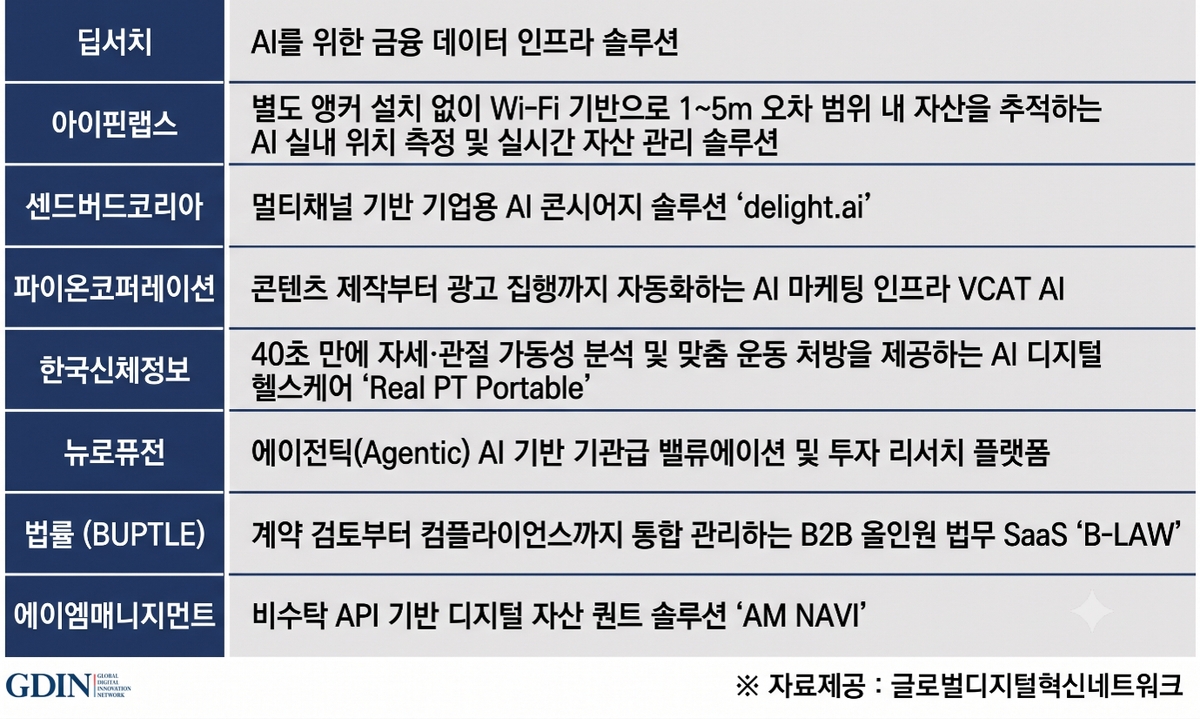
GDIN Supports Eight Startups at CEATEC 2026 in Japan, Opens Door to Local Investor Collaboration
13 hours ago