
Europe needs a shared story, not a single memory
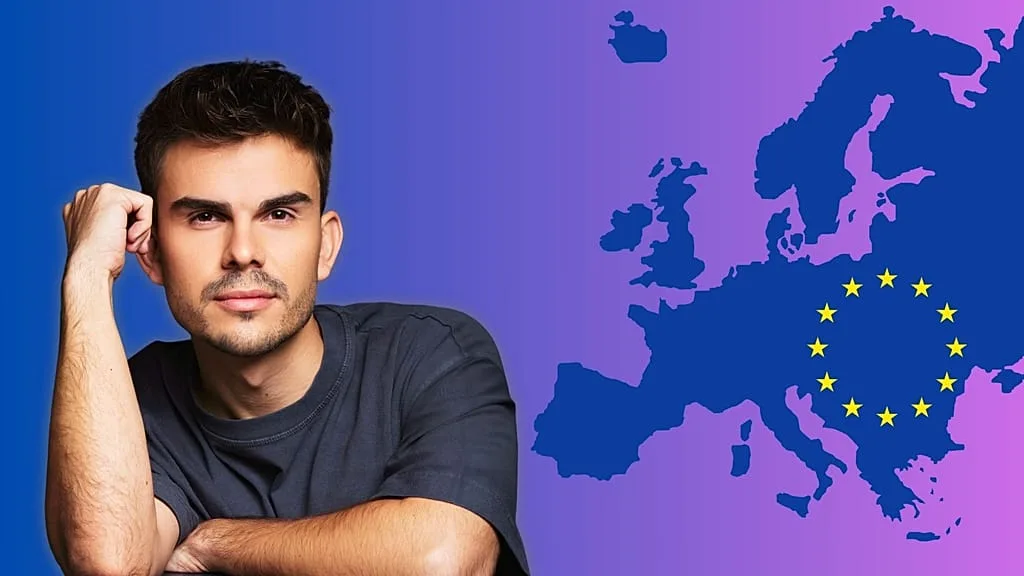
Europe is not an enlarged nation nor a community built on a single language, a single memory or a single historical experience. Its distinctiveness lies precisely in having built a common political project out of different histories, at times wounded, contradictory and even opposed.
Perhaps the mistake has been to assume that a European identity can only grow out of what everyone shares equally. Political identities are not built solely on commonalities. They are also forged in the ability to recognise as one's own what others contribute to the whole.
Europe shares history, but does not always share the same memory of that history. What for some was liberation may for others have been defeat; what for some was expansion may for others have been loss; what for some is national pride may for others still be an uncomfortable question.
The Spanish paradox: too European for America and too American for Europe
The real European challenge, therefore, is not to manufacture a single memory. It is to shape a shared narrative.
Here the transatlantic experience can offer a useful key. For a long time, the American dimension of Spain, Portugal, France, the Netherlands and the United Kingdom has been read as an extension of their respective national stories. In the Spanish case, that relationship has been marked by obvious tensions: pride, guilt, memory, criticism, belonging, wounds and opportunity. Spain has often been seen as a southern, Mediterranean, Atlantic and American Europe all at once; too European for America and too American for a certain narrow idea of Europe. But perhaps that discomfort is not a weakness. Perhaps, in fact, it is an advantage.
Spain's Atlantic dimension is not an exception to its Europeanness, but one of its most valuable contributions to the common project. Through it, Europe not only recalls a complex part of its past; it also gains a way of relating to the world. The same happens with other national experiences when they stop being understood as particular traits and begin to act as shared capacities.
The EU's challenge: to build a common European narrative
The European Union has built a common market, common institutions and, in part, a common foreign policy. But it still has something more difficult pending: turning its historical differences into a shared grammar. The formula "unity in diversity" should not be read as a pleasant slogan, but as a political task: not to erase differences, but to learn to transform them into common capacity.
From that perspective, the question changes. It is no longer only a matter of what Europe owes to its transatlantic history, but of what that history can do for Europe in the 21st century.
European history should not function only as a museum of national identities, but as a shared toolbox. Each Atlantic, Mediterranean, Central European, Baltic or Balkan experience can broaden the European project when it ceases to be understood as the exclusive heritage of a single state and begins to operate as a resource for the whole.
That transformation does not happen by itself. It requires a cultural and political decision: to stop treating national histories as closed compartments and to start incorporating them into the common European narrative. In the Atlantic case, that means turning a complex memory into real cooperation: education, heritage, universities, cultural industries, cultural diplomacy and spaces for dialogue with Latin America. There Europe not only remembers better; it also acts better.
The question, therefore, is not whether the whole of Europe shares the same Atlantic history to an equal degree. It does not. The question is whether Europe is capable of turning that history, born in some of its member states, into a resource for the entire European project. The Atlantic bond should not be read as historical nostalgia or as an uncomfortable inheritance that the continent contemplates from the outside. It is one of the ways in which Europe can broaden its conversation with the world.
In a fragmented world, where influence is no longer measured only in military or economic power, but also in trust, legitimacy and the capacity to connect, culture stops being an adornment. It becomes infrastructure. That is why heritage, education, universities and the creative industries should not occupy a decorative place in the European project, but a strategic one: they help to explain Europe, to project it and to make it recognisable within and beyond its borders.
Only a Europe able to look its history in the eye can use it honestly
This demands a mature outlook. Recognising the strategic value of the transatlantic bond does not mean whitewashing its shadows or turning the past into propaganda. On the contrary: only a Europe able to look its history in the eye can use it honestly. But looking it in the eye does not mean standing still. Memory cannot be only a debt; it must also become responsibility, knowledge and cooperation.
Perhaps there lies one of the keys to Europe's future: learning to turn complex legacies into shared tools. It is not a question of erasing wounds or asking the past to stop being uncomfortable. It is a question of preventing history from becoming trapped between two equally sterile extremes: nostalgia and guilt. Between them there is a third possibility: to build.
This logic touches, even if only indirectly, one of Europe's major contemporary debates: integration. For years Europe has been asking itself how to integrate those who arrive. But no one can integrate into a project that does not know how to explain itself. Before asking only how to incorporate new communities, Europe must ask itself what common narrative it offers: not a closed, exclusionary or uniform one, but one clear enough to be understood and broad enough to be lived in.
Europe's challenge is not to shrink until it finds a common denominator where nothing is uncomfortable, but to dare to live by a multiplying principle: a identity that does not dissolve difference, but turns it into strength. The Atlantic, the Mediterranean, the East, the North and the centre should cease to be the margins of a map and instead be recognised as energies of a single political civilisation. For Europe will not become stronger by administering a reduced version of itself, but by learning to grow with everything that makes it up. Europe will not be more Europe when everyone remembers the same thing; it will be more Europe when it is able to turn every memory into a promise of future.
Federico Gallardo is a Spanish actor with a career in film, television and audiovisual platforms, developed between Spain, Mexico and the United States. In parallel, he promotes cultural projects linked to memory, heritage and transatlantic relations. He is the driving force behind the Archivo Indiano de Identidades Transatlánticas, an initiative dedicated to exploring the historical, cultural and human ties between Europe and America. His work spans artistic creation, cultural management and reflection on European identity and cultural diplomacy.
This text was translated with the help of artificial intelligence. Report a problem : [feedback-articles-en@euronews.com].
Related Stories
 Culture
MLRIT celebrates 21st traditional day with cultural festivities
5 days ago
 Culture
Uganda's King Oyo death: Royal family rejects UBC presenter Edward Rukidi Kijanangoma as the new monarch
1 week ago
 Culture
Easy Japanese news in translation: Japan to nominate Hikone Castle for World Heritage status
1 week ago
 Culture
Thieves steal paintings from Renoir Museum on French Riviera
1 week ago
 Culture
Zelenskyy: US envoys resumed talk process with Russia
1 week ago
 Culture
Brandon's Naija Summer fest brings Nigeria to the Prairies
1 week ago
 Culture
Church's mental health centre conversion rejected
1 week ago
 Culture
Ramlila, the traditional performance of the Ramayana
2 weeks ago