
‘Even Politburo members can be touched’: what the latest purge says about Xi Jinping’s China
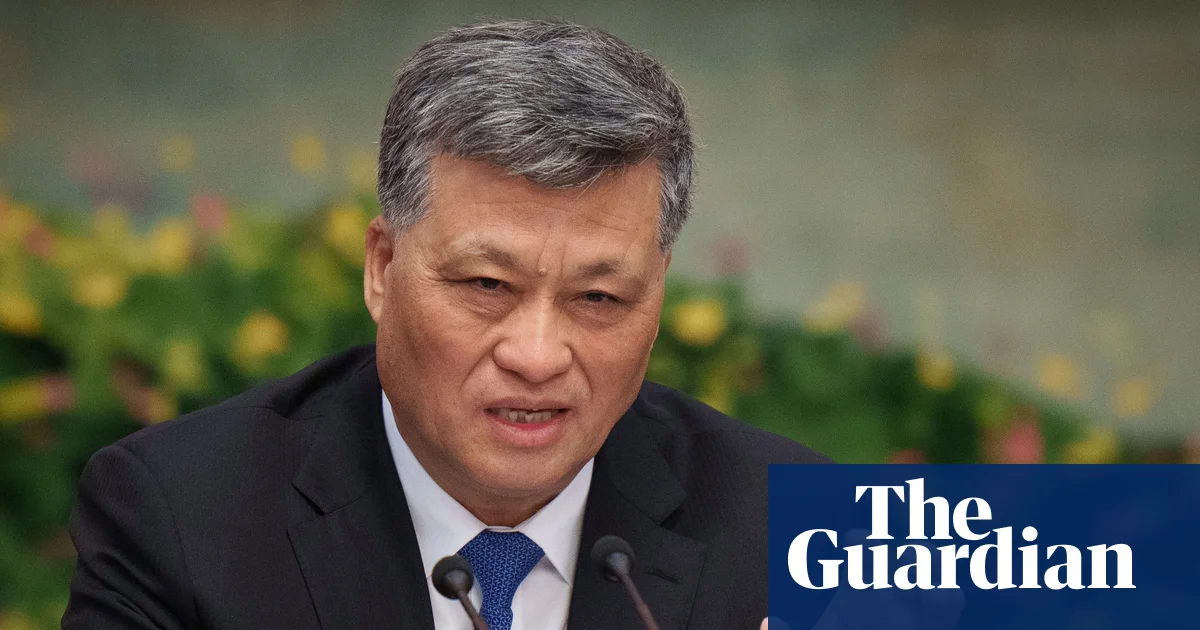
On Tuesday, China expelled Ma Xingrui, one of the ruling party’s most senior officials, making him the third politburo member to be purged since 2022 as Xi Jinping deepens his years-long anti-corruption campaign.
Ma, a former Communist party secretary for China’s north-western region of Xinjiang, was accused of corruption, abuse of power and trading political favours for sex. The announcement came after Ma was placed under investigation in April for suspected “serious violations of discipline and the law”.
He has not responded to the claims against him and has not been seen since the announcement.
It is notable that Ma is the first civilian official in the elite political body to fall in this latest purge. Zhang Youxia, who was expelled in January, and He Weidong, who was removed in October last year, were both military officials.
“This is the only civilian [within the politburo] that’s been purged,” said Joseph Torigian, an associate professor at American University and a historian of Chinese elite politics. “I certainly haven’t seen something like that since the purge of the Gang of Four.” Torigian was referring to a 1976 incident in which four politburo members were arrested after the death of Mao Zedong. They were later accused of attempting to seize power, marking one of the most significant reshuffles of the top leadership of the Chinese Communist party (CCP) in its history.
“One of the signals [of what] Xi Jinping is hoping to get out of this purge is that even politburo members, no matter who you are, can be touched by this kind of crackdown,” Torigian said.
China’s Central Commission for Discipline Inspection accused Ma of seeking benefits for others in official appointments, improperly accepting gifts and bribes, helping relatives and associates profit from his position, and presiding over what it described as “family corruption”.
Christopher Nye, a non-resident fellow at the Jamestown Foundation, said the official announcement about Ma contained very little of the politically charged language that is usually seen, such as “two-faced person”, “inflated political ambition” or “disloyalty”. Yet Ma was still removed from office.
“This suggests that Xi Jinping’s political tolerance has diminished. In the past, it seemed that you had to be seen as opposing Xi before the leadership would use the judicial system to remove you. Now, even without any obvious signs of political opposition, corruption allegations alone appear to be enough to justify such severe punishment,” Nye said.
The announcement alleged Ma’s behaviour was “extremely serious” and accused him of failing to “restrain himself” after the CCP’s 18th National Congress in 2012. Experts said the reference was notable because it explicitly tied Ma’s alleged misconduct to the period when Xi was leader.
“Before that, Xi wasn’t interested. But anything that happened after that can now become grounds for a purge,” Nye said.
Ma, 67, was once one of the country’s most promising political figures, rising through the ranks after establishing himself as an aerospace engineer and technocrat. Once the youngest doctoral supervisor at the Harbin Institute of Technology, he spent more than a decade at the state-owned China Aerospace Science and Technology Corporation, where he oversaw major satellite launches and led key programmes including China’s crewed spaceflight and lunar exploration projects. It earned him the nickname “the young marshal of the aerospace industry”.
His political career accelerated in 2013, the year Xi Jinping took office. He was transferred to Guangdong, a province closely associated with the political legacy of Xi’s father, serving as deputy provincial party secretary and later governor of the province.
In 2021, Ma was appointed Communist party secretary of Xinjiang, where Beijing has been accused of arbitrarily detaining more than a million Uyghurs and other Muslim minorities in “re-education” camps. During his tenure, Ma publicly maintained a hardline stance on security and “counter-terrorism”, demonstrating to Xi that he could manage one of China’s most politically sensitive regions.
Xi’s purge may not end with Ma. Several officials who previously worked under him have also come under scrutiny.
Last year, Zhang Jianhua, a former subordinate from the State Administration of Science, Technology and Industry for National Defence, was investigated and expelled from the Communist party for corruption charges. In March, Guo Yonghang, who worked under Ma during his time in Shenzhen, was also expelled from the party.
Additional research by Yu-chen Li
Related Stories
 Technology
‘Nobody will win’: Zelenskyy adviser warns of mutual destruction if war with Russia continues
10 minutes ago
 Technology
Francois Wu seeks stronger Taiwan
1 hour ago
 Technology
3 takeaways from BYU’s dominant win over Utah Tech
2 hours ago
 Technology
Francois Wu seeks stronger Taiwan
2 hours ago
 Technology
What Does Align Technology (ALGN) Gain From Its Board Change?
3 hours ago
 Technology
Live coverage: BYU kicks off 2026 campaign against Utah Tech
4 hours ago
 Technology
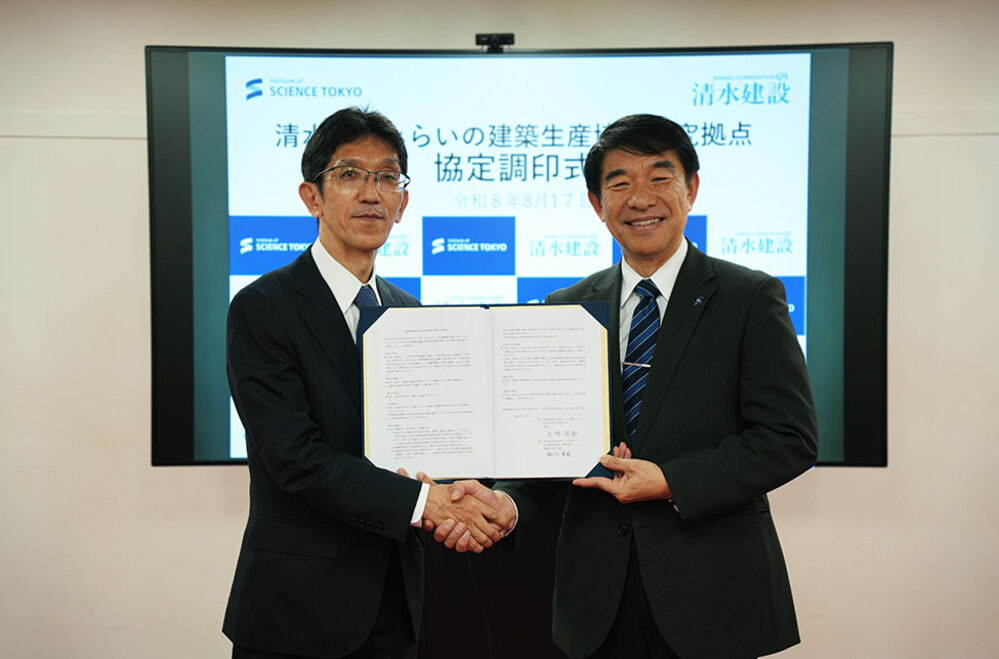
Shimizu Corporation and Tokyo University of Science and Technology Launch Research Initiative Toward “Architectural Upcycling” That Preserves Existing Structures
5 hours ago
 Technology
Who is Will Hammond? Meet Texas Tech's new QB1 after Brendan Sorsby saga
7 hours ago