
FIFA World Cup: Are Toronto and Vancouver ready to host?
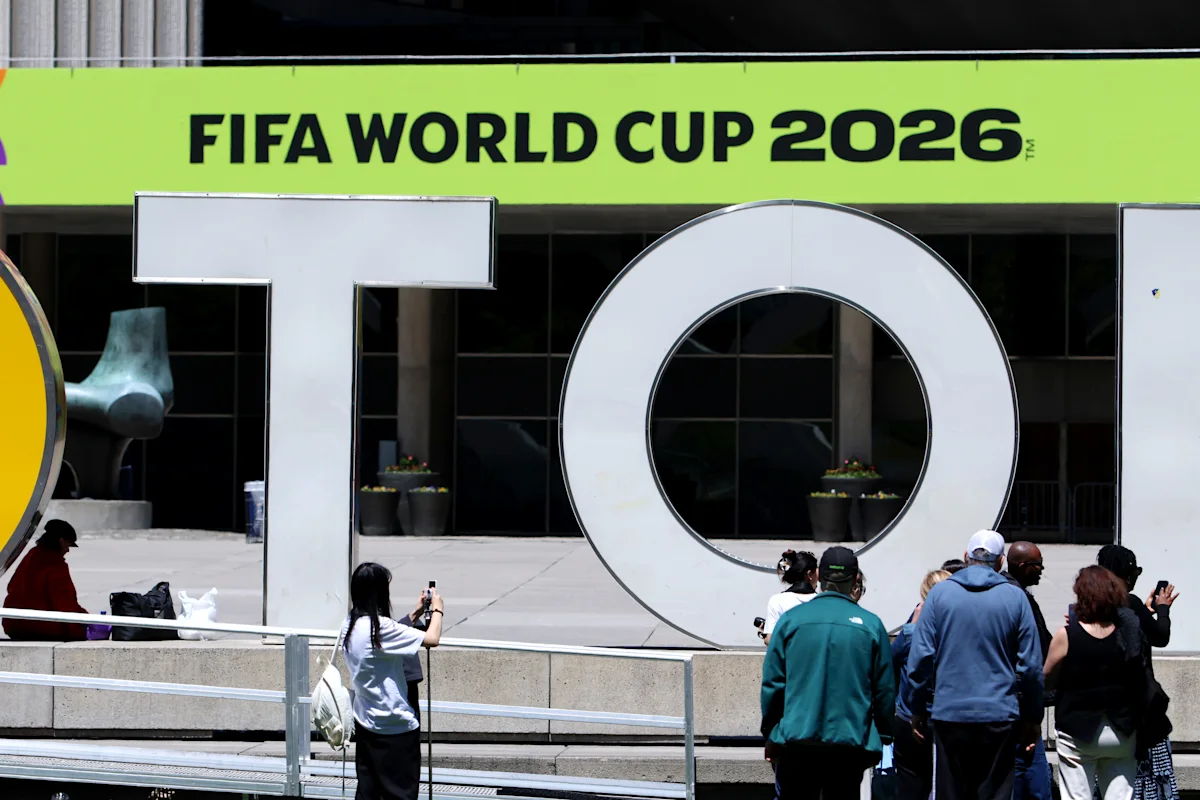
The World Cup is fast approaching and with it are a number of preparations host cities in Canada have taken to ensure the games are safe for all.
Details remain scarce on how exactly Toronto and Vancouver will handle security for the games, but Toronto Police say that their presence at the World Cup could be "stronger than we've ever seen at any event" with the largest deployment of officers in the force's history. Toronto and Vancouver expect up to 350,000 visitors to each city for the games.
Toronto has set aside $94 million for security, which includes $66 million for the Toronto Police. The federal government has allocated $145 million towards security in both Toronto and Vancouver, $45 million of which will go to Toronto.
Toronto will rely heavily on surveillance, using drones and additional security cameras to monitor the crowds. The city has also invested $12.5 million in a command centre to help co-ordinate security and police operations.
Canada is hosting 13 FIFA World Cup matches, split between six in Toronto and seven in Vancouver. Canada takes on Bosnia and Herzegovina on June 12 in Toronto. Australia and Türkiye face off on June 13 in Vancouver.
Graeme Hudson, Vice President of Crisis & Security Consulting with Crisis24, a security management company and division of GardaWorld, told Yahoo Canada that security for World Cup matches has evolved over the years to handle expected safety issues. The World Cup brings with it very passionate fans, so hosts must be prepared for potential behaviour such as setting off flares within the stadium or rushing the pitch.
"Security for matches is multi-layered. It's no longer just at the stadium (or its) surrounding area," Hudson said. "Security is about influencing the fans' behaviour."
That means that as far away as Pearson International Airport, fans could receive messaging to be respectful and not make trouble. Soccer has a storied history of rowdiness, with a culture of "hooliganism" existing for decades. Hudson said hooliganism is linked to right-wing extremism, and authorities have a comprehensive database on known troublemakers who are banned from games.
According to Hudson, surveillance and intelligence will play an important role to nip any trouble in the bud, including the potential use of high-tech cameras to detect any suspicious behaviour.
Hudson said there will likely be "stewards" on the ground to provide information and directions to fans and maintain a cheerful attitude, while police will focus more on enforcement and reacting to incidents.
Security checkpoints will screen fans when going into the stadium for counterfeit tickets, but once the game is over, those chokepoints will likely be loosened to make it easy for crowds to exit the stadium. Overcrowding and crushing due to crowds has been an issue for big events like the World Cup in the past, so now free movement is promoted.
"Now it's recognized within stadiums that restricting the movement and safe exit of fans causes more problems than it solves," Graeme said. "Allowing the swift exit and movement of fans from a stadium to the surrounding area… leads towards a much safer event."
The risks for the World Cup are multiple given the geopolitical climate, and it is possible for any group to try to hijack the event to put a spotlight on their cause, according to University of Ottawa criminology professor and surveillance expert David Murakami Wood.
That could include protests or an attack. The U.S. has said that the biggest threat they see posed during the tournament is from drones, which have been used more frequently and effectively during warfare, and the country is investing money into defence against such attacks. Toronto Police have included a line in their budget for the event to counter drone activity.
Murakami Wood said that since Iran is participating in the tournament, it is unlikely they'd try to launch an attack during it as a push against the U.S. and its war against them.
If protests do occur, Murakami Wood said that police will be careful not to overreact, like during the G20 protests in Toronto in 2010 where actions such as "kettling" crowds to keep them from leaving were internationally criticized.
"There's been a drawing back of more aggressive forms of policing at mega events in recent years in favour of much more defensive security measures," Murakami Wood said. "Some of the biggest risks to Canada from these games is always a reputational risk … The worst thing to happen would be that Canada is seen as a USA-lite."
Then there's the matter of how the cities' infrastructure will hold up with so many more visitors, and simultaneous events, like Pride, happening in Toronto in late June.
University of Toronto Infrastructure Professor Matti Siemiatycki told Yahoo Canada that Toronto is taking a transit-first approach to the games and will have additional bus service to and from the stadium, as well as dedicated bus lanes and pick-up and drop-off locations for ride-shares.
Toronto is a city that typically has bad traffic on even a regular weekend, so there is the potential it could be worse during the World Cup, which is why the city is encouraging walking, biking and transit over driving. Siemiatycki hopes that the festive atmosphere of the World Cup will translate into patience and tolerance from drivers in traffic, and not road rage.
He highlighted the Raptors' victory parade in 2019 after winning the NBA Championship as an example of the city being crowded but still enjoyable. Other times, though, like New Year's Eve when the GO train platforms can get completely packed, are not so much fun. He hopes Toronto can avoid situations like that. He said communication on the ground and on social media is key to give the impression the city has the situation under control and there is a plan in place.
"We want it to be crowded but not chaotic, " Siemiatycki said. "If the city can achieve that balance, then it's a win for Toronto."
We want it to be crowded but not chaotic. If the city can achieve that balance, then it's a win for Toronto.
Related Stories
 Canada
Frechette holds mid-campaign cabinet meeting ahead of counter
58 minutes ago
 Canada
Why more than 150 years later, Hamilton's Nine Hour Movement still matters
58 minutes ago
 Canada
Stephen Fuhr was mocked for opposing the purchase of F
58 minutes ago
 Canada
'It’s going to be painful': Trade watchers warn of tit-for
58 minutes ago
 Canada
Free support for secondary school place sign
1 hour ago
 Canada
46-year
2 hours ago
 Canada
AP top stories September 7
3 hours ago
 Canada
‘Get up, governor’: Trump takes shot at PM Carney with hockey cartoon
3 hours ago