
From Manuscripts to Folk Traditions: Four Initiatives Protecting India’s Cultural Legacy
From Manuscripts to Folk Traditions: Four Initiatives Protecting India’s Cultural Legacy
Government initiatives focus on documenting village traditions, preserving manuscripts, promoting inter-state cultural exchange and connecting youth with India’s rich cultural heritage.
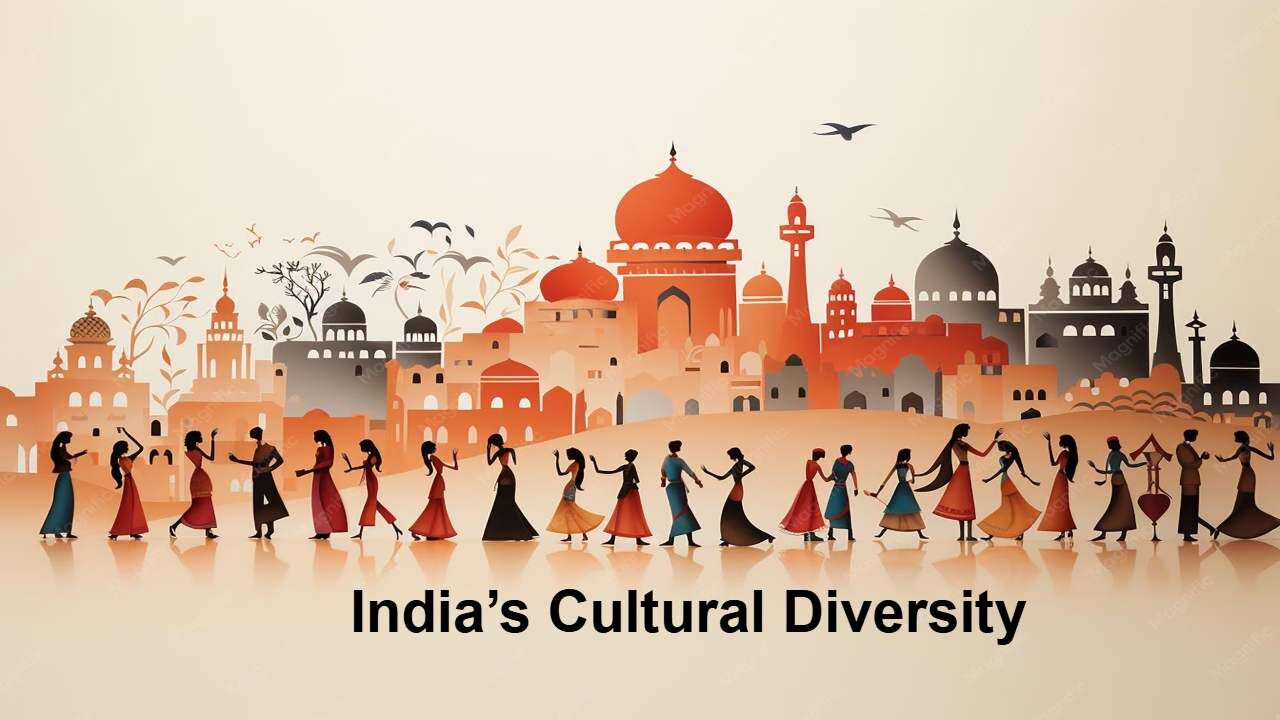
India’s Cultural Diversity (pc- social media)
India’s cultural heritage extends far beyond monuments, forts, palaces and other physical structures. The country’s villages, communities and regions also preserve a vast range of oral traditions, local languages, customs, manuscripts, indigenous practices and forms of cultural expression. Recognising this diversity, the Government of India has undertaken several initiatives aimed at documenting, preserving and promoting the country’s tangible and intangible cultural heritage. Among these are Mera Gaon Meri Dharohar, Gyan Bharatam Mission, Ek Bharat Shreshtha Bharat and SPIC MACAY, each focusing on a different aspect of India’s rich cultural legacy.
The Mera Gaon Meri Dharohar initiative is associated with the National Mission on Cultural Mapping and focuses on documenting the cultural identity of villages across India. Its scope goes beyond physical heritage structures because not every village necessarily has a fort, palace, tomb, haveli or other prominent monument. Instead, the initiative seeks to record the diverse cultural practices and traditions that make each village unique.
The initiative documents both tangible and intangible cultural heritage at the village level. This includes oral traditions, local languages and customs associated with seasonal changes, festivals and community practices. Traditions such as worshipping a particular tree, respecting a certain species of bird or following a distinctive practice during the arrival of spring can form part of a village’s cultural heritage. Local administration, Gram Sabhas and Panchayati Raj institutions can also play an important role in assisting with this cultural documentation.
The Gyan Bharatam Mission focuses on the preservation of India’s vast manuscript heritage. Manuscripts preserved in universities, research institutions and private or academic collections can also form part of the effort to document and preserve India’s written heritage. Therefore, Its scope is not restricted to manuscripts held by government institutions.
The mission covers manuscripts irrespective of their region, language or script. These historical records may have been written on materials such as paper and leaves and contain valuable knowledge from different periods and parts of India. Along with physical preservation, the mission aims to create a digital repository so that the knowledge contained in these manuscripts remains accessible even if the original material deteriorates over time.
Technology, including AI-based handwritten text recognition tools, can further assist this process. Such tools can help identify and interpret handwritten material and convert it into digital form, making the preservation and accessibility of historical manuscripts more effective.
Ek Bharat Shreshtha Bharat focuses on strengthening India’s unity while preserving and enhancing its cultural diversity. The initiative promotes inter-state cultural exchange, allowing people from different states and regions to learn about and experience one another’s traditions, customs and cultural practices.
Through such exchanges, cultural practices from one state can be showcased and experienced in another. This encourages greater awareness of India’s varied traditions while strengthening the cultural connections between different parts of the country. The initiative therefore highlights the idea that diversity can become a means of bringing communities and states closer together.
Society for the Promotion of Indian Classical Music and Culture Amongst Youth (SPIC MACAY), works to promote awareness and appreciation of Indian classical music, dance, folk traditions, yoga, meditation and other aspects of Indian cultural heritage among young people.
By increasing awareness of indigenous and traditional forms of culture, such efforts can help ensure that cultural knowledge does not remain limited to older generations. Documentation and wider public exposure can contribute to keeping these traditions visible and relevant in a changing society.
Himanshu is a journalism graduate with professional experience in news curation, editorial research, content writing, and fact-checking. Her interests include Geopolitics, Indian polity, Supreme Court judgments, and History.
Related Stories
 Culture
Elegance with Royalty: How to Infuse Traditional Indian Elements into Modern Interiors
2 hours ago
 Culture
Giis Hadapsar Kg2b Celebrates India’S Textile Heritage Through ‘Loom To Legacy’
2 days ago
 Culture
Hand-me
2 days ago
 Culture
Quaco Museum highlights St. Martins's shipbuilding heritage
3 days ago
 Culture
Fire destroys Langley's beloved 'Little Red House'
4 days ago
 Culture
Diversity of Indian sarees, textile heritage displayed by diaspora women at Times Square
1 week ago
 Culture
Diversity of Indian sarees, textile heritage displayed by diaspora women at Times Square | Hindustan Times
1 week ago
 Culture
Yogi Adityanath attacks Rahul Gandhi over Manusmriti remarks, asks 'why destroy India's heritage?'
1 week ago